personal-development
Personality and Assertiveness: How Big Five Traits Shape Speaking Up
Explore how the Big Five personality traits influence assertiveness, who finds it easy, who struggles, and practical tips for each profile.
Quick answer
How do personality traits affect assertiveness?
Personality traits like extraversion and agreeableness positively impact assertiveness, while neuroticism can hinder it. Each trait offers different strengths and challenges for speaking up.
Source: Wumardan University research
Executive Summary
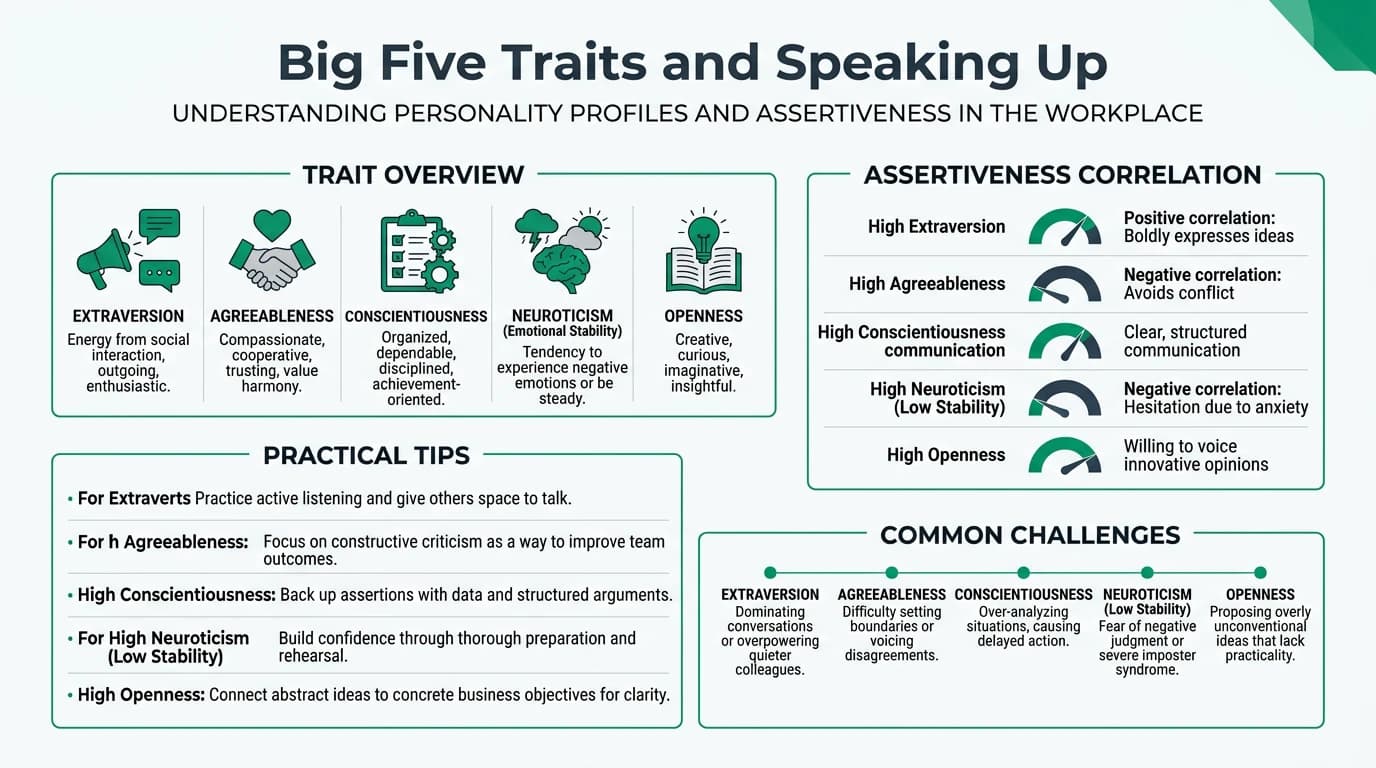
Understanding how personality influences assertiveness can help you communicate more effectively without changing who you are. The Big Five traits—Openness, Conscientiousness, Extraversion, Agreeableness, and Neuroticism—play a significant role in how easily you speak up.
The bottom line: Assertiveness is a skill you can develop by leveraging your natural traits.
Critical: If assertiveness challenges are linked to anxiety or trauma, consider seeking professional support.
What is Assertiveness?
Assertiveness is the ability to express your thoughts, feelings, and needs directly and respectfully. It involves:
- Emotional clarity: Expressing feelings without aggression.
- Boundary setting: Saying no when necessary.
- Confidence: Standing up for yourself while respecting others.
Important: Assertiveness is distinct from aggression, which violates others' boundaries.
How Do the Big Five Traits Affect Assertiveness?
Quick Reference Table
| Trait | Assertiveness Correlation | Key Insight |
|---|---|---|
| Extraversion | Strong positive | Naturally assertive; enjoys speaking up |
| Agreeableness | Moderate positive | Can be assertive but may avoid conflict |
| Conscientiousness | Moderate positive | Organized and goal-oriented |
| Neuroticism | Strong negative | Anxiety may hinder assertiveness |
| Openness | Minimal | Not a primary predictor |
Key Takeaways
- Extraversion: Often linked to natural assertiveness.
- Agreeableness: Balances assertiveness with harmony.
- Conscientiousness: Supports assertiveness through discipline.
- Neuroticism: Can create barriers due to anxiety.
- Openness: Less direct impact on assertiveness.
Why Do Extraverts Find Assertiveness Easier?
Extraverts are naturally inclined to be assertive due to their comfort with social interactions. They enjoy engaging with others and often feel energized by speaking up.
Scenario Table
| Scenario | Extravert Advantage |
|---|---|
| Workplace meetings | Comfortable voicing ideas and opinions |
| Social gatherings | Easily initiates conversations |
| Leadership roles | Confidently directs and motivates others |
Key Insight: Extraverts can leverage their natural confidence to lead discussions and present ideas.
Can Introverts Be Assertive?
Absolutely! Introversion is about energy, not assertiveness. Introverts can develop assertiveness by:
- Preparing in advance: Organize thoughts before speaking.
- Using written communication: Start with emails or messages.
- Practicing in low-stakes settings: Build confidence gradually.
Practical Tips for Introverts
- Prepare talking points: Helps structure thoughts.
- Practice active listening: Engages others and builds rapport.
- Set small goals: Gradual exposure to assertive situations.
How Does Agreeableness Influence Assertiveness?
Agreeable individuals value harmony and may struggle with assertiveness due to conflict avoidance. However, they can be assertive by framing it as collaboration.
Assertiveness Strategies for Agreeable People
- Reframe assertiveness: As mutual respect, not conflict.
- Use "I" statements: Clearly express needs without blame.
- Practice saying no: Start with small, manageable situations.
Important: Assertiveness doesn't mean being rude; it's about clear communication.
What Challenges Do Highly Neurotic People Face?
High neuroticism can lead to anxiety and avoidance, making assertiveness challenging. However, with emotional regulation techniques, these individuals can improve their assertiveness.
Strategies for High-Neuroticism Individuals
- Practice mindfulness: Helps manage anxiety.
- Start small: Begin with less intimidating situations.
- Seek support: Consider therapy for anxiety management.
How to Leverage Conscientiousness for Assertiveness
Conscientious individuals are organized and disciplined, which can support assertiveness. They can use their strengths to plan and execute assertive communication.
Tips for Conscientious People
- Set clear goals: Know what you want to communicate.
- Use lists and reminders: Keep track of assertiveness goals.
- Reflect on successes: Learn from past experiences.
Practical Assertiveness Tips for Each Personality Type
Table: Assertiveness Tips by Personality Type
| Personality Type | Key Strategy |
|---|---|
| Extravert | Use natural energy to lead discussions |
| Introvert | Prepare and practice in low-stakes settings |
| Agreeable | Frame assertiveness as collaboration |
| Neurotic | Manage anxiety with mindfulness techniques |
| Conscientious | Use organization skills to plan communication |
Key Takeaway: Tailor assertiveness strategies to your personality for best results.
FAQ
Can introverts be assertive?
What's the difference between assertiveness and aggressiveness?
Do agreeable people struggle with assertiveness?
How does neuroticism affect assertiveness?
Is assertiveness a learnable skill?
Can conscientiousness make you more assertive?
What role does extraversion play in assertiveness?
Notes
Primary Sources
| Source | Type | URL |
|---|---|---|
| Wumardan University | Research | Link |
| UC Davis | Research | Link |
Conclusion
Assertiveness is a skill accessible to all personality types. By understanding your Big Five traits, you can develop strategies that align with your natural tendencies.