relationships
Personality and Empty Nest Transition: Big Five Traits, Parental Identity, Marital Adjustment, and Wellbeing Research
Explore how personality traits impact the empty nest transition, affecting parental identity, marital adjustment, and overall wellbeing.
Quick answer
What is empty nest syndrome?
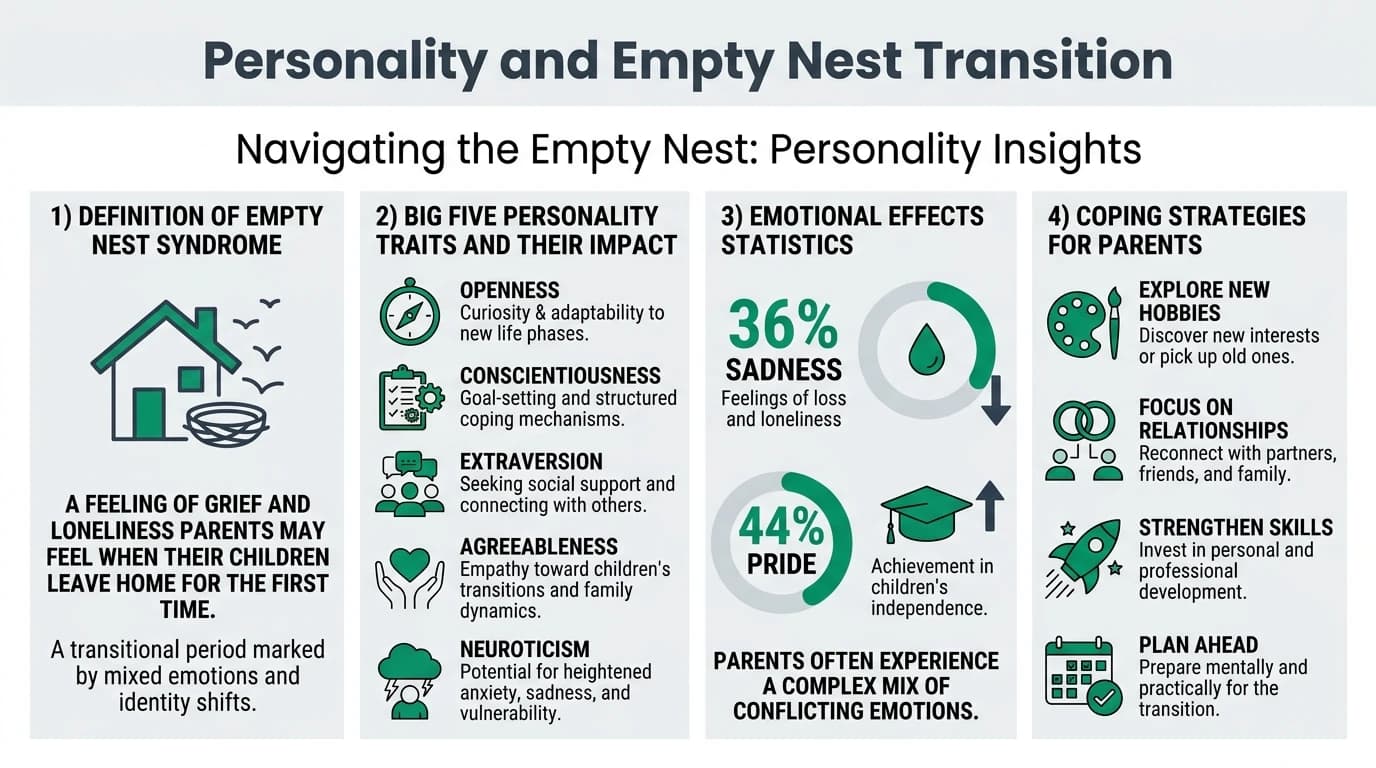
Empty nest syndrome is a feeling of grief and loneliness parents may experience when children leave home, leading to depression, loss of purpose, and anxiety; it is not a clinical condition but involves psychosocial adjustments.
Source: Wikipedia
Executive Summary
The empty nest transition is a major life change for many parents. It involves emotional adjustments as children leave home, impacting parental identity and marital dynamics. Personality traits, particularly the Big Five, play a significant role in how parents cope with this change.
The bottom line: Understanding your personality can help navigate the empty nest transition more smoothly.
Critical: Consult a mental health professional if feelings of depression or anxiety become overwhelming.
What is Empty Nest Syndrome?
Empty nest syndrome isn't a formal diagnosis but a common experience. Parents often feel:
- Grief and loss: Missing daily interactions with children.
- Anxiety and worry: Concerns about children's independence.
- Marital stress: Changes in relationship dynamics.
| Symptom | Description |
|---|---|
| Loss of purpose | Reduced daily child-related activities. |
| Emotional distress | Sadness or anxiety about the future. |
| Marital stress | Resurfacing relationship issues. |
How Do Big Five Traits Affect the Transition?
The Big Five personality traits—openness, conscientiousness, extraversion, agreeableness, and neuroticism—can influence how parents handle the empty nest transition.
- Neuroticism: May heighten anxiety and worry.
- Conscientiousness: Aids in planning and adjusting.
- Extraversion: Encourages social engagement, easing loneliness.
| Trait | Effect on Empty Nest Transition |
|---|---|
| Neuroticism | Increases anxiety and worry. |
| Conscientiousness | Helps with planning and adjustment. |
| Extraversion | Promotes social activities to combat loneliness. |
How Does Parental Identity Change?
When children leave, parents often experience a shift in identity. This can be challenging, especially for those whose self-worth was tied to parenting.
- Loss of identity: Struggling to find new purpose.
- Opportunity for growth: Rediscovering personal interests.
| Identity Shift | Description |
|---|---|
| Loss of identity | Feeling purposeless without parenting role. |
| Growth potential | Exploring new hobbies and interests. |
Does the Empty Nest Affect Marital Adjustment?
The empty nest can either strain or strengthen marriages. Without children as a buffer, couples may face:
- Resurfacing conflicts: Previous issues may re-emerge.
- Reconnection opportunities: Time to focus on each other.
| Marital Impact | Description |
|---|---|
| Resurfacing conflicts | Old issues may come to light. |
| Reconnection | Opportunity to strengthen the relationship. |
What Are the Wellbeing Outcomes?
Research shows mixed outcomes for parents during the empty nest transition. Some report increased life satisfaction, while others experience reduced quality of life.
- Positive outcomes: More time for personal growth.
- Negative outcomes: Feelings of loneliness and depression.
| Wellbeing Outcome | Description |
|---|---|
| Increased satisfaction | More freedom and personal time. |
| Reduced quality of life | Loneliness and lack of purpose. |
What Are the Symptoms and Emotional Effects?
Parents may experience various symptoms during the empty nest transition:
- Loss of purpose: Reduced daily responsibilities.
- Emotional distress: Sadness or anxiety.
- Marital stress: Relationship challenges.
| Symptom | Coping Strategy |
|---|---|
| Loss of purpose | Rebuild trust and find new activities. |
| Emotional distress | Seek therapy or support groups. |
| Marital stress | Focus on communication and reconnection. |
Who is Most Vulnerable to Empty Nest Syndrome?
Certain groups are more susceptible to experiencing challenges during this transition:
- Full-time mothers: Identity tied to parenting roles.
- Parents in unstable marriages: Lack of relationship foundation.
- Primary caregivers: Struggle with change and loss.
| Vulnerable Group | Why They Are Vulnerable |
|---|---|
| Full-time mothers | Identity loss when children leave. |
| Unstable marriages | Increased marital stress. |
| Primary caregivers | Difficulty adjusting to change. |
Are There Positive Aspects to the Transition?
Despite the challenges, the empty nest transition can offer positive experiences:
- Renewed freedom: Time to pursue personal interests.
- Marital focus: Opportunity to strengthen the relationship.
| Positive Aspect | Description |
|---|---|
| Renewed freedom | More time for hobbies and self-care. |
| Marital focus | Opportunity to reconnect with spouse. |
How to Cope with Empty Nest Anxiety?
Coping strategies can help manage anxiety and stress during this transition:
- Rebuild purpose: Engage in new activities or hobbies.
- Seek support: Join groups or talk to a therapist.
- Reconnect with spouse: Focus on shared interests.
| Coping Strategy | Description |
|---|---|
| Rebuild purpose | Find new activities to fill time. |
| Seek support | Join support groups or therapy sessions. |
| Reconnect with spouse | Plan activities together. |
Action checklist
- Identify your Big Five personality traits.
- Explore new hobbies or interests.
- Communicate openly with your partner.
- Seek professional support if needed.
FAQ
What are the symptoms of empty nest syndrome?
Is empty nest syndrome real or just a myth?
How long does empty nest syndrome last?
Does empty nest syndrome affect marriages?
Can personality traits predict empty nest difficulties?
How does parental identity change after kids leave?
What Big Five traits worsen empty nest transition?
Notes
Primary Sources
| Source | Type | URL |
|---|---|---|
| PMC (PubMed Central) | Peer-reviewed | https://pmc.ncbi.nlm.nih.gov/articles/PMC11414866/ |
| Wikipedia | Encyclopedia (sourced) | https://en.wikipedia.org/wiki/Empty_nest_syndrome |
| Kate Christie | Industry report summary | https://www.katechristie.com.au/am-i-suffering-from-empty-nest-syndrome-god-no/ |
| HomeWord | Industry blog | https://homeword.com/jims-blog/5-signs-and-symptoms-of-empty-nest-syndrome/ |
| Dr. Rachel Glik | Expert blog | https://www.drrachelglik.com/blog-posts/2023/9/4/empty-nesting-the-upsides-downsides-and-tips-for-a-fresh-start-mindset |
Conclusion
The empty nest transition is a complex process influenced by personality traits, identity shifts, and marital dynamics. By understanding these factors, parents can better navigate this life stage.
Footnotes
-
Source and explanation. ↩
-
Wikipedia, Empty nest syndrome overview. ↩
-
Dr. Rachel Glik, Blog on empty nest transition. ↩
-
PMC, Peer-reviewed analysis on marital impacts. ↩
-
Psychology Today, Personality traits and anxiety. ↩
-
HomeWord, Blog on parental identity shifts. ↩
-
Australian Empty Nesters Report 2024. ↩