personality-tests
Personality and Feedback Reception: Big Five in the Workplace
Explore how the Big Five personality traits influence feedback reception, processing, and action in the workplace.
Quick answer
How do Big Five traits affect feedback reception in the workplace?
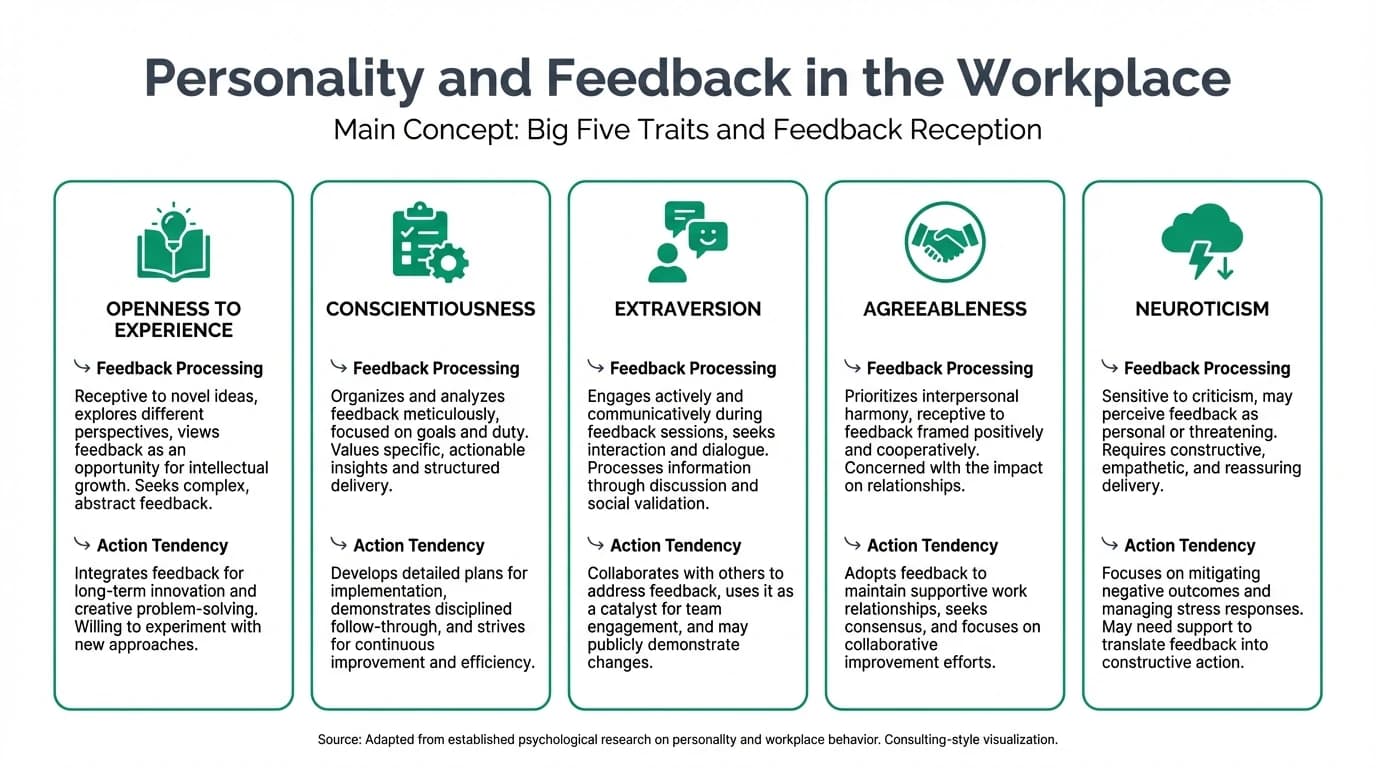
The Big Five traits—Openness, Conscientiousness, Extraversion, Agreeableness, and Neuroticism—moderate how individuals receive, process, and act on feedback, impacting job performance and engagement.
Executive Summary
The Big Five personality traits significantly influence workplace behaviors, including feedback reception. Each trait—Openness, Conscientiousness, Extraversion, Agreeableness, and Neuroticism—affects how feedback is received, processed, and acted upon.
The bottom line: Understanding these traits can enhance feedback delivery and improve workplace dynamics.
Critical Warning: Ignoring personality differences can lead to ineffective feedback and reduced job satisfaction.
Overview of Big Five Traits
The Big Five personality traits, known as OCEAN, provide a framework for understanding individual differences in workplace behavior.
- Openness to Experience: Creativity and adaptability.
- Conscientiousness: Organization and reliability.
- Extraversion: Sociability and assertiveness.
- Agreeableness: Cooperation and empathy.
- Neuroticism: Emotional stability and stress management.
| Trait | Key Behavior | Job Satisfaction Link |
|---|---|---|
| Openness | Innovative thinking | High in creative roles |
| Conscientiousness | Detail-oriented tasks | High across roles |
| Extraversion | Team collaboration | High in social roles |
| Agreeableness | Conflict resolution | High in teamwork |
| Neuroticism | Stress response | Low if unmanaged |
How Openness to Experience Affects Feedback Reception
Openness enhances feedback reception by fostering adaptability and innovation.
- Effect: Reduces negative feedback impact.
- Process: Encourages creative solutions.
- Caveat: May struggle with routine tasks.
| Scenario | Feedback Type | Response Strategy |
|---|---|---|
| Creative critique | Constructive criticism | Leverage curiosity |
| Routine feedback | Standard procedures | Encourage flexibility |
Conscientiousness and Processing Structured Feedback
Conscientious individuals excel in processing structured feedback, leading to improved performance.
- Effect: Enhances goal setting.
- Process: Detail-oriented analysis.
- Caveat: May resist unstructured input.
| Feedback Type | Processing Style | Outcome |
|---|---|---|
| Structured reviews | Systematic approach | High achievement |
| Unstructured input | Potential resistance | Need for clarity |
Extraversion's Influence on Acting on Social Feedback
Extraverts thrive on social feedback, often engaging proactively.
- Effect: Promotes team engagement.
- Process: Energetic implementation.
- Caveat: May overlook individual needs.
| Feedback Scenario | Preferred Setting | Action Tendency |
|---|---|---|
| Team input | Group discussions | Proactive engagement |
| One-on-one | Personal interaction | May need encouragement |
Agreeableness and Emotional Responses to Feedback
Agreeableness softens the impact of negative feedback, promoting cooperation.
- Effect: Enhances interpersonal relations.
- Process: Empathetic listening.
- Caveat: May avoid conflict.
| Feedback Type | Emotional Response | Conflict Handling |
|---|---|---|
| Interpersonal critique | Cooperative processing | High job satisfaction |
| Direct criticism | Potential avoidance | Need for assertiveness |
Neuroticism's Role in Defensive Feedback Reactions
High Neuroticism can lead to defensive reactions to feedback, affecting job satisfaction.
- Effect: Increases stress response.
- Process: Defensive processing.
- Caveat: May require support.
| Feedback Scenario | Emotional Impact | Support Strategy |
|---|---|---|
| Negative feedback | High stress | Emotional support |
| Constructive input | Potential defensiveness | Encouragement needed |
Trait Interactions as Moderators of Feedback-Performance Link
Interactions between traits can moderate feedback effects on performance.
- Combined Effects: Higher OCEAN traits mitigate negative feedback.
- Employment Status: Trait differences across roles.
- Implication: Personalized feedback strategies.
| Trait Combination | Feedback Impact | Role Example |
|---|---|---|
| High Openness + Low Neuroticism | Positive adaptation | Entrepreneurial roles |
| High Conscientiousness + Extraversion | Effective implementation | Managerial roles |
Big Five Predictors of Job Performance Post-Feedback
The Big Five traits predict job performance outcomes after feedback.
- Correlations: Engagement and productivity links.
- Recruitment: Feedback-responsive hiring.
- Trends: Longitudinal trait stability.
| Trait | Positive Outcome | Recruitment Focus |
|---|---|---|
| Conscientiousness | High productivity | Detail-oriented roles |
| Extraversion | High engagement | Social roles |
Personality Assessments for Feedback Optimization
Using Big Five assessments can tailor feedback styles for better outcomes.
- Integration: Leadership effectiveness.
- Evidence: Meta-analysis support.
- Application: Trait-job fit strategies.
| Assessment Type | Feedback Style | Application |
|---|---|---|
| Big Five Inventory | Structured for traits | Leadership development |
| Trait-specific | Tailored approaches | Team effectiveness |
Employment Status Hierarchies and Feedback Traits
Different roles exhibit distinct trait profiles affecting feedback reception.
- Entrepreneurs: Low Neuroticism, high Openness.
- Managers: High Conscientiousness, Extraversion.
- Supervisors: Detail-oriented action.
| Role | Dominant Traits | Feedback Implication |
|---|---|---|
| Entrepreneur | High Openness | Adaptive feedback |
| Manager | High Conscientiousness | Structured feedback |
| Supervisor | Detail-oriented | Reliable implementation |
Employee Engagement and Voice Through Big Five
Big Five traits influence engagement and voice behaviors post-feedback.
- Links: Emotional stability and motivation.
- Research: Recent studies on trait impacts.
- Strategies: Task assignments based on traits.
| Engagement Outcome | Linked Traits | Strategy |
|---|---|---|
| High voice | Extraversion, Stability | Encourage participation |
| Low engagement | High Neuroticism | Provide support |
Action checklist
- Identify dominant traits in team members.
- Tailor feedback delivery to individual traits.
- Monitor engagement and adjust strategies accordingly.
FAQ
What are the Big Five personality traits?
How does Conscientiousness affect feedback reception?
Can Neuroticism negatively impact job performance after feedback?
Why is Openness important for feedback in creative roles?
How do Extraverts handle feedback differently?
What role does Agreeableness play in feedback reception?
How can personality assessments optimize feedback delivery?
Notes
Primary Sources
| Source | Type | URL |
|---|---|---|
| David Publisher | Systematic Review | Link |
| Scientific Research Publishing | Research Article | Link |
| National Institutes of Health | Research Article | Link |
Conclusion
Understanding the Big Five personality traits can significantly enhance feedback mechanisms in the workplace. By tailoring feedback to individual traits, organizations can improve performance, engagement, and job satisfaction.