personality-tests
Unlocking Success: How Big Five Personality Traits Shape Interior Design Careers
Discover how your Big Five personality traits (Openness, Conscientiousness, Extraversion, Agreeableness, Neuroticism) influence success in interior design, from creative vision to client relationships and workplace dynamics. Learn to leverage your unique profile for career growth.
Quick answer
What Big Five personality traits are most important for interior designers?
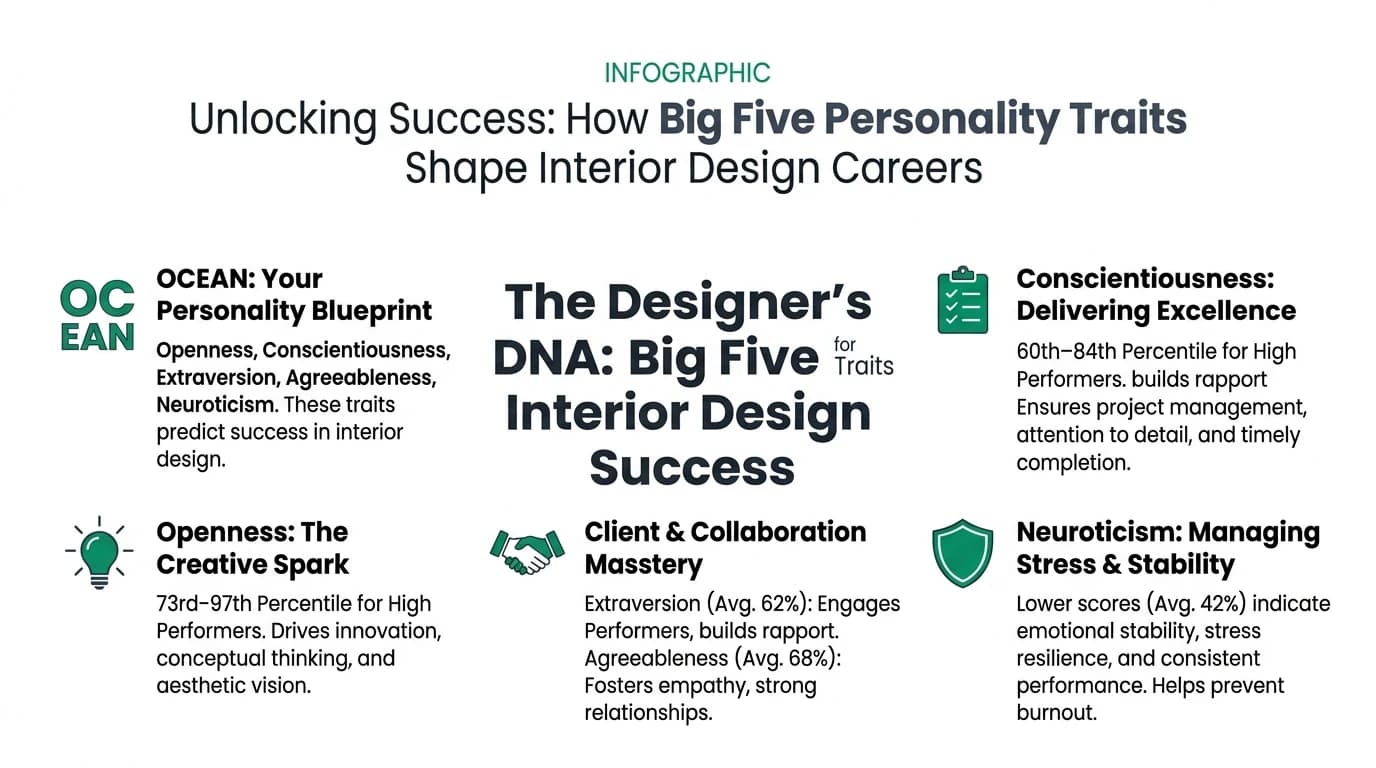
For interior designers, high Openness to Experience (73rd–97th percentile) is crucial for creativity. Conscientiousness (60th–84th) ensures project execution. Extraversion (around 62%) aids client interactions. Agreeableness (around 68%) builds strong relationships. Lower Neuroticism (around 42%) helps maintain emotional stability. High Openness is often the strongest predictor of success in this creative field. [^1]
Source: PersonalityHQ
Executive Summary
Understanding your personality can be a powerful tool, especially in creative fields like interior design. The Big Five personality traits—Openness, Conscientiousness, Extraversion, Agreeableness, and Neuroticism (OCEAN)—offer a clear framework to see how your natural inclinations align with career demands. For interior designers, these traits impact everything from generating innovative concepts to managing client expectations and delivering projects on time.
This guide explores how each Big Five trait plays a role in an interior design career. We'll look at how traits like high Openness fuel creativity, while strong Conscientiousness ensures your brilliant ideas become reality. By understanding your own profile, you can leverage your strengths, address potential challenges, and build more successful client relationships and a fulfilling career.
The bottom line: Your Big Five personality traits are strong indicators of your natural fit and potential for success in interior design. Knowing them helps you navigate creative challenges, manage projects, and connect effectively with clients.
Critical Warning: While personality traits offer valuable insights, they are not destiny. They describe tendencies, not guarantees. Individual success also depends on skills, experience, effort, and external factors. Use this information for self-awareness and growth, not as a definitive judgment.
Understanding the Big Five: Your Personality Blueprint
The Big Five model, often called OCEAN, is a widely accepted framework in psychology for describing personality. It breaks down human personality into five broad dimensions, each representing a spectrum of behaviors and preferences. These traits are stable over time and influence how we think, feel, and act in various situations, including the workplace.
Knowing your Big Five profile can help you understand why certain tasks feel natural and others are a struggle. For creative professionals like interior designers, this self-awareness is key to optimizing your work style, choosing the right projects, and building effective teams. It's like having a map to your own professional strengths and areas for development.
Why the Big Five Matters for Interior Design
The demands of interior design are diverse, requiring a blend of artistic vision, meticulous planning, and strong interpersonal skills. Each Big Five trait contributes uniquely to these aspects. For instance, generating fresh ideas comes from one trait, while ensuring those ideas are executed perfectly comes from another.
| Trait | Description | Workplace Example in Design |
|---|---|---|
| Openness to Experience | Imaginative, curious, artistic, unconventional. | Exploring new design trends, bold color palettes. |
| Conscientiousness | Organized, disciplined, responsible, thorough. | Meeting deadlines, managing project budgets precisely. |
| Extraversion | Outgoing, sociable, energetic, assertive. | Leading client presentations, networking at industry events. |
| Agreeableness | Cooperative, empathetic, trusting, kind. | Resolving client disagreements, collaborating with contractors. |
| Neuroticism | Prone to anxiety, moodiness, emotional instability. | Feeling overwhelmed by tight deadlines, stress from client feedback. |
| 1 |
Openness to Experience: The Heart of Interior Design Creativity
Openness to Experience is perhaps the most celebrated trait in creative fields. Individuals high in Openness are imaginative, intellectually curious, and appreciate art, beauty, and new ideas. They thrive on novelty and are often the innovators, pushing boundaries and thinking outside the box. For an interior designer, this trait is a powerhouse for generating unique concepts and visionary aesthetics.
High Openness means you're likely to be the designer who suggests an unconventional material, a daring color scheme, or an innovative spatial arrangement. You enjoy exploring diverse styles and are less bound by tradition, making you adept at creating truly personalized and cutting-edge spaces. This trait is a strong predictor of success in roles requiring creative problem-solving and artistic expression 2.
How Openness Drives Design Vision
- Idea Generation: Easily brainstorms novel concepts and solutions.
- Aesthetic Appreciation: Deep understanding and passion for visual arts and design principles.
- Adaptability: Open to new trends, technologies, and client preferences.
- Problem-Solving: Approaches design challenges with innovative, non-traditional thinking.
| Aspect of Design | High Openness | Low Openness |
|---|---|---|
| Approach to Change | Embraces new trends, innovative solutions. | Prefers established methods, traditional styles. |
| Task Preference | Enjoys conceptualizing, creative problem-solving. | Prefers structured tasks, clear guidelines. |
| Thinking Style | Abstract, imaginative, theoretical. | Concrete, practical, focused on facts. |
| Risk-Taking | Willing to experiment with bold designs. | Cautious, sticks to proven, safe choices. |
| 3 |
Conscientiousness: Bringing Design Visions to Life
While Openness sparks the initial creative flame, Conscientiousness is the fuel that keeps the project burning brightly until completion. This trait describes individuals who are organized, responsible, disciplined, and goal-oriented. They are meticulous planners and reliable executors, ensuring that every detail is accounted for and every deadline is met.
In interior design, high Conscientiousness translates directly into successful project management. It means carefully managing budgets, coordinating with contractors, tracking timelines, and ensuring the quality of materials and installations. Without this trait, even the most brilliant design concepts might never fully materialize or could be plagued by delays and errors. Conscientiousness is consistently found to be the biggest influence on job performance across almost all roles 4.
Conscientiousness and Project Success
- Deadline Adherence: Consistently meets project timelines and milestones.
- Budget Management: Tracks expenses carefully, avoids cost overruns.
- Quality Control: Ensures high standards in material selection and execution.
- Reliability: Clients and team members can depend on you to follow through.
- Attention to Detail: Catches errors and ensures precision in all aspects.
| Project Phase | High Conscientiousness | Potential Impact on Project |
|---|---|---|
| Planning | Detailed schedules, thorough material sourcing. | Smooth execution, accurate budgeting. |
| Execution | Consistent oversight, proactive problem-solving. | High-quality finish, minimal delays. |
| Client Communication | Regular updates, clear expectation setting. | Trust, client satisfaction. |
| Post-Project | Follow-ups, addressing punch list items promptly. | Strong reputation, repeat business. |
Extraversion: Connecting with Clients and Collaborators
Interior design is not a solitary endeavor; it's a highly collaborative and client-facing profession. Extraversion plays a significant role here. Individuals high in Extraversion are sociable, energetic, assertive, and enjoy being around people. They draw energy from social interaction and are often skilled communicators.
For an interior designer, Extraversion can be a huge asset in initial client consultations, networking, and presenting design concepts. An extraverted designer might naturally put clients at ease, articulate their vision with enthusiasm, and build rapport quickly. They are also likely to thrive in team environments, collaborating effectively with architects, contractors, and suppliers.
Extraversion in Client-Facing Roles
- Initial Consultations: Creates a welcoming and engaging atmosphere.
- Presentations: Delivers design concepts with confidence and enthusiasm.
- Networking: Builds a strong professional network and attracts new clients.
- Team Collaboration: Energizes team discussions and facilitates communication.
- Client Engagement: Proactively seeks feedback and maintains open dialogue.
| Trait Level | Strength in Design Role | Example Scenario |
|---|---|---|
| High Extraversion | Excellent rapport with clients, dynamic presentations. | Charismatic designer wins over a hesitant client with engaging pitch. |
| Moderate Extraversion | Comfortable in social settings, good listener. | Designer balances active listening with clear communication during meetings. |
| Low Extraversion | Prefers independent work, deep focus on tasks. | Designer excels at detailed planning and quiet, focused design work. |
Agreeableness: Building Trust and Harmonious Relationships
Agreeableness reflects how cooperative, empathetic, and compassionate a person is. Highly agreeable individuals tend to be trusting, kind, and considerate of others' feelings. In a service-oriented profession like interior design, this trait is vital for building strong, lasting client relationships and fostering a positive work environment.
An agreeable designer is skilled at understanding a client's needs and desires, even when unspoken. They are patient with feedback, adept at resolving conflicts, and prioritize client satisfaction. This doesn't mean always saying "yes," but rather approaching disagreements with a desire for mutual understanding and a collaborative spirit. This trait also contributes to harmonious team dynamics, making you a valued colleague.
Agreeableness in Client Relationships
- Empathy: Understands and responds to client emotions and preferences.
- Conflict Resolution: Handles disagreements calmly and seeks fair solutions.
- Client Satisfaction: Prioritizes client happiness and comfort throughout the process.
- Collaboration: Works well with contractors, suppliers, and other team members.
- Trust Building: Fosters a sense of reliability and mutual respect with clients.
| Aspect of Interaction | High Agreeableness | Potential Impact on Design Projects |
|---|---|---|
| Client Feedback | Welcomes input, seeks to understand underlying needs. | Leads to designs that truly reflect client vision, fewer revisions. |
| Negotiations | Seeks win-win solutions, avoids aggressive stances. | Smoother project flow, positive long-term relationships. |
| Teamwork | Supports colleagues, fosters a cooperative atmosphere. | Efficient project execution, shared success. |
| Handling Criticism | Takes feedback constructively, focuses on improvement. | Professional growth, enhanced design quality. |
Neuroticism: Managing Stress and Maintaining Stability in Design
Neuroticism, sometimes referred to as Emotional Stability (with low Neuroticism indicating high stability), describes a person's tendency to experience negative emotions like anxiety, worry, and mood swings. While often seen as a "negative" trait, understanding its impact is crucial for managing stress in demanding careers.
Interior design can be high-pressure, with tight deadlines, demanding clients, and unexpected challenges. Designers with higher Neuroticism might be more prone to stress, anxiety, and burnout when faced with these pressures. Conversely, those with lower Neuroticism (higher emotional stability) tend to be calmer, more resilient, and better able to cope with setbacks and uncertainty. This stability allows them to maintain focus and make clear decisions even under pressure 5.
Neuroticism and Workplace Well-being
- Stress Management: Lower Neuroticism correlates with better coping mechanisms.
- Resilience: Ability to bounce back from project setbacks or client rejections.
- Decision-Making: Maintains clarity and objectivity under pressure.
- Burnout Risk: Higher Neuroticism can increase susceptibility to burnout.
- Client Perception: Emotional stability projects confidence and professionalism.
| Trait Level | Impact on Workplace | Strategies for Success |
|---|---|---|
| High Neuroticism | Prone to stress, self-doubt, perfectionism. | Practice mindfulness, delegate tasks, set clear boundaries. |
| Moderate Neuroticism | Experiences some worry, can be motivated by deadlines. | Develop coping strategies, seek peer support, prioritize self-care. |
| Low Neuroticism | Calm under pressure, resilient, optimistic. | Leverage natural stability, mentor others, take on leadership roles. |
The Ideal Big Five Profile for Interior Designers
While every individual is unique, research and industry benchmarks suggest a common Big Five profile for high-performing interior designers. This profile highlights the blend of creativity, meticulousness, and interpersonal skills essential for success in the field. High Openness is consistently a standout trait, reflecting the core creative nature of the profession.
However, it's important to remember that these are averages. Your personal scores might vary, and that's perfectly fine. The goal isn't to fit a mold, but to understand how your traits align and where you might need to develop complementary skills or seek out specific roles within the broader design industry.
Big Five Benchmarks for Interior Designers
These percentiles represent typical scores for high-performing interior designers, meaning they score higher than X% of the general population in that trait 6.
| Trait | High-Performer Percentile | Key Benefit in Interior Design |
|---|---|---|
| Openness to Experience | 73rd–97th percentile | Drives innovation, unique aesthetic vision. |
| Conscientiousness | 60th–84th percentile | Ensures project delivery, attention to detail. |
| Extraversion | Around 62nd percentile | Facilitates client engagement, networking. |
| Agreeableness | Around 68th percentile | Builds strong client relationships, team harmony. |
| Neuroticism | Around 42nd percentile | Maintains emotional stability, manages stress. |
Key Takeaways from the Profile
- Creative Core: High Openness is paramount for innovative design.
- Execution Focus: Strong Conscientiousness ensures ideas become reality.
- People Skills: Moderate to high Extraversion and Agreeableness are crucial for client and team interactions.
- Resilience: Lower Neuroticism helps manage the inherent stress of project-based work.
Beyond Individual Traits: Big Five in Team Dynamics and Hiring
Understanding individual Big Five traits is powerful, but recognizing how they interact within a team or influence hiring decisions adds another layer of insight. An interior design firm isn't just a collection of individuals; it's a dynamic system where different personalities can complement each other or, if misaligned, create friction.
Hiring managers often look for specific trait profiles depending on the role. A lead designer might need higher Openness and Conscientiousness, while a client relations manager might prioritize Extraversion and Agreeableness. For freelancers, a balanced profile across all traits becomes even more critical, as they often wear many hats.
Trait Combinations for Design Teams
Effective teams often benefit from a diversity of traits, where members' strengths compensate for others' weaknesses.
| Trait Combination | Team Role/Benefit | Example in Design Firm |
|---|---|---|
| High Openness + High Conscientiousness | Visionary executor, brings ideas to completion. | Lead designer who innovates and manages projects meticulously. |
| High Extraversion + High Agreeableness | Client relationship builder, team harmonizer. | Client liaison, project manager focused on communication. |
| High Openness + Low Conscientiousness | Brilliant but disorganized idea generator. | Creative director paired with an organized project coordinator. |
| Low Neuroticism + High Conscientiousness | Stable, reliable, performs well under pressure. | Senior designer handling multiple complex projects calmly. |
Hiring Considerations for Design Roles
- Role-Specific Needs: Tailor personality requirements to the specific job (e.g., client-facing vs. back-end design).
- Team Balance: Assess how a new hire's traits will complement existing team dynamics.
- Cultural Fit: Consider how a candidate's personality aligns with the company's values and work environment.
- Growth Potential: Look for traits that indicate adaptability and a willingness to learn.
Navigating Client Relationships with Personality Insights
Client relationships are the lifeblood of an interior design business. Understanding the Big Five can give you an edge in tailoring your communication and approach to different client personalities. This isn't about manipulating clients, but about fostering better understanding, reducing friction, and ensuring a smoother, more satisfying design process for everyone involved.
For example, a client high in Openness might appreciate bold, experimental designs and be open to unconventional ideas. Conversely, a client low in Openness might prefer classic, proven styles and feel overwhelmed by too many novel choices. Adjusting your presentation style and suggestion range can significantly improve client satisfaction.
Tailoring Client Interactions by Trait
| Client's Likely Trait | How They Might Behave | Your Best Approach |
|---|---|---|
| High Openness | Enthusiastic about new ideas, asks "what if?". | Present diverse, innovative options; emphasize creativity. |
| Low Openness | Prefers traditional, familiar, practical solutions. | Offer classic, proven designs; focus on comfort and function. |
| High Conscientiousness | Asks for timelines, budgets, detailed plans. | Provide clear schedules, cost breakdowns, regular updates. |
| Low Conscientiousness | Might be indecisive, miss appointments, change mind. | Set firm deadlines, provide gentle reminders, simplify choices. |
| High Extraversion | Enjoys lively discussions, wants to be involved. | Engage in frequent, energetic conversations; involve them in choices. |
| Low Extraversion | Prefers written communication, quiet meetings. | Use email for updates, provide space for reflection, avoid overwhelming. |
| High Agreeableness | Cooperative, avoids conflict, might not voice concerns. | Actively solicit feedback, reassure them it's okay to disagree. |
| Low Agreeableness | Direct, challenges ideas, can be demanding. | Be prepared to justify choices, maintain professional boundaries. |
| High Neuroticism | Worries about budget, timelines, outcomes. | Offer reassurance, provide detailed progress reports, anticipate concerns. |
| Low Neuroticism | Calm, trusting, less concerned with minor issues. | Focus on core design, provide updates without excessive detail. |
Self-Assessment and Career Growth: Using Your Big Five Scores
Armed with knowledge about the Big Five and its relevance to interior design, you can now apply these insights to your own career journey. Self-assessment is the first step towards leveraging your personality for greater success and satisfaction. There are many reputable online tests that can provide you with your Big Five scores.
Once you have your scores, reflect on how they align with the typical profile of a successful interior designer. Identify your strengths and consider how you can lean into them. For areas where your scores might deviate, think about strategies to develop complementary skills or seek out roles that better fit your natural tendencies.
Steps for Self-Assessment and Growth
- Take a Reputable Big Five Test: Use a scientifically validated assessment to get accurate scores. Many free options are available online.
- Analyze Your Profile: Compare your scores to the interior designer benchmarks.
- Identify Strengths: Pinpoint traits where you score high and consider how they benefit your work.
- Recognize Growth Areas: Note traits where your scores might present challenges in certain design contexts.
- Develop Strategies:
- Leverage Strengths: Seek projects or roles that maximize your natural talents.
- Mitigate Weaknesses: Develop skills or systems to compensate for lower scores (e.g., if low Conscientiousness, use project management tools).
- Seek Complementary Partners: Collaborate with others whose strengths balance your own.
- Continuous Reflection: Periodically revisit your scores and career path to ensure alignment.
Trait-Driven Career Fits
Understanding your Big Five can also guide you toward specific niches within interior design or even related creative fields.
| High Trait | Best Fit in Design/Creative Roles | Example |
|---|---|---|
| Openness | Conceptual designer, trend forecaster, artistic director. | Designing avant-garde commercial spaces. |
| Conscientiousness | Project manager, operations lead, detail-oriented specialist. | Managing large-scale residential renovations. |
| Extraversion | Client relations, sales, public speaker, networking specialist. | Leading a design firm's business development. |
| Agreeableness | Client advocate, HR for design firm, collaborative team lead. | Mediating between client and contractor on site. |
| Low Neuroticism | Senior designer handling high-stress projects, mentor. | Overseeing multiple complex projects with tight deadlines. |
| 7 |
Action Checklist for Interior Designers
- Take a validated Big Five personality test to understand your profile.
- Compare your scores to the typical interior designer benchmarks.
- Identify your strongest traits and brainstorm how to leverage them in your design work and client interactions.
- For traits where you score lower, develop strategies or seek tools to compensate (e.g., project management software for lower Conscientiousness).
- Reflect on your client interactions and consider how understanding their potential Big Five traits could improve communication.
- Discuss your Big Five profile with a mentor or career coach to gain external perspective.
- Explore specific niches or roles within interior design that align best with your unique personality strengths.
FAQ
What Big Five trait is best for interior designers?
High Openness to Experience is often considered the most crucial trait for interior designers, as it drives creativity, innovation, and an appreciation for aesthetics. However, a strong blend of Conscientiousness, Extraversion, and Agreeableness is also highly beneficial for overall success.
How does high Openness help in creative careers?
High Openness fuels creativity by fostering imagination, intellectual curiosity, and a willingness to explore new ideas and unconventional approaches. This allows individuals to generate novel solutions, appreciate diverse perspectives, and innovate within their field, which is essential for creative careers like interior design.
Why is Conscientiousness key to workplace success?
Conscientiousness is key to workplace success because it encompasses traits like organization, discipline, responsibility, and goal-orientation. These qualities lead to reliable job performance, effective project management, adherence to deadlines, and meticulous attention to detail, which are valued in almost any profession.
Can Neuroticism affect client relationships in design?
Yes, higher Neuroticism can affect client relationships. Designers prone to anxiety or moodiness might appear less confident or stable, potentially eroding client trust. Stress from deadlines or feedback could also lead to emotional responses that strain the professional relationship. Lower Neuroticism (higher emotional stability) generally fosters more confident and reassuring client interactions.
Which personality traits make a good interior designer?
A good interior designer typically exhibits high Openness for creativity, strong Conscientiousness for project execution, moderate to high Extraversion for client engagement, and good Agreeableness for building rapport. Lower Neuroticism contributes to resilience and stable decision-making under pressure.
How do Big Five traits predict job performance?
Big Five traits predict job performance by indicating tendencies in behavior, motivation, and interaction styles. For example, high Conscientiousness predicts reliability and diligence, while high Extraversion predicts success in roles requiring social interaction. The specific predictive power varies by trait and job role.
Is Extraversion important for client-facing design work?
Yes, Extraversion is quite important for client-facing design work. Extraverted designers often excel at building rapport, communicating ideas enthusiastically, and leading presentations. Their social energy can make clients feel more comfortable and engaged throughout the design process.
Notes
Primary Sources
| Source | Type | URL |
|---|---|---|
| PersonalityHQ | Industry benchmark | https://personalityhq.com/careers/interior-designer |
| Florida Tech Online | Academic | https://online.fit.edu/degrees/graduate/master-organizational-leadership/how-the-big-five-personality-traits-influence-work-behavior/ |
| Michigan State University Online | Academic | https://www.michiganstateuniversityonline.com/resources/leadership/lead-your-team-with-big-five-model/ |
| PMC/NIH | Peer-reviewed | https://pmc.ncbi.nlm.nih.gov/articles/PMC10089283/ |
| Simply Psychology | Academic | https://www.simplypsychology.org/big-five-personality.html |
| The Hire Talent | Industry | https://www.preemploymentassessments.com/blog/big-5-personality-traits-explained/ |
| JobCannon | Industry | https://jobcannon.io/blog/what-your-big-five-score-says-about-your-career |
Conclusion
Your personality isn't just a part of who you are; it's a powerful asset in your interior design career. By understanding your Big Five traits, you gain invaluable insights into your natural strengths, how you interact with clients, manage projects, and thrive in creative environments. High Openness fuels your artistic vision, while Conscientiousness ensures your designs become tangible realities. Extraversion and Agreeableness smooth client interactions, and lower Neuroticism provides the stability needed to navigate challenges.
Embracing your unique personality profile allows you to not only excel in your current role but also to strategically plan your career growth. Whether you're an aspiring designer, a seasoned professional, or a hiring manager, leveraging the Big Five framework can lead to more fulfilling work, stronger client relationships, and ultimately, greater success in the dynamic world of interior design.
Footnotes
-
Simply Psychology. (Accessed 2026). The Big Five Personality Traits. Retrieved from https://www.simplypsychology.org/big-five-personality.html ↩
-
Michigan State University Online. (Accessed 2026). Lead Your Team with the Big Five Model. Retrieved from https://www.michiganstateuniversityonline.com/resources/leadership/lead-your-team-with-big-five-model/ ↩
-
The Hire Talent. (Accessed 2026). Big 5 Personality Traits Explained. Retrieved from https://www.preemploymentassessments.com/blog/big-5-personality-traits-explained/ ↩
-
Florida Tech Online. (Accessed 2026). How the Big Five Personality Traits Influence Work Behavior. Retrieved from https://online.fit.edu/degrees/graduate/master-organizational-leadership/how-the-big-five-personality-traits-influence-work-behavior/ ↩
-
PMC/NIH. (2023). Personality Traits and Employment Outcomes: A Meta-Analysis. Retrieved from https://pmc.ncbi.nlm.nih.gov/articles/PMC10089283/ ↩
-
PersonalityHQ. (Accessed 2026). Interior Designer Big Five Personality Profile. Retrieved from https://personalityhq.com/careers/interior-designer ↩
-
JobCannon. (Accessed 2026). What Your Big Five Score Says About Your Career. Retrieved from https://jobcannon.io/blog/what-your-big-five-score-says-about-your-career ↩