career
Personality and Social Work Careers: Big Five Traits, Empathy Fatigue, and Client Outcomes
Explore how Big Five personality traits influence social work careers, empathy fatigue, boundary setting, and client outcomes.
Quick answer
How do Big Five personality traits impact social work careers?
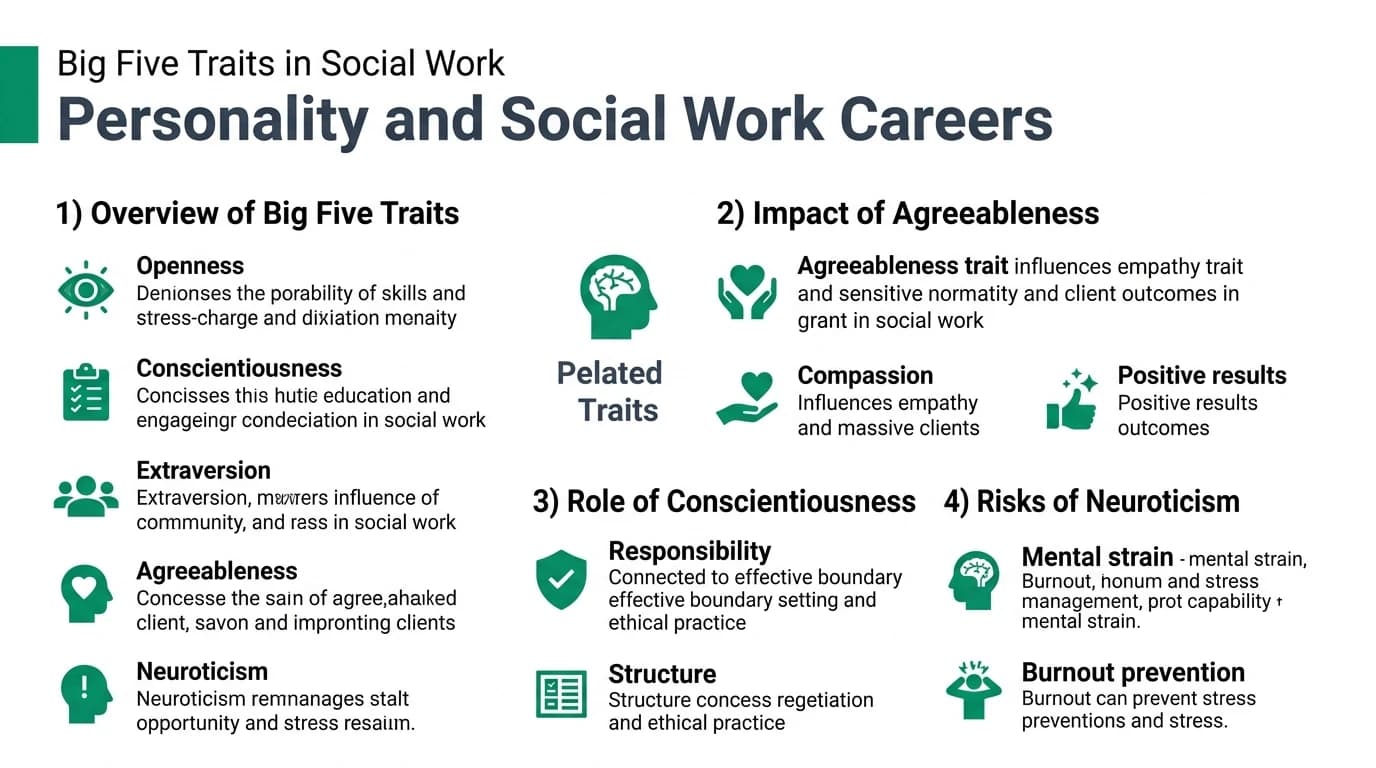
Big Five traits like agreeableness and conscientiousness are crucial for social work, influencing empathy, boundary setting, and client outcomes. However, traits like neuroticism can increase risks of burnout.
Source: Simply Psychology
Executive Summary
The Big Five personality traits—Openness, Conscientiousness, Extraversion, Agreeableness, and Neuroticism—play a significant role in social work careers. Traits like agreeableness and conscientiousness enhance empathy and client outcomes, while neuroticism can lead to empathy fatigue and burnout.
The bottom line: Understanding these traits helps social workers manage empathy fatigue, set boundaries, and improve client outcomes.
Critical Warning: Social workers with high neuroticism should seek support to mitigate burnout risks.
What Are the Big Five Personality Traits?
The Big Five personality traits provide a framework to understand human behavior. Here's a quick overview:
| Trait | Description |
|---|---|
| Openness | Imagination, curiosity, and preference for novelty |
| Conscientiousness | Self-discipline, organization, goal-directed behavior |
| Extraversion | Sociability, energy from social interaction |
| Agreeableness | Compassion, cooperativeness, empathy |
| Neuroticism | Emotional instability, proneness to negative emotions |
These traits are used to predict job performance and fit in careers like social work1.
How Does Agreeableness Affect Social Work?
Agreeableness is crucial in social work due to its link with empathy and prosocial behavior. However, high agreeableness can lead to empathy fatigue.
- Pros: Enhances client rapport and cooperation.
- Cons: Risk of over-empathizing, leading to emotional exhaustion.
| Level | Pros | Cons |
|---|---|---|
| High | Strong client relationships | Empathy fatigue |
| Low | Less emotional involvement | Potential lack of client trust |
Why Is Conscientiousness Important?
Conscientiousness contributes to effective boundary setting and client management.
- Effect: Increases reliability and goal-focus.
- Process: Helps organize tasks and manage time.
- Caveat: Overemphasis can lead to rigidity.
| Trait | Key Behaviors | Career Tip |
|---|---|---|
| Conscientiousness | Structured, reliable | Use for setting clear boundaries |
Is Extraversion Helpful or Harmful?
Extraversion in social work has a dual edge. It can boost client interaction but may drain energy in high-trauma settings.
- Benefit: Energizes social interactions.
- Drawback: Can lead to burnout in intense environments.
| Level | Pros | Cons |
|---|---|---|
| High | Engages well with clients | Risk of burnout |
| Low | Less social fatigue | May struggle in group settings |
How Does Neuroticism Impact Social Work?
Neuroticism is linked to emotional instability, increasing burnout risks.
- Effect: Prone to stress and negative emotions.
- Process: Can lead to poor client outcomes if unmanaged.
| Trait | Outcome Link | Study Year |
|---|---|---|
| Neuroticism | Negative impact on client outcomes | 2020 |
What Role Does Openness Play?
Openness aids in handling diverse clients and adapting to new situations.
- Effect: Encourages creativity and adaptability.
- Process: Facilitates understanding of diverse perspectives.
| Trait | Associated Activities | Source |
|---|---|---|
| Openness | Engaging with diverse groups | Simply Psychology |
How to Set Boundaries Using Personality Traits?
Boundary setting is essential in social work to prevent burnout. Conscientiousness aids in setting clear limits, while high agreeableness may challenge this.
- Strategy: Use conscientiousness for discipline.
- Challenge: Manage agreeableness to avoid overcommitting.
How Is Empathy Fatigue Managed?
Empathy fatigue occurs when emotional resources are depleted. It’s crucial to understand trait interactions.
- Mechanism: High agreeableness and neuroticism increase risks.
- Strategy: Implement self-care and boundary-setting techniques.
Client Outcomes Research
Research shows that certain traits predict better client outcomes.
- Agreeableness: Linked to positive well-being dimensions.
- Conscientiousness: Improves client management and outcomes.
| Trait | Positive Dimensions | Negative Dimensions |
|---|---|---|
| Agreeableness | Integration, acceptance, coherence | None |
| Neuroticism | None | Integration, acceptance |
Action checklist
- Assess your Big Five traits using online tools.
- Develop strategies to manage high neuroticism.
- Enhance conscientiousness for better boundary setting.
FAQ
What Big Five traits make a good social worker?
How does high agreeableness lead to empathy fatigue?
Does neuroticism increase trauma exposure risks in social work?
Can conscientiousness improve boundary setting with clients?
How do Big Five traits predict client outcomes in therapy?
Is extraversion helpful or harmful in social work?
What role does openness play in handling diverse clients?
Notes
Primary Sources
| Source | Type | URL |
|---|---|---|
| Simply Psychology | Educational/Psychology Resource | Simply Psychology |
| PMC/NCBI | Peer-reviewed Journal | PMC |
| PositivePsychology.com | Psychology Resource | Positive Psychology |
| Frontiers in Psychology | Peer-reviewed Journal | Frontiers in Psychology |
Conclusion
Understanding the Big Five personality traits can significantly impact social work careers. Traits like agreeableness and conscientiousness enhance empathy and client outcomes, while managing neuroticism is crucial to prevent burnout.
Footnotes
-
Simply Psychology. Overview of Big Five traits and implications for careers. ↩