lifestyle
Personality and Spirituality: Big Five Traits, Religiosity, Spiritual Experiences, and Meaning-Making Research
Explore how the Big Five personality traits relate to religiosity and spirituality, and discover the research behind these connections.
Quick answer
How do personality traits influence religiosity and spirituality?
Agreeableness and Conscientiousness are key predictors of religiosity, while Openness is linked to spirituality.
Executive Summary
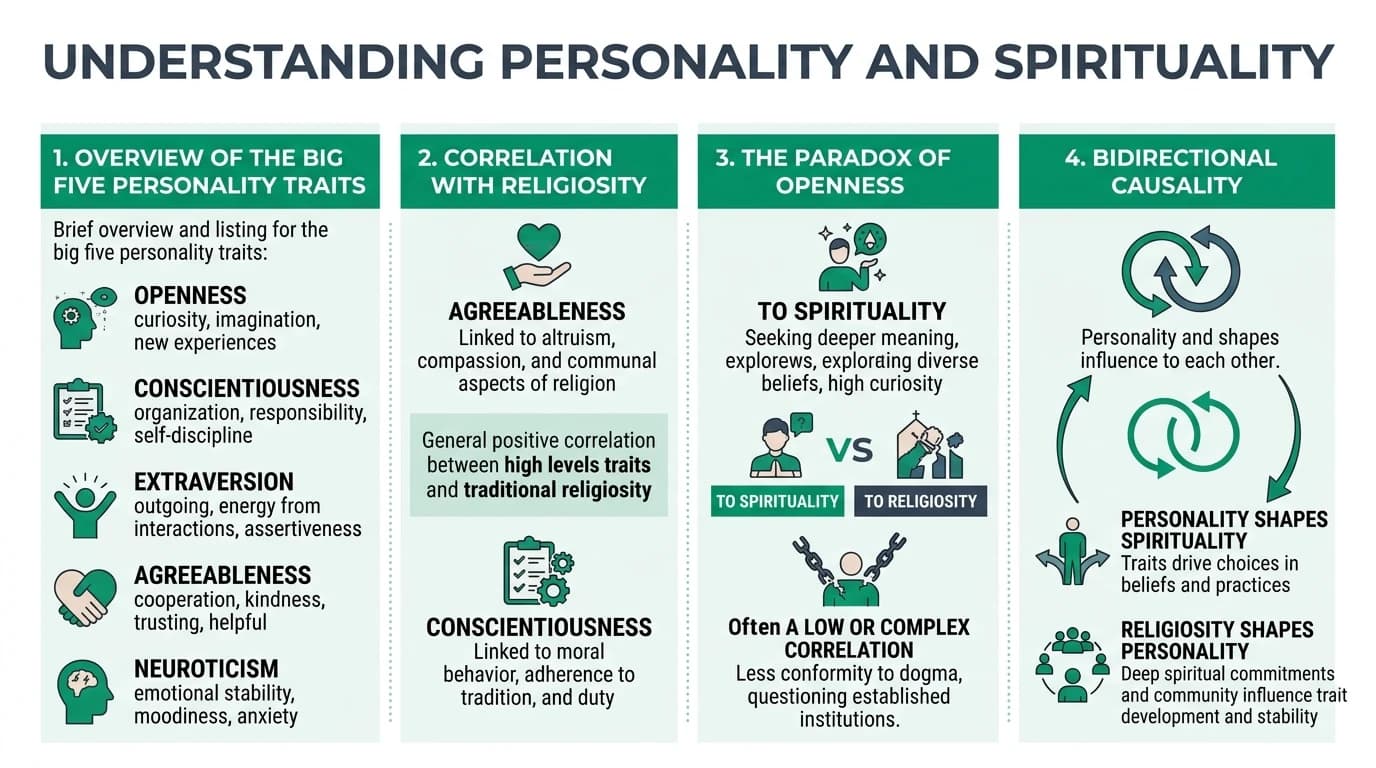
Understanding how personality influences spirituality and religiosity can enrich self-awareness and personal growth. The Big Five personality traits—Agreeableness, Conscientiousness, Openness, Extraversion, and Neuroticism—play distinct roles in shaping religious and spiritual experiences.
The bottom line: Personality traits like Agreeableness and Conscientiousness are closely linked to religiosity, while Openness is more associated with spirituality.
Critical Warning: Cultural context can significantly alter these relationships, so findings may not apply universally.
What Are the Big Five Personality Traits?
The Big Five model is a popular framework for understanding personality. It includes:
- Agreeableness: Compassionate and cooperative nature.
- Conscientiousness: Organized and disciplined behavior.
- Openness: Curiosity and appreciation for new experiences.
- Extraversion: Sociability and assertiveness.
- Neuroticism: Tendency toward emotional instability.
Why use this model? It's widely accepted in psychology for its ability to predict various life outcomes, including religiosity and spirituality.
| Trait | Description | Key Facets |
|---|---|---|
| Agreeableness | Compassionate, cooperative | Altruism, Trust |
| Conscientiousness | Organized, disciplined | Self-discipline, Orderliness |
| Openness | Curious, imaginative | Aesthetics, Ideas |
| Extraversion | Sociable, outgoing | Warmth, Assertiveness |
| Neuroticism | Emotionally unstable | Anxiety, Vulnerability |
How Do Agreeableness and Conscientiousness Relate to Religiosity?
Agreeableness and Conscientiousness are the strongest predictors of religiosity. They influence:
- Religious Engagement: Agreeable individuals are drawn to compassionate religious values.
- Disciplined Practice: Conscientious people often engage in structured religious activities.
Key Takeaways:
- Agreeableness: Predicts compassionate religious values.
- Conscientiousness: Linked to organized religious practice.
| Trait | Religiosity Correlation | Spirituality Correlation |
|---|---|---|
| Agreeableness | Strong positive | Moderate positive |
| Conscientiousness | Moderate positive | Moderate positive |
Why Does Openness Lead to Spirituality but Not Religiosity?
Openness is associated with a love for new experiences and ideas, which often leads to:
- Spiritual Exploration: Open individuals explore diverse spiritual traditions.
- Avoidance of Institutional Religion: They may shy away from structured religious practices.
Important: Openness predicts spirituality positively but has a negative correlation with religiosity.
| Trait | Religiosity | Spirituality |
|---|---|---|
| Openness | Negative | Strong positive |
What About Extraversion and Neuroticism?
These traits show weaker and inconsistent correlations with religiosity:
- Extraversion: May influence social aspects of religious community.
- Neuroticism: Shows minimal correlation with religiosity.
Key Points:
- Extraversion: Social engagement varies by context.
- Neuroticism: Minimal impact on religiosity.
Does Religiosity Shape Personality?
Research suggests a bidirectional relationship:
- Religious Practice: Can increase Agreeableness and, in some contexts, Openness.
- Personality Influence: Personality traits can predict future religious engagement.
Bidirectional Effects:
- Personality → Religiosity: Stronger influence.
- Religiosity → Personality: Weaker influence.
| Direction | Effect | Strength |
|---|---|---|
| Personality → Religiosity | Stronger | Consistent |
| Religiosity → Personality | Weaker | Variable |
How Do Cultural and Demographic Factors Play a Role?
Cultural context significantly affects these relationships:
- Western vs. Non-Western: Findings may differ based on cultural norms.
- Gender Differences: Women often show higher intrinsic religiosity.
Cultural Moderation:
- Western Samples: May not generalize to highly religious societies.
- Gender: Women > Men in religiosity.
| Population | Key Finding | Source |
|---|---|---|
| Sudanese | Women more religious | [1] |
| German | Bidirectional effects | [2] |
| British | Majority non-religious | [3] |
Practical Applications: How Can This Knowledge Be Used?
Understanding personality and religiosity can aid in:
- Career Guidance: Aligning personality with career paths.
- Counseling: Tailoring spiritual guidance to personality traits.
- Workplace Diversity: Designing inclusive policies based on personality-religiosity links.
| Application | Personality Profile | Career/Life Path |
|---|---|---|
| Religious Leadership | High Agreeableness | Ministry, Chaplaincy |
| Spiritual Exploration | High Openness | Yoga Instruction, Meditation Teaching |
Action checklist
- Identify your Big Five personality traits.
- Explore how these traits influence your spiritual or religious life.
- Consider cultural and demographic factors in your spiritual journey.
FAQ
What is the strongest personality predictor of religiosity?
Does openness to experience increase or decrease religiosity?
Can religiosity change personality traits over time?
Are these personality-religiosity relationships the same across cultures?
What is the difference between religiosity and spirituality in personality research?
Does neuroticism correlate with religiosity?
How much of religiosity variance do Big Five traits explain?
Notes
Primary Sources
| Source | Type | URL |
|---|---|---|
| Journal of Personality and Social Psychology | Peer-reviewed | https://onlinelibrary.wiley.com |
| NIH/PubMed Central | Peer-reviewed | https://pubmed.ncbi.nlm.nih.gov |
Conclusion
Personality traits provide valuable insights into how individuals engage with religiosity and spirituality. While Agreeableness and Conscientiousness are linked to religious practices, Openness is more associated with spiritual exploration. Understanding these dynamics can enhance personal growth and well-being.