relationships
Personality Divorce Adjustment Big Five
Practical guide to understand and apply Personality Divorce Adjustment Big Five.
md
title: "Personality and Divorce Adjustment: Big Five Traits, Separation Coping, Co-Parenting Stress, and Post-Divorce Wellbeing Research" description: "Explore how the Big Five personality traits impact divorce risk, coping strategies, and post-divorce wellbeing." slug: "personality-divorce-adjustment-big-five" category: "relationships" keywords: ["Big Five personality divorce", "Neuroticism divorce risk", "Personality traits marital satisfaction", "Conscientiousness post-divorce wellbeing", "Extraversion and divorce"] author: "Editorial Team" datePublished: "2026-03-24" lastUpdated: "2026-03-24" featured: true images:
- url: "/images/guides/personality-divorce-adjustment-big-five.webp" alt: "A couple discussing their relationship with a therapist, highlighting the role of personality traits in divorce." caption: "Understanding personality traits can help navigate divorce and improve co-parenting dynamics." relatedGuides:
- "personality-grief-loss-coping-big-five"
- "personality-conflict-romantic-relationships"
- "personality-resilience-mental-toughness-big-five"
Quick answer
How do Big Five personality traits affect divorce adjustment?
The Big Five traits influence divorce risk, coping, and wellbeing. Neuroticism increases divorce risk, while conscientiousness aids post-divorce adjustment.
Source: Population Europe
Executive Summary
Understanding how personality affects divorce can guide better coping and adjustment. The Big Five traits—neuroticism, extraversion, openness, agreeableness, and conscientiousness—play key roles. Neuroticism often predicts higher divorce risk, while traits like conscientiousness and agreeableness can buffer against stress and aid in co-parenting.
The bottom line: Personality traits significantly impact how individuals handle divorce. Knowing your traits can help tailor coping strategies.
Critical Warning: Personality insights are general. Individual experiences vary. Consider professional support for personalized guidance.
What Are the Big Five Personality Traits?
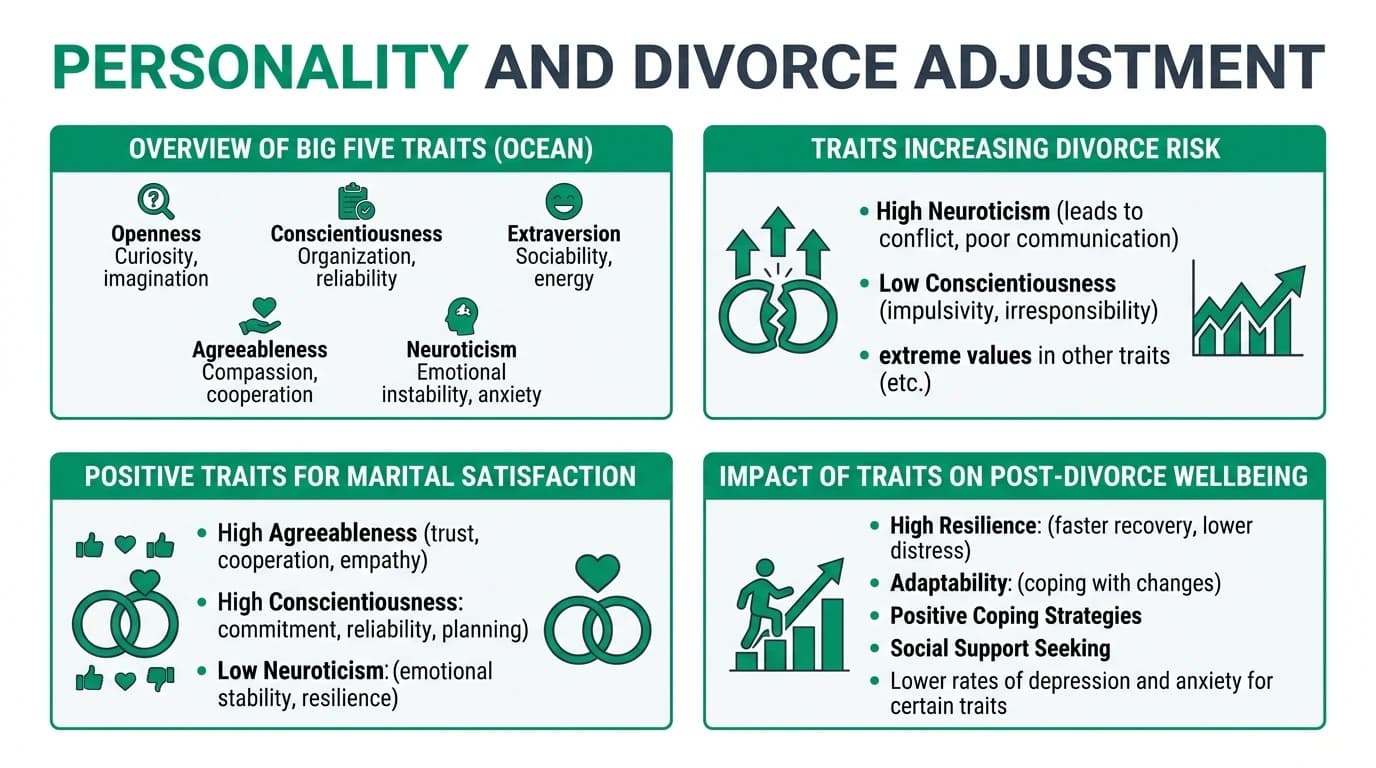
The Big Five traits are a popular model for understanding personality. Here's a quick look:
- Neuroticism: Tendency toward emotional instability.
- Extraversion: Sociability and assertiveness.
- Openness: Curiosity and creativity.
- Agreeableness: Compassion and cooperation.
- Conscientiousness: Organization and reliability.
| Trait | Description |
|---|---|
| Neuroticism | Emotional instability |
| Extraversion | Sociability and assertiveness |
| Openness | Curiosity and creativity |
| Agreeableness | Compassion and cooperation |
| Conscientiousness | Organization and reliability |
Key takeaway: Understanding these traits can help predict divorce risk and coping ability.
How Do Big Five Traits Affect Divorce Risk?
Certain traits have been linked to higher divorce risk:
- Neuroticism: Strongly linked to dissatisfaction and higher divorce odds.
- Extraversion: Elevates risk, consistent across countries.
- Openness: Increases divorce probability, effect may weaken over time.
- Low Agreeableness/Conscientiousness: Associated with poorer marital quality.
| Trait | Effect on Risk | Key Evidence |
|---|---|---|
| Neuroticism | High | Strong dissatisfaction link |
| Extraversion | High | Consistent across countries |
| Openness | Moderate | Effect weakens over time |
| Agreeableness | Low | Poor marital quality |
| Conscientiousness | Low | Poor marital quality |
Important: Neuroticism is a significant predictor of divorce risk. Recognizing this can guide interventions.
How Do Personality Traits Influence Marital Satisfaction?
Personality traits can significantly impact marital satisfaction:
- Neuroticism: Negatively predicts satisfaction.
- Conscientiousness and Extraversion: Positively predict satisfaction.
- Agreeableness: Linked to higher marital satisfaction.
| Trait | Correlation | Variance Explained |
|---|---|---|
| Neuroticism | Negative | 32% variance |
| Conscientiousness | Positive | Enhances satisfaction |
| Extraversion | Positive | Enhances satisfaction |
| Agreeableness | Positive | Enhances satisfaction |
Key takeaway: Positive traits like conscientiousness and agreeableness can enhance marital satisfaction.
Can Personality Traits Change After Divorce?
Divorce can lead to changes in personality traits:
- Neuroticism: Often rises post-divorce, impacting adjustment.
- Baseline Traits: Predict outcomes more than changes.
| Trait | Pre/Post Change | Adjustment Impact |
|---|---|---|
| Neuroticism | Increases | Negative impact |
| Others (Big Five) | Varies | Varies |
Important: While traits can shift, baseline traits are stronger predictors of outcomes.
How Do Personality Traits Affect Co-Parenting Stress?
Traits influence how parents handle co-parenting stress:
- Low Agreeableness: Heightens stress.
- Conscientiousness: Helps manage stress effectively.
| Trait | Stress Impact | Coping Strategy |
|---|---|---|
| Low Agreeableness | High | Enhance cooperation |
| Conscientiousness | Low | Prioritize organization |
Key takeaway: Conscientiousness can be a valuable trait for reducing co-parenting stress.
What Role Does Openness Play in Separation Adjustment?
Openness can influence how individuals adjust to separation:
- Early Marriage: Buffers satisfaction declines.
- Post-Stigma Decline: Influence may weaken.
| Stage | Openness Impact | Outcome |
|---|---|---|
| Early Marriage | Positive | Buffers declines |
| Post-Stigma | Weakens | Reduced influence |
Important: Openness can initially help but may lose impact over time.
How Do Spousal Trait Perceptions Affect Wellbeing?
Perceptions of a partner's traits can impact marital wellbeing:
- Positive Illusions: Perceived higher conscientiousness can sustain wellbeing.
- Trait Discrepancies: Can lead to satisfaction issues.
| Perception Type | Satisfaction Link | Sex Differences |
|---|---|---|
| Positive Discrepancies | High | Beneficial |
| Trait Averages | Moderate | Varies |
Key takeaway: Positive perceptions can enhance relationship quality.
Action checklist
- Identify your Big Five traits.
- Understand how these traits affect your relationships.
- Consider professional guidance for trait-based coping strategies.
FAQ
How does neuroticism affect divorce risk?
Which Big Five trait best predicts marital satisfaction?
Can extraversion lead to higher divorce rates?
Does conscientiousness help with post-divorce coping?
What role does openness play in separation adjustment?
How do personality traits influence co-parenting stress?
Do Big Five traits change after divorce?
Notes
Primary Sources
| Source | Type | URL |
|---|---|---|
| Population Europe | Research Digest | Link |
| ResearchPublish.com | Peer-reviewed PDF | Link |
| PMC | Peer-reviewed | Link |
| UBC Psychology | Peer-reviewed PDF | Link |
| Semantic Scholar | Peer-reviewed | Link |
Conclusion
Personality traits play a crucial role in how individuals experience and adjust to divorce. By understanding the Big Five traits, individuals can better navigate the challenges of divorce and improve their wellbeing.