personality-tests
Personality and Music Preferences: What Your Taste in Music Says About You
Explore how your music preferences reveal your personality traits. Learn about the Big Five traits and their connection to music genres.
Quick answer
What do music preferences reveal about personality?
Music preferences often correlate with the Big Five personality traits, offering insights into traits like Openness and Extraversion.
Executive Summary
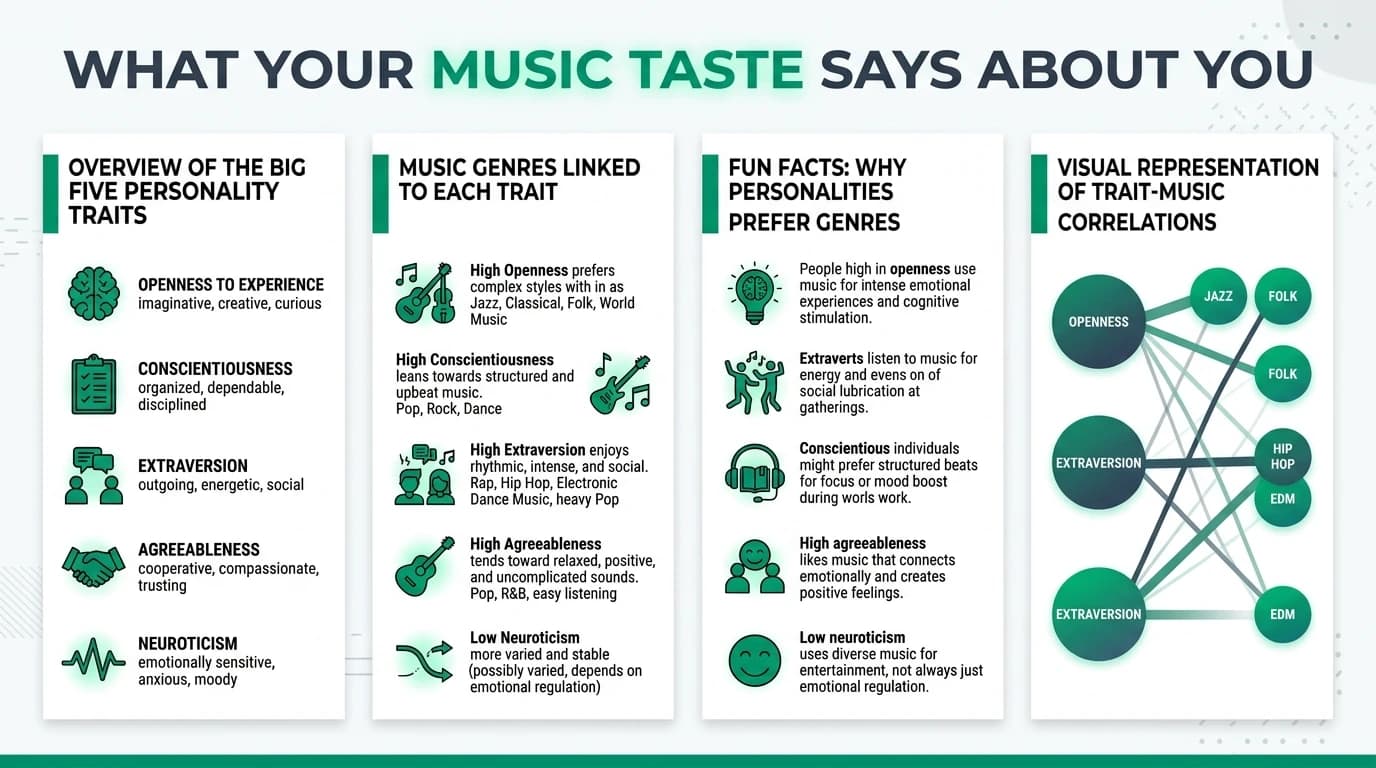
- Your taste in music can reveal a lot about your personality, especially when viewed through the lens of the Big Five traits: Openness, Conscientiousness, Extraversion, Agreeableness, and Neuroticism.
- Different genres resonate with different traits. For example, extraverts may prefer upbeat pop, while those high in Openness might enjoy complex genres like jazz or classical.
The bottom line: Your playlist might be saying more about you than you realize. Understanding these connections can enhance self-awareness and improve your social interactions.
What Are the Big Five Personality Traits?
The Big Five personality traits provide a framework for understanding individual differences. Here's a quick overview:
- Openness: Creativity and curiosity.
- Conscientiousness: Organization and dependability.
- Extraversion: Sociability and enthusiasm.
- Agreeableness: Compassion and cooperation.
- Neuroticism: Emotional instability and moodiness.
| Trait | Description |
|---|---|
| Openness | Imaginative, open to new experiences |
| Conscientiousness | Efficient, organized |
| Extraversion | Outgoing, energetic |
| Agreeableness | Friendly, compassionate |
| Neuroticism | Sensitive, nervous |
How Do These Traits Link to Music Genres?
Each trait tends to align with specific music genres. Here's how:
- Openness: Enjoys complex and novel music like classical and jazz.
- Extraversion: Prefers contemporary, upbeat genres like pop and rap.
- Conscientiousness: Leans towards unpretentious genres like country.
- Agreeableness: Favors mellow and harmonious music.
- Neuroticism: Often drawn to music that matches or alters their mood.
| Trait | Positive Genres | Negative Genres |
|---|---|---|
| Openness | Classical, Jazz | None noted |
| Extraversion | Pop, Rap | None noted |
| Conscientiousness | Country | Rock |
| Agreeableness | Mellow, Unpretentious | None noted |
| Neuroticism | Mood-altering | None noted |
Why Do People Like Different Music Genres?
Music preferences aren't just about personality; they're also influenced by:
- Cultural background: Different cultures have unique musical traditions.
- Emotional needs: Music can fulfill emotional needs, like relaxation or excitement.
- Social identity: Music can be a way to express and connect with social groups.
Important: While personality influences music preference, cultural and situational factors also play significant roles.
What Are the Core Music Preference Dimensions?
Music preferences can be categorized into four core dimensions:
- Reflective & Complex: Classical, jazz.
- Intense & Rebellious: Rock, metal.
- Upbeat & Conventional: Pop, country.
- Energetic & Rhythmic: Rap, dance.
| Dimension | Traits Linked | Example Genres |
|---|---|---|
| Reflective & Complex | Openness | Classical, Jazz |
| Intense & Rebellious | Openness | Rock, Metal |
| Upbeat & Conventional | Extraversion | Pop, Country |
| Energetic & Rhythmic | Extraversion | Rap, Dance |
Does Openness Predict Music Taste?
Yes, Openness to experience is a strong predictor of music preferences. Those high in Openness often enjoy:
- Complex genres: Classical, jazz.
- Novel experiences: Rock, metal.
Effect: Strongest link among the Big Five traits.
How Do Extraversion and Conscientiousness Affect Music Choices?
- Extraversion: Enjoys lively, danceable music like pop and rap.
- Conscientiousness: Prefers structured, soothing music like country.
| Trait | Preferred Genres |
|---|---|
| Extraversion | Pop, Rap |
| Conscientiousness | Country |
How Does Neuroticism Influence Music Enjoyment?
Neurotic individuals often use music to regulate emotions. They may prefer:
- Mood-matching: Music that reflects their current mood.
- Mood-altering: Happy music to lift spirits.
Effect: Emotional reactivity to music is heightened.
Are Music Tastes the Same Worldwide?
While some patterns are consistent globally, cultural influences create variations:
- Universal patterns: Extraversion with pop, Openness with jazz.
- Cultural variations: Local music traditions impact preferences.
| Trait-Music Link | Worldwide Consistency | Evidence |
|---|---|---|
| Extraversion-Pop | Yes | Global studies[1][7] |
| Openness-Jazz | Yes | Global studies[1][7] |
Why Do People Like Intense Music Like Metal?
Intense music appeals to those seeking:
- Emotional intensity: A way to experience strong emotions.
- Novelty and complexity: Satisfies the curiosity of open individuals.
Important: Intense music isn't just about aggression; it's about depth and complexity.
Does Liking Multiple Genres Mean High Openness?
Yes, people who enjoy a wide range of music genres often score high in Openness. They appreciate:
- Variety: Enjoying different styles and sounds.
- Novelty: Seeking new musical experiences.
| Listener Type | Openness Level | Example |
|---|---|---|
| Multi-Genre | High | Enjoys classical and metal |
| Single-Genre | Varies | Focuses on one genre |
Action checklist
- Explore your favorite genres and see which traits they align with.
- Consider taking a music personality test for more insights.
- Share your playlist with friends and discuss your findings.
FAQ
What Big Five personality traits match rock music?
Do introverts prefer different music than extraverts?
Why do open-minded people like jazz or classical?
Does conscientiousness affect music choices?
What music do agreeable people listen to?
How does neuroticism influence music enjoyment?
Are music tastes the same worldwide?
Notes
Primary Sources
| Source | Type | URL |
|---|---|---|
| Journal of Personality and Social Psychology (APA) | Peer-reviewed | Link |
| Wikipedia | Industry summary | Link |
Conclusion
Understanding the link between personality traits and music preferences can offer valuable insights into your own behavior and preferences. Whether you're curating a playlist for a party or just exploring new genres, these insights can enhance your musical journey.