career
Personality and Nursing Healthcare Careers: Big Five Traits, Patient Care, Teamwork, and Burnout Resilience Research
Explore how the Big Five personality traits impact nursing careers, patient care quality, teamwork, and resilience against burnout.
Quick answer
How do Big Five personality traits affect nursing careers?
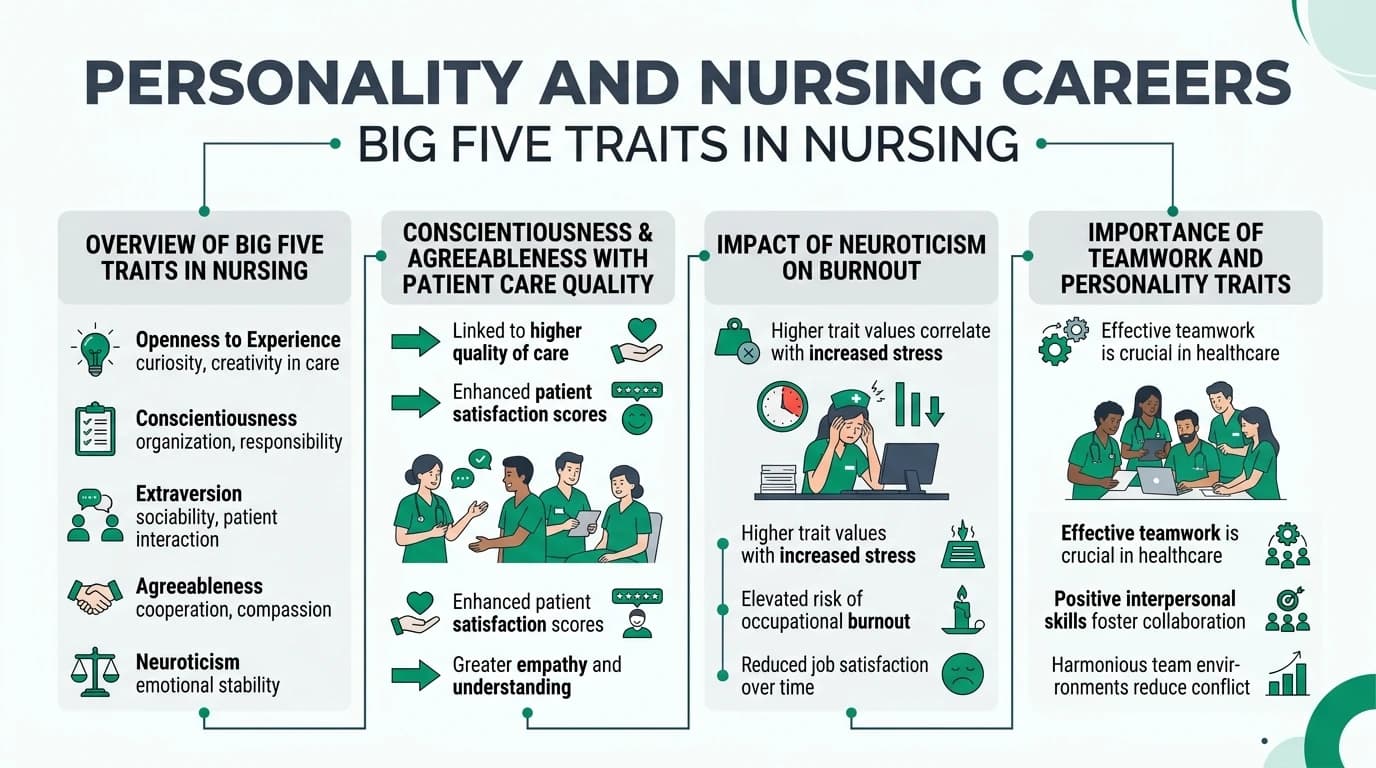
The Big Five traits influence nursing success by impacting patient care quality, teamwork, and resilience against burnout. High Conscientiousness and Agreeableness improve performance and reduce burnout, while high Neuroticism increases risks.
Source: PLOS One
Executive Summary
Understanding the Big Five personality traits—Openness, Conscientiousness, Extraversion, Agreeableness, and Neuroticism—can help predict success and resilience in nursing careers. These traits affect how nurses interact with patients, collaborate with colleagues, and handle stress.
The bottom line: Choosing nursing as a career may depend on your personality traits, with Conscientiousness and Agreeableness being particularly beneficial.
Critical Warning: While personality traits offer insights, they are not definitive predictors of success. Individual assessments and professional guidance are recommended.
What Are the Big Five Personality Traits?
The Big Five personality traits are a widely recognized framework for understanding human behavior. Here's a quick look at each trait:
- Openness: Creativity and willingness to try new things.
- Conscientiousness: Diligence and reliability.
- Extraversion: Sociability and energy.
- Agreeableness: Empathy and cooperation.
- Neuroticism: Emotional instability and sensitivity to stress.
Big Five Means Comparison
| Trait | Nurses | Preceptors |
|---|---|---|
| Openness | 3.72 | 3.80 |
| Conscientiousness | 4.10 | 4.20 |
| Extraversion | 3.65 | 3.70 |
| Agreeableness | 4.01 | 4.10 |
| Neuroticism | 2.54 | 2.40 |
How Do These Traits Affect Patient Care?
Personality traits significantly influence how nurses care for patients. Here's how:
- Conscientiousness: Leads to better organization and attention to detail, enhancing patient safety.
- Agreeableness: Promotes empathy and communication, improving patient satisfaction.
- Neuroticism: Can increase stress and reduce care quality.
Traits vs. Patient Care Quality
| Trait | Effect on Care |
|---|---|
| Conscientiousness | Improved accuracy |
| Agreeableness | Better empathy |
| Neuroticism | Increased errors |
How Do Traits Influence Teamwork?
Effective teamwork is crucial in healthcare settings. Personality traits can either enhance or hinder collaboration:
- Extraversion: Encourages open communication and leadership.
- Agreeableness: Fosters a supportive team environment.
- Neuroticism: May lead to conflicts and misunderstandings.
Teamwork and Traits
| Trait | Impact on Teamwork |
|---|---|
| Extraversion | Positive leadership |
| Agreeableness | Strong collaboration |
| Neuroticism | Potential conflicts |
Can Personality Predict Burnout Resilience?
Burnout is a common issue in nursing, and personality traits can play a role in resilience:
- Conscientiousness: Provides structure and coping strategies.
- Agreeableness: Encourages seeking support.
- Neuroticism: Increases vulnerability to burnout.
Burnout Correlation
| Trait | Correlation with Burnout |
|---|---|
| Conscientiousness | Negative (protective) |
| Agreeableness | Negative (supportive) |
| Neuroticism | Positive (risk factor) |
What Traits Are Best for Nursing Preceptors?
Nursing preceptors guide new nurses, and certain traits are more beneficial:
- Conscientiousness: Ensures thorough training.
- Agreeableness: Builds trust and rapport.
- Extraversion: Facilitates effective communication.
Preceptor Trait Rankings
| Trait | Importance for Preceptors |
|---|---|
| Conscientiousness | High |
| Agreeableness | High |
| Extraversion | Moderate |
How Do Traits Affect Work-Life Balance?
Balancing work and personal life is essential for nurses. Personality traits can influence this balance:
- Conscientiousness: May lead to work neglect due to overcommitment.
- Extraversion: Supports maintaining social connections.
- Neuroticism: Can disrupt personal life due to stress.
Work-Life Balance Predictors
| Trait | Effect on Balance |
|---|---|
| Conscientiousness | Potential work neglect |
| Extraversion | Better social life |
| Neuroticism | Increased stress |
Key Takeaways
- Conscientiousness and Agreeableness are key for patient care and teamwork.
- Extraversion aids in communication and leadership.
- Neuroticism poses risks for burnout and stress.
Action checklist
- Assess your personality traits using a Big Five inventory.
- Identify areas for development to enhance nursing skills.
- Seek roles that align with your strengths and traits.
FAQ
Which Big Five trait is highest in nurses?
How does high Neuroticism affect nursing burnout?
Do Conscientious nurses excel in patient care?
What personality traits make good nursing preceptors?
Can personality predict compassion fatigue in nurses?
How do Agreeableness and teamwork relate in healthcare?
What Big Five profile fits nursing students best?
Notes
Primary Sources
| Source | Type | URL |
|---|---|---|
| PLOS One | Journal | Link |
| PMC | Article | Link |
Conclusion
Understanding the Big Five personality traits can enhance nursing career success by improving patient care, teamwork, and resilience against burnout. By aligning roles with personality strengths, nurses can thrive in their careers.