career
Personality and Software Engineering Careers: Big Five Traits, Coding Collaboration, Debugging Focus, Remote Teamwork, and Tech Leadership Research
Explore how the Big Five personality traits influence software engineering careers, including coding collaboration, debugging focus, remote teamwork, and tech leadership.
Quick answer
How do Big Five personality traits affect software engineering careers?
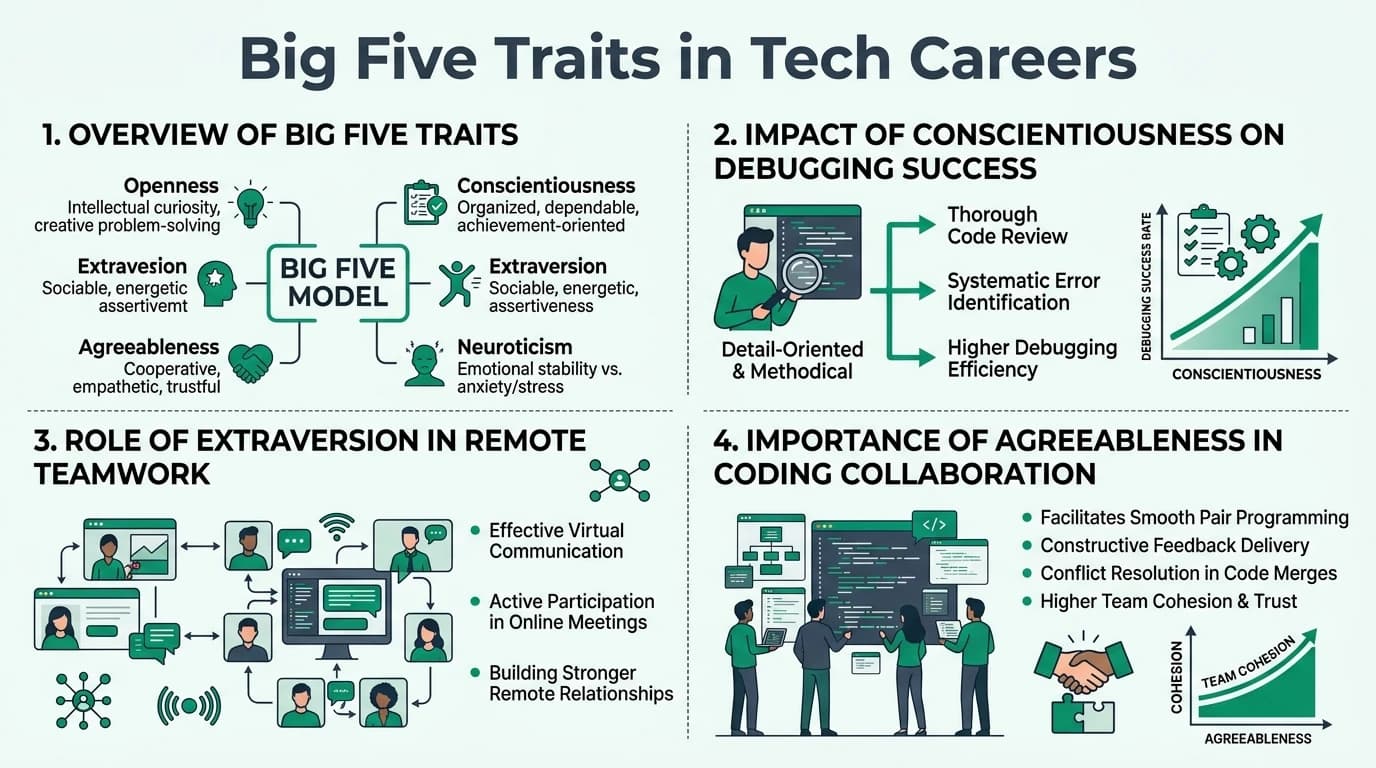
The Big Five traits—openness, conscientiousness, extraversion, agreeableness, and neuroticism—impact software engineering by influencing collaboration, focus, teamwork, and leadership. Conscientiousness is key for debugging, extraversion aids remote teamwork, and agreeableness enhances coding collaboration.
Source: Wiley Online Library
Executive Summary
Understanding how personality traits like the Big Five influence software engineering can help in career planning and team building. Traits such as conscientiousness and extraversion play crucial roles in debugging and remote teamwork.
The bottom line:
Important: Personality traits can guide career paths and improve team dynamics in tech environments.
What are the Big Five Personality Traits?
The Big Five model, often remembered by the acronym OCEAN, includes:
- Openness to Experience: Imagination, curiosity.
- Conscientiousness: Reliability, organization.
- Extraversion: Sociability, assertiveness.
- Agreeableness: Cooperation, empathy.
- Neuroticism: Emotional stability.
| Trait | High Score Strength | Low Score Risk | Example Role |
|---|---|---|---|
| Openness | Creativity, adaptability | Resistance to change | Innovation roles |
| Conscientiousness | Task performance, reliability | Impulsivity | Debugging, leadership |
| Extraversion | Teamwork, communication | Overwhelm in solitude | Remote collaboration |
| Agreeableness | Team climate, cooperation | Conflict avoidance | Pair programming |
| Neuroticism | Emotional awareness | Stress under pressure | High-pressure debugging |
How Does Conscientiousness Affect Debugging?
Conscientiousness is crucial for debugging due to its focus on detail and reliability.
- Effect: Enhances sustained focus.
- Process: Methodical approach to problem-solving.
- Caveat: May lead to rigidity in creative tasks.
| Conscientiousness Level | Performance | Study Insight |
|---|---|---|
| High | Excellent debugging | Linked to higher task performance and reliability |
| Medium | Adequate | Balances focus with adaptability |
| Low | Inconsistent | Prone to errors and oversight |
Does Extraversion Help with Remote Software Teamwork?
Extraversion aids in virtual collaboration by enhancing communication and team dynamics.
- Effect: Stronger team bonds.
- Process: Active participation in virtual meetings.
- Caveat: Needs balance to avoid burnout.
| Trait | Remote Fit | Rationale |
|---|---|---|
| Extraversion | High | Facilitates communication and engagement |
| Introversion | Medium | Requires structured interaction |
How Do Agreeableness and Team Climate Interact in Dev Teams?
Agreeableness fosters a positive team climate, crucial for collaborative tasks like pair programming.
- Effect: Improved team morale.
- Process: Encourages empathy and cooperation.
- Caveat: May avoid necessary conflicts.
| High Trait | Pros | Cons |
|---|---|---|
| Agreeableness | Enhanced teamwork | Potential conflict avoidance |
| Openness | Innovative solutions | Resistance to routine |
Can Openness to Experience Improve Learning Programming?
Openness is linked to creativity and adaptability, aiding in learning new programming languages and systems.
- Effect: Quick adaptation to new technologies.
- Process: Embraces novel approaches.
- Caveat: May struggle with routine tasks.
Is Neuroticism a Barrier for Software Engineers?
Neuroticism can impact stress management, crucial in high-pressure environments like software debugging.
- Effect: Heightened emotional awareness.
- Process: Can lead to stress under pressure.
- Caveat: May hinder performance in stressful situations.
What Personality Traits Make a Good Tech Leader?
Traits like conscientiousness and emotional intelligence are vital for effective tech leadership.
- Effect: Strong decision-making.
- Process: Balances empathy with authority.
- Caveat: Requires ongoing emotional regulation.
| Trait | Leadership Prediction | Mediation Factor |
|---|---|---|
| Conscientiousness | High | Emotional intelligence |
| Extraversion | Moderate | Communication skills |
How Do Big Five Traits Influence Coding Collaboration?
The Big Five traits shape how developers interact and collaborate on coding projects.
- Conscientiousness: Enhances reliability.
- Extraversion: Boosts team interaction.
- Agreeableness: Promotes harmony.
| Trait | Impact on Performance | Evidence Source |
|---|---|---|
| Conscientiousness | High | Wiley Online Library |
| Extraversion | Moderate | Systematic Literature Review |
FAQ
What are the Big Five personality traits in software development?
The Big Five traits—openness, conscientiousness, extraversion, agreeableness, and neuroticism—impact various aspects of software development, from coding collaboration to leadership. 1
How does conscientiousness affect debugging in coding?
Conscientiousness enhances focus and reliability, making it crucial for effective debugging. 2
Does extraversion help with remote software teamwork?
Yes, extraversion enhances communication and team dynamics in remote settings. 3
Which personality traits make a good tech leader?
Conscientiousness and emotional intelligence are key for tech leadership. 1
How do Big Five traits influence coding collaboration?
Traits like conscientiousness and agreeableness enhance reliability and teamwork in coding projects. 3
Is neuroticism a barrier for software engineers?
Neuroticism can lead to stress under pressure, impacting performance in high-stakes environments. 1
Can openness to experience improve learning programming?
Yes, openness aids in adapting to new technologies and creative problem-solving. 4
Notes
Primary Sources
| Source | Type | URL |
|---|---|---|
| PMC (NCBI) | Peer-reviewed | Link |
| Missouri S&T Scholars' Mine | Academic paper | Link |
| Wiley Online Library | Peer-reviewed | Link |
| NSF PAR | Conference paper | Link |
Conclusion
The Big Five personality traits offer valuable insights into software engineering careers, influencing everything from coding collaboration to leadership. Understanding these traits can enhance team dynamics and personal career paths.