personality-tests
Big Five Personality Traits and University Student Adjustment: Academic Stress, Social Belonging, and First-Year Success
Explore how the Big Five personality traits influence university students' academic stress, social belonging, and first-year success.
Quick answer
How do Big Five personality traits affect university student adjustment?
The Big Five traits—Openness, Conscientiousness, Extraversion, Agreeableness, and Neuroticism—impact academic stress, social belonging, and first-year success. Conscientiousness is linked to academic success, while Neuroticism increases stress.
Source: PMC/NIH
Executive Summary
The Big Five personality traits significantly influence university students' experiences, affecting academic stress, social belonging, and success. Conscientiousness is a strong predictor of academic achievement, while Neuroticism often leads to increased stress.
The bottom line: Understanding these traits can help students, educators, and parents develop strategies for successful university adjustment.
Critical Warning: While personality traits can predict trends, individual experiences may vary. Consult professionals for personalized advice.
What Are the Big Five Personality Traits?
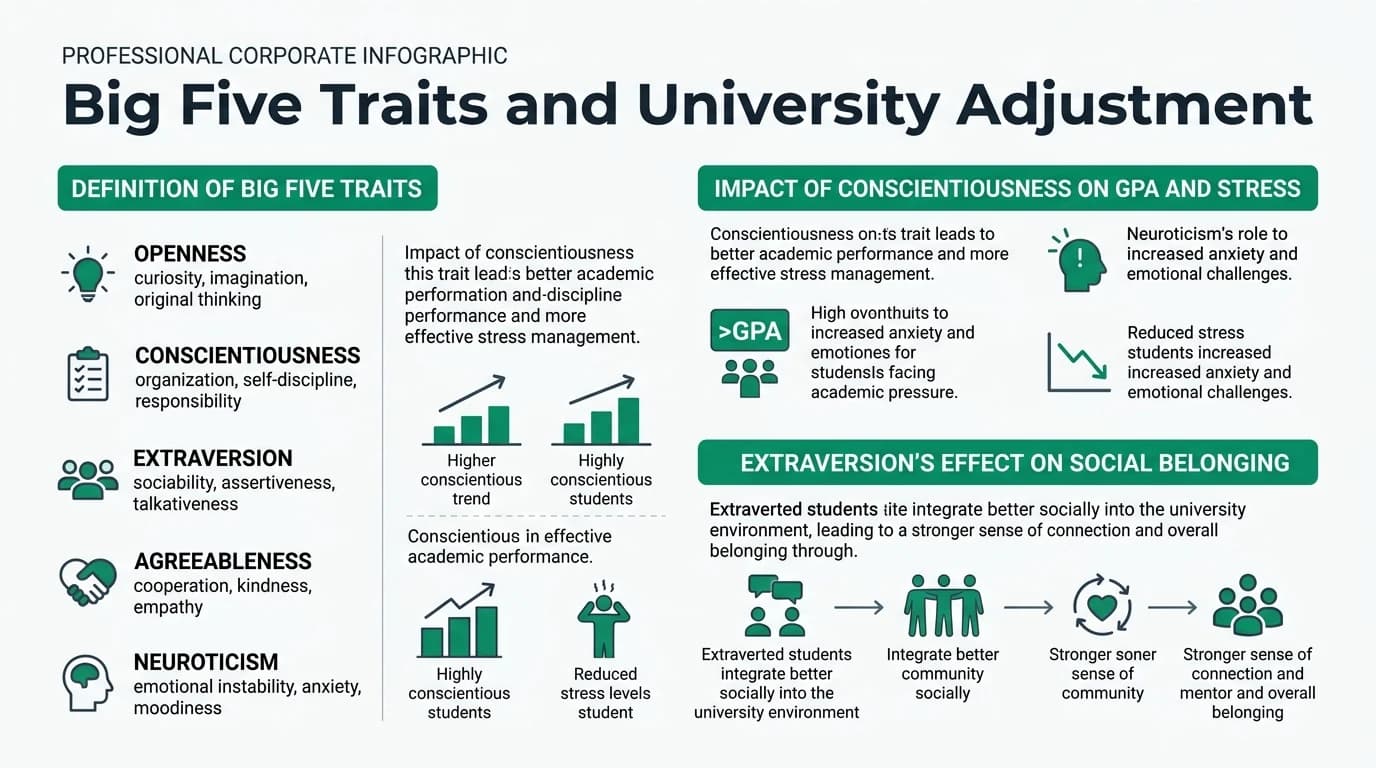
The Big Five personality traits are a widely accepted model for understanding human personality. Here's a quick look:
- Openness: Curiosity and creativity.
- Conscientiousness: Discipline and organization.
- Extraversion: Sociability and energy.
- Agreeableness: Cooperation and empathy.
- Neuroticism: Emotional instability and stress proneness.
These traits help predict how students adjust to university life, impacting everything from GPA to social connections1.
How Does Conscientiousness Affect Academic Success?
Conscientiousness is a key predictor of academic success. Here's how it helps:
- GPA Impact: Strongest link to high grades.
- Motivation: Boosts intrinsic drive.
- Organization: Encourages effective study habits.
| Trait | GPA Impact | Motivation Link |
|---|---|---|
| Conscientiousness | High | Intrinsic |
| Openness | Moderate | Deep processing |
Students with high Conscientiousness often achieve better academic outcomes2.
Why Does Neuroticism Increase Academic Stress?
Neuroticism can lead to higher stress levels. Here's why:
- Stress Symptoms: Increases vulnerability.
- Emotional Instability: Heightens anxiety.
- Coping Challenges: Struggles with stress management.
| Trait | Stress Prediction | Variance Explained |
|---|---|---|
| Neuroticism | Positive | High |
| Extraversion | Negative | Moderate |
Understanding this trait can help develop better coping strategies3.
What Role Does Extraversion Play in Social Belonging?
Extraversion enhances social belonging in university settings:
- Social Networks: Builds connections easily.
- Energy Levels: Engages in activities.
- Adjustment: Facilitates quicker adaptation.
| Trait | Social Impact | Completion Rate Link |
|---|---|---|
| Extraversion | High | Positive |
| Agreeableness | Moderate | Moderate |
Extraverted students often feel more connected and supported4.
How Does Openness to Experience Affect GPA?
Openness influences learning styles and academic performance:
- Curiosity: Encourages exploration.
- Creativity: Enhances problem-solving.
- Deep Processing: Links to higher grades.
| Trait | Learning Style Influence | GPA Impact |
|---|---|---|
| Openness | High | Moderate |
| Conscientiousness | Moderate | High |
Students who are open to new experiences often perform well academically1.
How Does Agreeableness Influence University Adjustment?
Agreeableness plays a role in both social and academic outcomes:
- Cooperation: Facilitates teamwork.
- Empathy: Enhances peer relationships.
- Conflict Resolution: Reduces interpersonal issues.
| Trait | Social Adjustment | Academic Outcome |
|---|---|---|
| Agreeableness | High | Positive |
| Neuroticism | Low | Negative |
Agreeable students often experience smoother transitions to university life4.
How Does Resilience Mediate Stress?
Resilience can buffer the effects of personality traits on stress:
- Protective Factor: Reduces stress symptoms.
- Adaptive Strategies: Encourages proactive coping.
- Trait Interaction: Mediates negative impacts.
| Personality Factor | Resilience Type | Stress Effect |
|---|---|---|
| Neuroticism | Reactive | Positive |
| Conscientiousness | Proactive | Negative |
Building resilience can help students manage stress more effectively3.
What Predicts First-Year Success?
First-year success is influenced by a combination of traits:
- Conscientiousness: Strong predictor of GPA.
- Openness: Supports learning adaptation.
- Extraversion: Enhances social integration.
| Trait Combo | Success Metric | Example % Variance |
|---|---|---|
| High Conscientiousness | GPA | 14% |
| Openness & Extraversion | Social Belonging | Moderate |
Understanding these predictors can guide students toward successful university adjustment12.
Action checklist
- Identify your dominant personality traits.
- Develop strategies to leverage strengths and mitigate weaknesses.
- Seek support and resources tailored to your personality profile.
FAQ
How does Conscientiousness help first-year college students?
Conscientiousness helps by promoting discipline and organization, leading to better academic performance and lower stress levels. Source
Why does Neuroticism increase academic stress?
Neuroticism increases stress due to emotional instability and heightened anxiety, making it harder to cope with university challenges. Source
Can personality traits predict university dropout rates?
Yes, traits like Conscientiousness and Neuroticism can influence dropout rates by affecting academic success and stress levels. Source
What role does Extraversion play in social belonging?
Extraversion enhances social belonging by promoting active engagement and building strong social networks. Source
How does Openness to experience affect GPA?
Openness supports higher GPA by fostering curiosity and deep learning styles. Source
Are Big Five traits linked to motivation in students?
Yes, traits like Conscientiousness are linked to intrinsic motivation, enhancing academic outcomes. Source
Which personality traits buffer against college stress?
Traits like Conscientiousness and resilience can buffer against stress by promoting proactive coping strategies. Source
Notes
Primary Sources
| Source | Type | URL |
|---|---|---|
| St. John's University Scholar | Peer-reviewed thesis | Link |
| PMC/NIH | Peer-reviewed article | Link |
| PMC/NIH | Peer-reviewed article | Link |
| JOOUST Institutional Repository | University research | Link |
Conclusion
The Big Five personality traits play a crucial role in shaping university students' experiences. By understanding these traits, students can enhance their academic and social outcomes.
Footnotes
-
St. John's University Scholar, Big Five on motivation, GPA variance (14%), learning styles. ↩ ↩2 ↩3
-
PMC/NIH, Traits predicting grades; Conscientiousness strongest. ↩ ↩2
-
PMC/NIH, Resilience mediation, Neuroticism-stress links (2021). ↩ ↩2
-
JOOUST Institutional Repository, Social adjustment, trait impacts on completion. ↩ ↩2