career
Personality and Veterinary Careers: Big Five Traits in Animal Care
Explore how Big Five personality traits impact veterinary careers, focusing on compassion fatigue, euthanasia stress, client communication, and clinical decision-making.
Quick answer
How do Big Five traits affect veterinary professionals?
Neuroticism increases stress and burnout risk; Conscientiousness aids resilience; low Extraversion and Agreeableness link to burnout; Openness fosters creativity.
Source: PubMed
Executive Summary
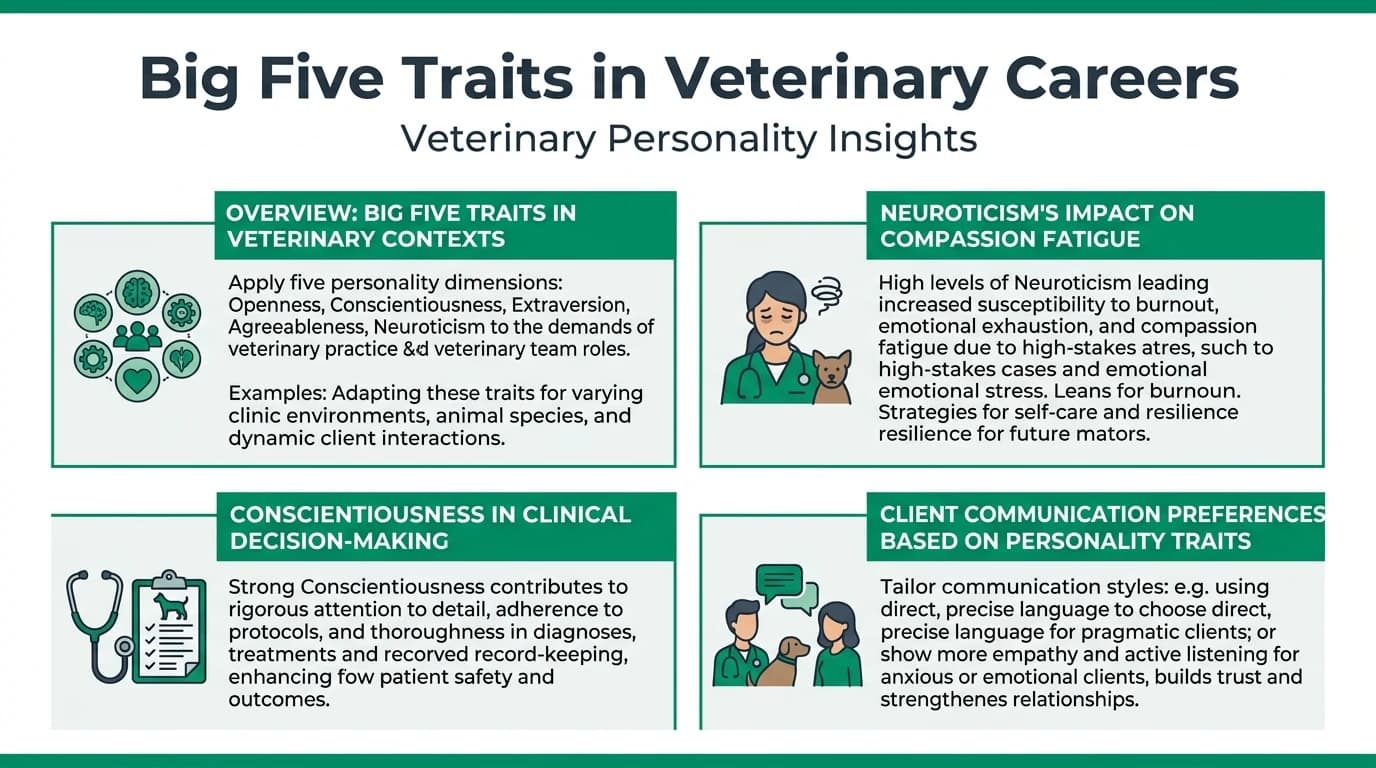
The Big Five personality traits—Openness, Conscientiousness, Extraversion, Agreeableness, and Neuroticism—play a crucial role in veterinary careers. These traits influence how veterinarians handle stress, communicate with clients, and make clinical decisions. Understanding these traits can help in managing compassion fatigue and euthanasia stress.
The bottom line: Personality traits significantly impact veterinary professionals' well-being and job performance.
Critical Warning: Associations are correlational, not causal; individual results vary. Consult professionals for mental health support.
What Are the Big Five Personality Traits?
The Big Five traits are:
- Openness: Creativity and willingness to try new things.
- Conscientiousness: Organization and dependability.
- Extraversion: Sociability and assertiveness.
- Agreeableness: Compassion and cooperation.
- Neuroticism: Emotional instability and anxiety.
These traits shape how veterinarians interact with their environment and manage stress.
| Trait | Description |
|---|---|
| Openness | Creative, open to new experiences |
| Conscientiousness | Organized, reliable |
| Extraversion | Outgoing, energetic |
| Agreeableness | Friendly, compassionate |
| Neuroticism | Anxious, emotionally volatile |
How Does Neuroticism Impact Veterinary Professionals?
Neuroticism is linked to:
- Stress Vulnerability: Increased emotional reactivity.
- Burnout Risk: Higher likelihood of compassion fatigue.
- Euthanasia Stress: Greater emotional toll during tough decisions.
| Impact | Description |
|---|---|
| Stress Vulnerability | Higher emotional reactivity and anxiety |
| Burnout Risk | Increased risk of compassion fatigue |
| Euthanasia Stress | Greater emotional toll during euthanasia |
Can Conscientiousness Reduce Euthanasia Stress?
Conscientiousness helps by:
- Improved Hygiene: Better adherence to protocols.
- Resilience: Enhanced ability to cope with stress.
- Decision-Making: More structured approach to clinical decisions.
| Benefit | Description |
|---|---|
| Improved Hygiene | Adherence to protocols and cleanliness |
| Resilience | Better stress management |
| Decision-Making | Structured and methodical approach |
How Do Extraversion and Agreeableness Affect Client Communication?
These traits influence:
- Client Interaction: More effective communication.
- Team Dynamics: Better collaboration with colleagues.
- Burnout Prevention: Reduced risk through social support.
| Aspect | Extraversion Effect | Agreeableness Effect |
|---|---|---|
| Client Interaction | Better communication | Increased empathy |
| Team Dynamics | Enhanced teamwork | Cooperative behavior |
| Burnout Prevention | Social support | Reduced conflict |
Why Do Veterinary Professionals Score High on Perfectionism?
Perfectionism is common due to:
- High Standards: Desire for excellence in care.
- Imposter Syndrome: Fear of not meeting expectations.
- Mental Health Risks: Linked to stress and burnout.
| Cause | Description |
|---|---|
| High Standards | Striving for excellence |
| Imposter Syndrome | Fear of inadequacy |
| Mental Health Risks | Increased stress and burnout |
What Strategies Help Neurotic Vets Manage Workplace Stress?
Effective strategies include:
- Mindfulness Practices: Reducing anxiety through meditation.
- Boundary Setting: Limiting work-related stressors.
- Support Networks: Building strong social connections.
| Strategy | Description |
|---|---|
| Mindfulness Practices | Meditation and relaxation techniques |
| Boundary Setting | Limiting work-related stressors |
| Support Networks | Building strong social connections |
How Are Big Five Traits Linked to Veterinary Burnout Rates?
Traits associated with burnout:
- Low Extraversion: Increased burnout odds.
- High Neuroticism: Greater emotional distress.
- Perfectionism: Elevated psychological distress.
| Trait | Burnout Risk |
|---|---|
| Low Extraversion | Higher burnout odds |
| High Neuroticism | Greater emotional distress |
| Perfectionism | Elevated psychological distress |
Valued Vet Qualities: Client vs. Vet Preferences
Clients and vets value different traits:
- Clients: Prefer emotional stability and trustworthiness.
- Vets: Value openness and creativity for problem-solving.
| Trait | Client Value | Vet Value |
|---|---|---|
| Emotional Stability | High | Moderate |
| Openness | Moderate | High |
Action checklist
- Identify your dominant personality traits.
- Develop strategies to manage stress based on your traits.
- Enhance communication skills through training.
FAQ
How does neuroticism impact veterinary client communication?
What Big Five traits predict compassion fatigue in vets?
Can conscientiousness reduce euthanasia stress for veterinarians?
Why do veterinary professionals score high on perfectionism?
How does extraversion affect veterinary team dynamics?
What personality traits do clients prefer in veterinarians?
Does openness to experience help with clinical decision-making in vets?
Notes
Primary Sources
| Source | Type | URL |
|---|---|---|
| PubMed (NIH) | Peer-reviewed | Link |
| Frontiers in Veterinary Science | Peer-reviewed | Link |
Conclusion
Understanding the Big Five personality traits can greatly impact veterinary professionals' ability to manage stress, communicate effectively, and make sound clinical decisions. By recognizing and leveraging their traits, veterinarians can improve their work-life balance and job satisfaction.