personal-development
Personality and Volunteering: Who Gives Their Time and Why
Explore how personality traits influence volunteering. Discover which Big Five traits are linked to altruism and what draws people to volunteer work.
Quick answer
What personality traits predict volunteering?
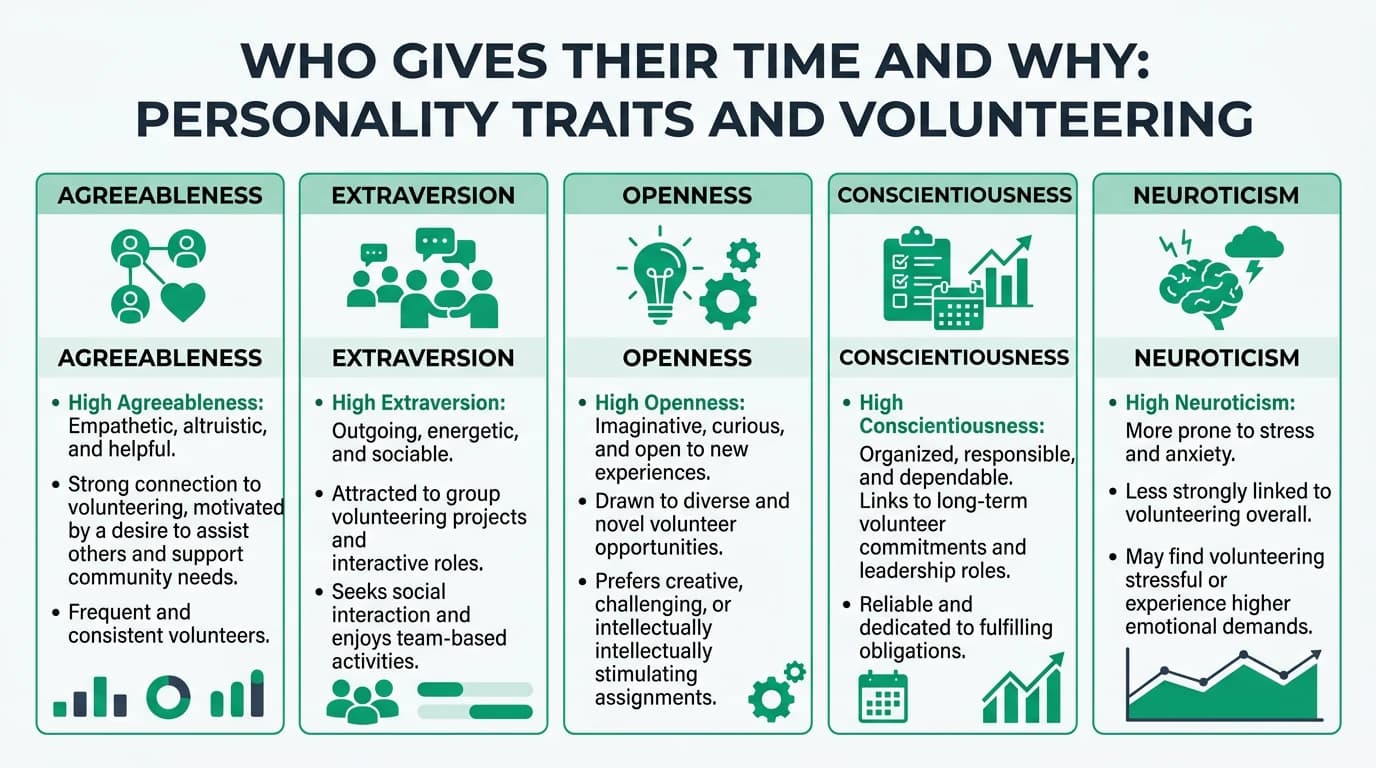
Agreeableness and extraversion are the strongest predictors of volunteering, with openness also playing a role. These traits influence how people engage in altruistic activities.
Source: Journal of Personality
Executive Summary
Volunteering is influenced by personality traits, especially agreeableness and extraversion. These traits make people more likely to engage in helping behaviors. Understanding these connections can help nonprofits recruit effectively and volunteers find fulfilling roles.
The bottom line: Personality plays a significant role in volunteering, but it's one of many factors. Motivation and role fit are also crucial.
Critical: While personality predicts volunteering tendencies, individual circumstances and motivations are equally important.
What is the Big Five Framework?
The Big Five personality traits are a widely used model in psychology to describe human personality. These traits are:
- Openness: Curiosity and willingness to try new experiences.
- Conscientiousness: Organization and dependability.
- Extraversion: Sociability and enthusiasm.
- Agreeableness: Compassion and cooperation.
- Neuroticism: Emotional sensitivity and anxiety.
Big Five Traits and Volunteering Outcomes
| Trait | Volunteering Likelihood | Charitable Giving | Best Volunteer Roles |
|---|---|---|---|
| Agreeableness | High | Very High | Community support, peer mentoring |
| Extraversion | High | Moderate-High | Event coordination, public-facing roles |
| Openness | Moderate-High | Moderate-High | Diverse projects, new initiatives |
| Conscientiousness | Mixed | Low-Moderate | Detail-oriented, structured roles |
| Neuroticism | Low | Low | Flexible, low-pressure roles |
Why Do Agreeable People Volunteer More?
Agreeable individuals are naturally compassionate and trusting. This makes them more inclined to help others and engage in volunteer activities.
- Compassion: Drives the desire to help.
- Trust: Encourages collaboration and teamwork.
- Commitment: Leads to consistent volunteering.
Key Takeaways
- Strong Predictor: Agreeableness is a strong predictor of volunteering.
- Mechanism: Compassion and trust fuel altruistic behavior.
- Role Fit: Best suited for roles involving teamwork and support.
How Does Extraversion Affect Volunteering?
Extraverts thrive in social environments and enjoy interacting with others, making them ideal for roles that require engagement and communication.
- Social Interaction: Prefers roles with people.
- Energy: High energy levels suit active roles.
- Networking: Builds connections easily.
Volunteer Role Matching by Personality Type
| Role Type | Best Suited Traits | Example Roles |
|---|---|---|
| Public-facing/Events | Extraversion, Agreeableness | Event coordinator, greeter, fundraiser |
| Behind-the-scenes/Admin | Conscientiousness, Openness | Data entry, grant writing, inventory |
| Direct service/Mentoring | Agreeableness, Conscientiousness | Tutor, mentor, counselor support |
Openness and Novel Experiences
People high in openness seek new experiences and enjoy learning, making them drawn to diverse and innovative volunteer opportunities.
- Adaptability: Enjoys change and variety.
- Creativity: Brings new ideas to projects.
- Enthusiasm: Motivated by novel experiences.
Personality Trait Definitions and Volunteer Implications
| Trait | Definition | Volunteer Strength |
|---|---|---|
| Openness | Seeks new experiences, ideas, and perspectives | Adaptability, creativity, enthusiasm |
| Conscientiousness | Organized, dutiful, disciplined | Reliability, attention to detail |
| Extraversion | Outgoing, social, energetic | Enthusiasm, networking |
| Agreeableness | Compassionate, trusting, cooperative | Empathy, teamwork |
| Neuroticism | Emotionally sensitive, prone to stress | Empathy, awareness of others' struggles |
Conscientiousness and Duty
Conscientious individuals are reliable and organized, but their impact on volunteering is mixed. They excel in structured environments but may not always seek out volunteer work.
- Reliability: Ensures tasks are completed.
- Organization: Good for detail-oriented roles.
- Challenge: May prefer routine over spontaneity.
Personality Traits and Donation Behavior
| Trait | Time Donation (Volunteering) | Money Donation | Strongest Effect |
|---|---|---|---|
| Agreeableness | Strong positive | Very strong positive | Money donation |
| Extraversion | Strong positive | Moderate positive | Volunteering |
| Openness | Moderate positive | Moderate positive | Balanced |
| Conscientiousness | Weak/Mixed | Weak negative | Weak overall |
| Neuroticism | Negative | Negative | Consistent negative |
Neuroticism and Emotional Barriers
Neuroticism often correlates with less volunteering due to stress and emotional strain. However, supportive environments can help high-neuroticism individuals participate.
- Stress Sensitivity: Limits availability for volunteering.
- Emotional Awareness: Can empathize with others' struggles.
- Support Needs: Requires flexible, low-pressure opportunities.
How Can Nonprofits Use Personality Science?
Nonprofits can tailor recruitment messages to attract volunteers whose personalities align with specific roles, improving retention and satisfaction.
- Identify Traits: Match roles to personality profiles.
- Craft Messaging: Appeal to specific traits in job descriptions.
- Role Matching: Place volunteers in roles that fit their strengths.
Personality-Based Recruitment Messaging
| Personality Type | Core Motivation | Effective Message |
|---|---|---|
| High Agreeableness | Helping others, compassion | "Make a real difference in people's lives" |
| High Extraversion | Social connection, teamwork | "Join a community and meet new people" |
| High Openness | Novel experiences, learning | "Explore new communities and gain diverse experiences" |
| High Conscientiousness | Duty, accomplishment | "Help us achieve important goals with precision" |
| Low Neuroticism | Stability, manageable stress | "Flexible opportunities at your own pace" |
Action checklist
- Identify personality traits that align with volunteer roles.
- Craft recruitment messages that appeal to specific traits.
- Match volunteers to roles based on personality preferences.
FAQ
What is the Big Five personality model?
Why are extraverts more likely to volunteer?
Does agreeableness predict charitable giving?
Can introverts be good volunteers?
How does neuroticism affect volunteering?
What role does conscientiousness play in volunteering?
How can I find volunteer work that matches my personality?
Notes
Primary Sources
| Source | Type | URL |
|---|---|---|
| Journal of Personality | Peer-reviewed research | https://onlinelibrary.wiley.com/doi/10.1111/jopy.12838 |
| Earth.com | Science journalism | https://www.earth.com/news/personality-traits-linked-to-willingness-to-volunteer-or-donate/ |
Conclusion
Understanding how personality traits influence volunteering can help nonprofits recruit more effectively and volunteers find roles that suit them. By leveraging the Big Five framework, both organizations and individuals can enhance the volunteering experience.