personality-tests
The Lifespan Development of Conscientiousness: When Does it Peak and Why?
Explore how conscientiousness develops over a lifetime, when it peaks, and its impact on longevity.
Quick answer
When does conscientiousness peak?
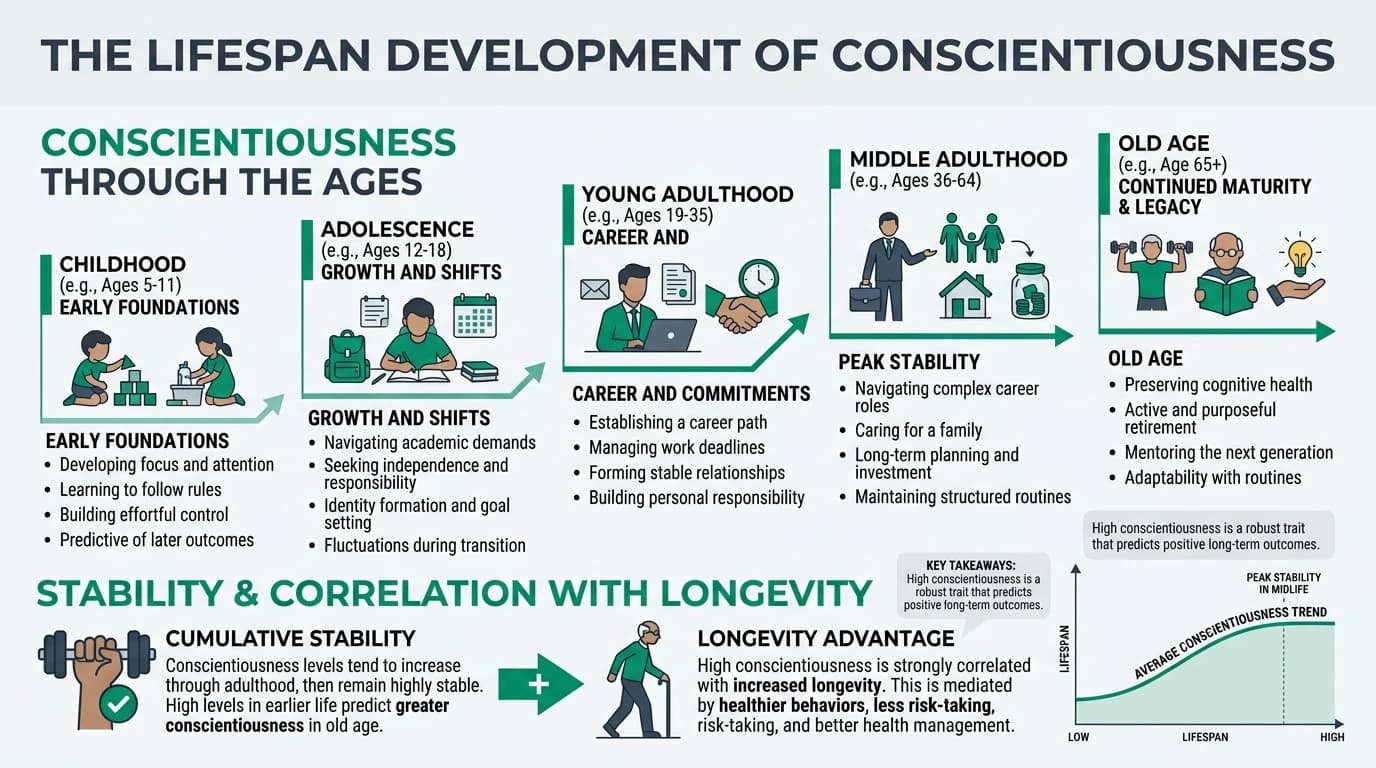
Conscientiousness gradually increases and stabilizes from childhood through old age, with no sharp peak.
Source: PMC
Executive Summary
- Conscientiousness is a personality trait linked to organization and responsibility. It gradually increases over a lifetime.
- Peak Timing: There is no single peak age; instead, it stabilizes from childhood to old age.
- Impact: Strongly predicts longevity and health outcomes.
The bottom line: Conscientiousness doesn't sharply peak but shows stability and growth, impacting longevity positively.
Critical: While conscientiousness predicts longevity, individual experiences may vary. Consult professionals for personalized advice.
What is Conscientiousness?
Definition: Conscientiousness is part of the Big Five personality traits. It includes:
- Organization: Keeping things orderly.
- Responsibility: Being reliable and dependable.
- Self-discipline: Staying focused and motivated.
Measurement: Often assessed using personality scales like the Big Five Inventory.
| Facet | Description |
|---|---|
| Organization | Keeping things tidy and structured. |
| Responsibility | Being accountable and trustworthy. |
| Self-discipline | Ability to stay focused and complete tasks. |
How Does Conscientiousness Develop Over Time?
Childhood to Adolescence:
- Increase: Conscientiousness tends to rise from ages 12 to 25.
- Stability: Begins to stabilize as individuals transition into adulthood.
| Age Range | Development |
|---|---|
| 12-25 | Mean-level increases and rank-order stability. |
| 25+ | Continues to stabilize with maturity. |
When Does Conscientiousness Peak?
No Sharp Peak:
- Gradual Rise: Conscientiousness increases steadily without a single peak age.
- Stability: Remains stable from adulthood into old age.
Key Takeaways:
- Consistency: Maintains rank-order stability from childhood to old age.
- Longevity Predictor: Continues to predict health outcomes throughout life.
Why is Conscientiousness Linked to Longevity?
Mechanisms:
- Health Behaviors: Encourages healthy habits like regular exercise and balanced diet.
- Cognitive Mediation: Associated with lower cognitive decline and Alzheimer's risk.
| Pathway | Impact |
|---|---|
| Health Behaviors | Promotes exercise and healthy eating. |
| Cognitive Mediation | Reduces cognitive decline risk. |
Can You Improve Conscientiousness Later in Life?
Yes, Through:
- Therapy: Cognitive-behavioral strategies can enhance conscientious behaviors.
- Apps: Digital tools to track and improve organization and discipline.
- Natural Gains: Age-related increases in conscientiousness occur naturally.
Important: Consistent effort and professional guidance can lead to improvements.
How Does Childhood Conscientiousness Affect Adult Health?
Predictive Power:
- Midlife Health: Early conscientiousness predicts better health and lower BMI.
- Longevity: Childhood ratings correlate with longer life expectancy.
| Childhood Trait | Adult Outcome |
|---|---|
| High Conscientiousness | Better health, longer life. |
| Low Conscientiousness | Higher health risks. |
How Does Conscientiousness Compare to Other Traits?
Comparison with Other Big Five Traits:
- Neuroticism: Often linked negatively to longevity.
- Agreeableness: Moderately linked to wellbeing.
| Trait | Longevity Link | Evidence |
|---|---|---|
| Conscientiousness | Strongest predictor | Tied to survival (Terman study) |
| Neuroticism | Negative | Linked to poor outcomes |
| Agreeableness | Moderate | Correlates with wellbeing |
What Are the Limitations of Conscientiousness Research?
Considerations:
- Stability: Low overall differential stability over a lifetime.
- Rater Effects: Variability in how conscientiousness is perceived by others.
Critical: Research is ongoing, and findings may evolve with new studies.
Action checklist
- Reflect on your current conscientiousness level.
- Consider using apps to track and improve conscientious habits.
- Consult professionals for personalized strategies to enhance conscientiousness.
FAQ
Does conscientiousness increase with age?
Is conscientiousness stable from childhood to old age?
Why is conscientiousness linked to longer life?
Can you improve conscientiousness later in life?
How does childhood conscientiousness affect adult health?
What Big Five trait predicts longevity best?
Does low conscientiousness shorten lifespan?
Notes
Primary Sources
| Source | Type | URL |
|---|---|---|
| NIH/PMC | Peer-reviewed | Link |
| NIH/PMC | Peer-reviewed | Link |
Conclusion
Conscientiousness develops gradually over a lifetime, with no sharp peak but significant stability and growth. It plays a crucial role in predicting longevity and health outcomes.