personality-tests
How to Interpret Neuroticism in the Workplace: Practical Guide for Managers and HR
Learn how to interpret neuroticism scores in workplace settings: impacts on engagement, safety, feedback sensitivity, and practical management strategies for HR and managers.
Quick answer
What is neuroticism in the workplace?
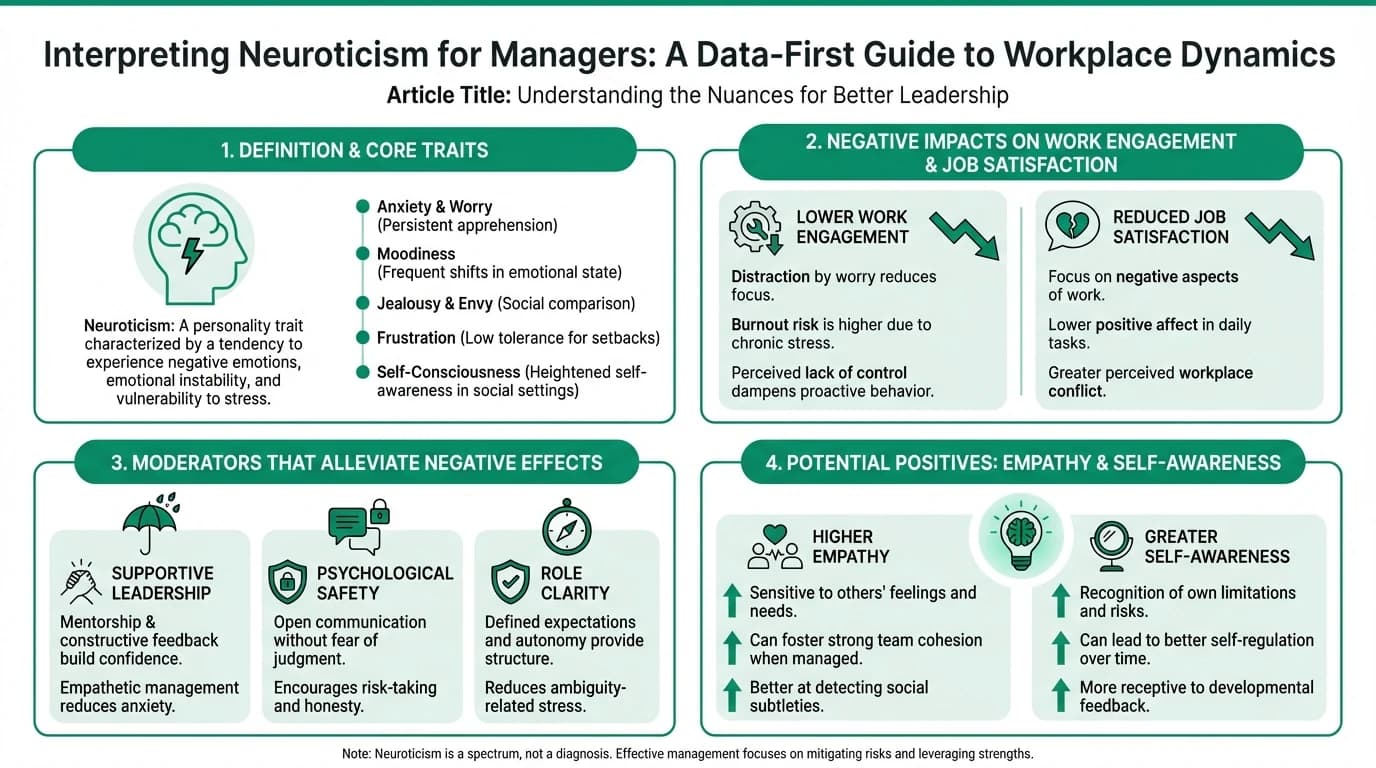
Neuroticism is a personality trait characterized by emotional instability, anxiety, and moodiness, impacting workplace engagement and performance.
Executive Summary
Interpreting neuroticism in the workplace is crucial for managers and HR professionals aiming to optimize team dynamics and individual performance. Neuroticism, a key personality trait in the Big Five model, is characterized by emotional instability, anxiety, and moodiness. While often perceived negatively, understanding its nuances can lead to better management strategies.
Key takeaway: By recognizing the facets of neuroticism and their impact on work engagement, managers can implement tailored interventions to mitigate negative outcomes and leverage potential strengths such as empathy and self-awareness.
Understanding Neuroticism in a Work Context
Neuroticism is defined by traits such as anxiety, fear, tension, and defensiveness. In a workplace setting, these characteristics can manifest as heightened stress responses, impacting an employee's ability to engage effectively with their tasks and colleagues. For instance, a highly neurotic employee might struggle with changes in routine or feedback, leading to decreased productivity.
However, understanding these traits allows managers to provide the necessary support. For example, offering clear communication and structured feedback can help alleviate anxiety and improve performance. Recognizing the individual differences in neuroticism is essential for creating a supportive work environment. For context on how neuroticism fits into the broader model, see our Big Five interpretation guide.
Negative Impacts on Work Engagement
Neuroticism is often linked to lower work engagement, primarily due to stress and emotional exhaustion. Employees high in neuroticism may find it challenging to maintain focus and motivation, especially under pressure. This can lead to higher turnover rates and decreased job satisfaction.
A practical example is seen in high-stress roles such as nursing, where neuroticism can exacerbate burnout. Providing resources like stress management workshops or flexible work arrangements can help mitigate these effects, fostering a more engaged and resilient workforce.
Neuroticism and Workplace Ostracism
New employees with high neuroticism levels may experience workplace ostracism, often mediated by low interpersonal trust. This can lead to feelings of isolation and disengagement, particularly in environments with low task interdependence. For instance, a new hire in a competitive sales team might feel excluded if they struggle to build trust quickly.
To counteract this, managers can promote team-building activities and mentorship programs that encourage inclusivity and trust-building. By fostering a supportive culture, organizations can reduce the negative impacts of neuroticism on social integration.
Safety Compliance in High-Risk Environments
In high-risk environments like oil and gas, neuroticism negatively affects safety compliance and participation. Employees with high neuroticism may exhibit lower adherence to safety protocols, posing significant risks. For example, a study found that neuroticism negatively predicted safety compliance, with a β = -0.1801.
Implementing rigorous safety training and regular assessments can help address these challenges. By focusing on clear communication and accountability, managers can enhance safety compliance among neurotic employees, reducing potential hazards. Before using personality data in hiring or assessment, verify instrument quality with our personality test reliability checklist.
| Neuroticism Impact | Safety Compliance | Participation |
|---|---|---|
| Negative Predictor | β = -0.180 | β = -0.164 |
Job Performance and Feedback Sensitivity
Neuroticism affects job performance, particularly in response to negative feedback. Employees with high levels of self-consciousness or depression may underperform following criticism, especially in low-autonomy roles. For instance, a customer service representative might struggle to recover from a negative customer interaction.
Managers can address this by providing constructive feedback and emphasizing strengths alongside areas for improvement. By creating a culture of positive reinforcement, organizations can help neurotic employees thrive despite their sensitivity to criticism. For structured hiring decisions that avoid bias, see our bias-resistant scorecard.
Moderators and Potential Positives
While neuroticism often predicts negative outcomes, certain moderators can alleviate its effects. High task interdependence and beneficiary contact can buffer against stress and disengagement. For example, employees in collaborative roles may benefit from shared responsibilities, reducing the individual burden of neuroticism.
Moreover, neurotic individuals may possess strengths such as realistic self-awareness and emotional depth, fostering empathy and innovation. By leveraging these traits, managers can enhance team creativity and problem-solving capabilities.
Important: Neuroticism scores should inform support and development, not be used to exclude or stigmatize employees. Always interpret in context with role demands and behavioral evidence.
Action checklist
- Assess neuroticism facets in employee evaluations.
- Implement stress management and resilience training.
- Promote trust-building and inclusivity in teams.
- Ensure clear communication and feedback mechanisms.
- Leverage potential strengths like empathy and self-awareness.
FAQ
How does neuroticism affect job satisfaction?
Can neuroticism be beneficial in any way?
What are effective strategies for managing neurotic employees?
How does task interdependence affect neuroticism's impact?
Why is it important to understand neuroticism in the workplace?
Primary Sources
| Source | Type | URL |
|---|---|---|
| National Center for Biotechnology Information | Research Article | pmc.ncbi.nlm.nih.gov |
| Scientific Research Publishing | Research Paper | scirp.org |
Conclusion
Notes
Footnotes
-
Effect sizes from oil and gas sector study on safety compliance (β = -0.180) and participation (β = -0.164). ↩