relationships
Personality and Forgiveness: Big Five Traits, Interpersonal Forgiveness, and Self-Forgiveness Research
Explore how the Big Five personality traits influence forgiveness in both interpersonal and self-forgiveness contexts, with insights from recent research.
Quick answer
How do Big Five traits influence forgiveness?
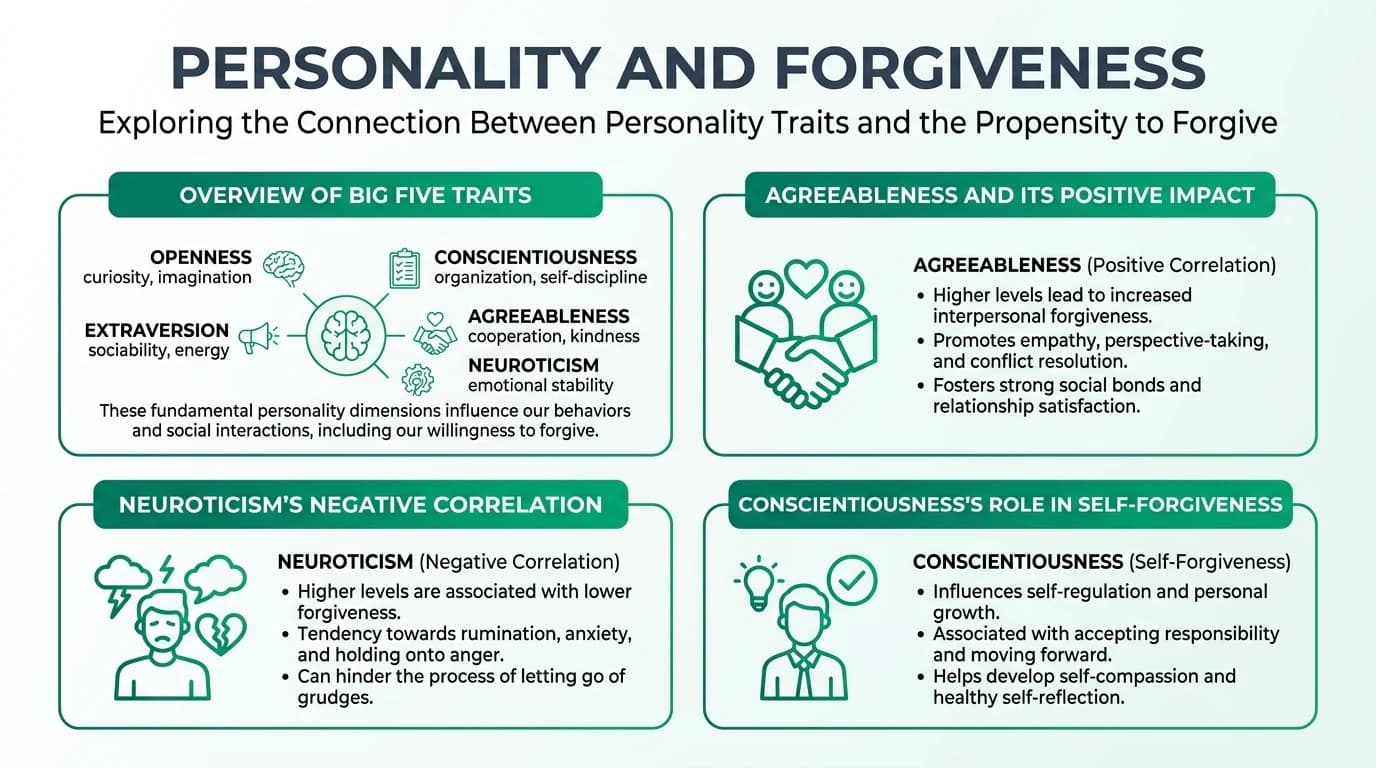
Agreeableness and Neuroticism are key traits affecting forgiveness. Agreeableness promotes empathy-driven forgiveness, while Neuroticism increases avoidance. Conscientiousness aids self-forgiveness.
Source: PMC
Executive Summary
Forgiveness is a complex process influenced by personality traits. The Big Five traits—Agreeableness, Conscientiousness, Extraversion, Neuroticism, and Openness—play significant roles in how we forgive others and ourselves.
The bottom line: Understanding these traits can improve emotional regulation and relationships.
Critical: Always consult a mental health professional for personalized advice.
What Are the Big Five Personality Traits?
The Big Five traits are a popular model in psychology:
- Openness: Creativity and open-mindedness.
- Conscientiousness: Organization and dependability.
- Extraversion: Sociability and assertiveness.
- Agreeableness: Compassion and cooperation.
- Neuroticism: Emotional instability and moodiness.
Quick Reference: Big Five Traits
| Trait | Description |
|---|---|
| Openness | Creative, imaginative |
| Conscientiousness | Organized, reliable |
| Extraversion | Outgoing, energetic |
| Agreeableness | Friendly, compassionate |
| Neuroticism | Anxious, sensitive |
How Do Big Five Traits Affect Forgiveness?
Interpersonal vs. Self-Forgiveness
- Interpersonal Forgiveness: Forgiving others.
- Self-Forgiveness: Forgiving oneself.
Trait Influences
| Forgiveness Type | Positive Traits | Negative Traits |
|---|---|---|
| Interpersonal | Agreeableness | Neuroticism |
| Self | Conscientiousness | Neuroticism |
How Does Agreeableness Influence Forgiveness?
Agreeableness is strongly linked to forgiveness:
- Empathy: Encourages understanding and compassion.
- Reduced Revenge: Lowers desire for retaliation.
Agreeableness and Forgiveness
| Motivation | Agreeableness Effect |
|---|---|
| Revenge | Reduced |
| Benevolence | Increased |
Why Does Neuroticism Reduce Forgiveness?
Neuroticism often hinders forgiveness:
- Avoidance: Increases tendency to avoid conflicts.
- Rumination: Leads to dwelling on negative feelings.
Neuroticism's Impact
| Motivation | Neuroticism Effect |
|---|---|
| Avoidance | Increased |
| Benevolence | Decreased |
What Role Does Conscientiousness Play in Self-Forgiveness?
Conscientiousness aids self-forgiveness:
- Self-Discipline: Helps manage guilt and responsibility.
- Competence: Encourages problem-solving and growth.
Conscientiousness and Self-Forgiveness
| Facet | Correlation with Self-Forgiveness |
|---|---|
| Self-Discipline | Positive |
| Competence | Positive |
Is Extraversion Linked to Other-Forgiveness?
Extraversion positively affects forgiveness:
- Sociability: Promotes positive interactions.
- Optimism: Encourages letting go of grudges.
Extraversion's Role
| Forgiveness Type | Extraversion Effect |
|---|---|
| Interpersonal | Positive |
| Self | Positive |
Can Personality Traits Change Forgiveness Levels?
- Therapy: Can enhance positive traits like Agreeableness.
- Mindfulness: Reduces Neuroticism's negative effects.
Practical Interventions
| Intervention | Target Trait |
|---|---|
| Therapy | Agreeableness |
| Mindfulness | Neuroticism |
How Do Motivations Influence Forgiveness?
Forgiveness involves different motivations:
- Revenge: Desire to retaliate.
- Avoidance: Wish to distance oneself.
- Benevolence: Willingness to forgive.
Motivations by Trait
| Motivation | Agreeableness Effect | Neuroticism Effect |
|---|---|---|
| Revenge | Reduced | Increased |
| Avoidance | Reduced | Increased |
| Benevolence | Increased | Decreased |
Action checklist
- Reflect on your personality traits.
- Identify forgiveness challenges you face.
- Consider therapy or mindfulness practices.
FAQ
How does Agreeableness influence forgiveness?
Why does Neuroticism reduce forgiveness?
Which Big Five trait predicts self-forgiveness best?
Is Extraversion linked to other-forgiveness?
What role does Conscientiousness play in self-forgiveness?
How do Big Five traits affect revenge motivations?
Can personality traits change forgiveness levels?
Notes
Primary Sources
| Source | Type | URL |
|---|---|---|
| PMC (NIH) | Peer-reviewed | https://pmc.ncbi.nlm.nih.gov/articles/PMC10646512/ |
| DePauw University | Peer-reviewed PDF | https://www.depauw.edu/files/resources/rosskendallmatterswrobelrye2004.pdf |
Conclusion
Understanding how personality traits influence forgiveness can enhance personal growth and relationships. Agreeableness and Conscientiousness play crucial roles, while Neuroticism often presents challenges.