personal-development
Personality and Gratitude: How Big Five Traits Shape Thankfulness and Appreciation
Discover how your personality influences your capacity for gratitude and learn ways to cultivate appreciation based on your Big Five traits.
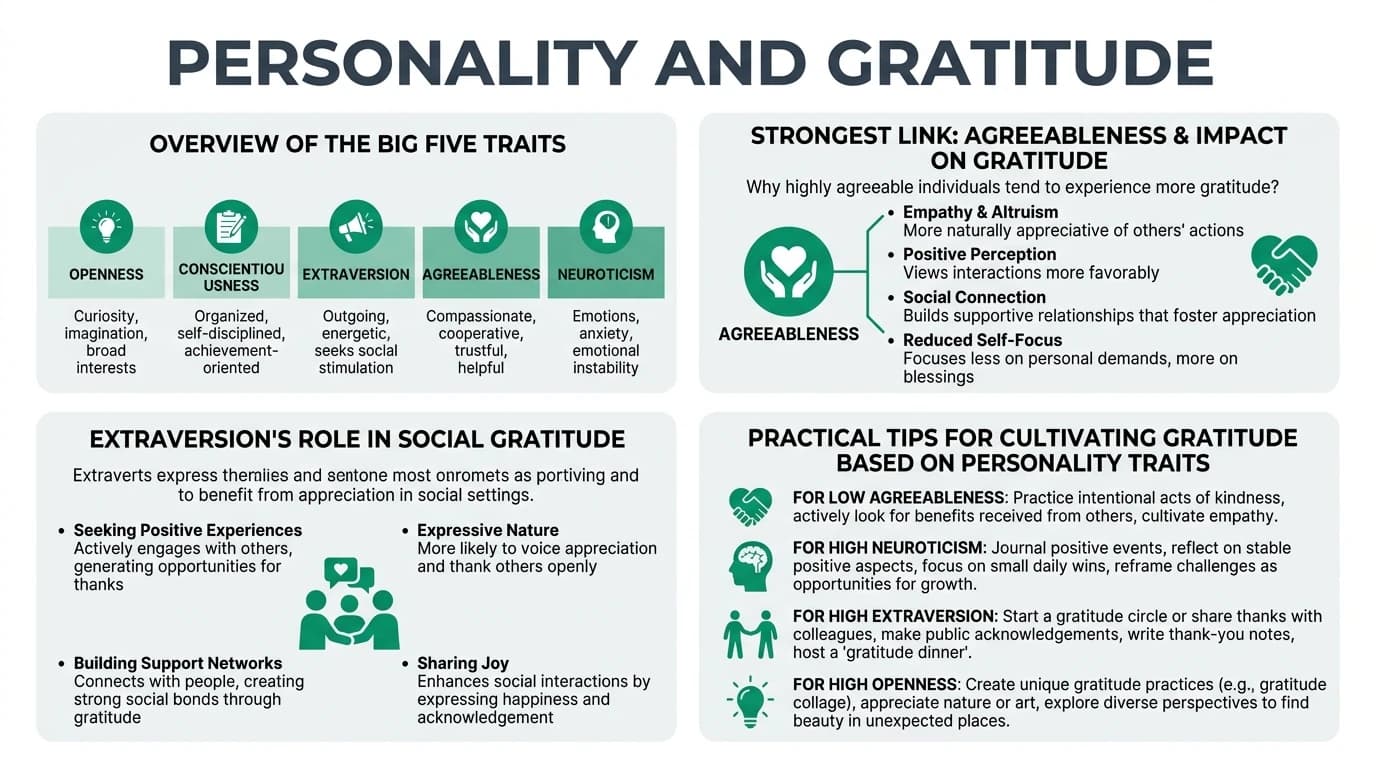
Quick answer
Which Big Five traits are linked to higher gratitude?
Agreeableness, extraversion, and openness are positively linked to gratitude, while neuroticism shows a negative correlation.
Executive Summary
Understanding how personality traits influence gratitude can help you cultivate a more thankful mindset. The Big Five traits—agreeableness, extraversion, openness, conscientiousness, and neuroticism—each play a unique role in shaping how we experience and express gratitude.
The bottom line: Agreeableness and extraversion are most strongly linked to gratitude, while neuroticism can hinder it. Tailoring gratitude practices to your personality can enhance your well-being.
Critical: While personality influences gratitude, individual experiences vary. Consult a professional for personalized guidance.
What is the Big Five Personality Model?
The Big Five personality model is a framework that describes five key traits:
- Openness: Creativity and curiosity.
- Conscientiousness: Organization and dependability.
- Extraversion: Sociability and assertiveness.
- Agreeableness: Compassion and cooperativeness.
- Neuroticism: Emotional instability and anxiety.
| Trait | Description |
|---|---|
| Openness | Imaginative, open to new experiences |
| Conscientiousness | Organized, reliable |
| Extraversion | Outgoing, energetic |
| Agreeableness | Friendly, empathetic |
| Neuroticism | Prone to stress, mood swings |
Understanding these traits helps explain why some people naturally feel more grateful than others.
How Does Agreeableness Influence Gratitude?
Agreeableness is the strongest predictor of gratitude. People high in agreeableness tend to be more empathetic and forgiving, fostering a natural sense of thankfulness.
- Effect: Strong positive link to gratitude.
- Process: Empathy and prosocial behavior enhance appreciation.
- Caveat: May lead to overextending oneself to please others.
| Trait | Gratitude Link | Explanation |
|---|---|---|
| Agreeableness | Strong Positive | Empathy and kindness drive gratitude |
Extraversion and Gratitude: A Social Connection
Extraverts often express gratitude more openly, benefiting from their social nature.
- Effect: Positive association with gratitude.
- Process: Social interactions increase opportunities for expressing thanks.
- Caveat: May overlook deeper, personal gratitude practices.
| Trait | Gratitude Link | Social Impact |
|---|---|---|
| Extraversion | Positive | Social interactions boost gratitude |
The Role of Openness in Reflective Gratitude
Openness enhances gratitude through a reflective appreciation of life’s experiences.
- Effect: Positive link, especially with introspective gratitude.
- Process: Curiosity leads to deeper appreciation of diverse experiences.
- Caveat: May struggle with routine gratitude practices.
| Trait | Gratitude Link | Reflective Impact |
|---|---|---|
| Openness | Positive | Encourages appreciation of experiences |
Conscientiousness and Gratitude: A Complex Relationship
Conscientiousness shows a mixed relationship with gratitude. While organized individuals may appreciate structure in gratitude practices, they might also focus more on tasks than emotions.
- Effect: Mixed; can be positive or negative.
- Process: Structured approaches can enhance gratitude.
- Caveat: Task-oriented focus may limit emotional gratitude.
| Trait | Gratitude Link | Complexity |
|---|---|---|
| Conscientiousness | Mixed | Balance between tasks and emotions |
Why Neuroticism Hinders Gratitude
Neuroticism negatively impacts gratitude, as emotional instability can overshadow feelings of thankfulness.
- Effect: Negative correlation with gratitude.
- Process: Anxiety and stress reduce focus on positive aspects.
- Caveat: May require intentional gratitude practices to counteract.
| Trait | Gratitude Link | Emotional Impact |
|---|---|---|
| Neuroticism | Negative | Stress and anxiety hinder gratitude |
Practical Ways to Cultivate Gratitude Based on Personality
Tailor gratitude practices to your personality for maximum benefit:
- Agreeableness: Engage in group gratitude activities.
- Extraversion: Share gratitude openly with others.
- Openness: Explore new gratitude practices like journaling.
- Conscientiousness: Set structured gratitude goals.
- Neuroticism: Use mindfulness to focus on positive experiences.
| Personality Trait | Suggested Practice |
|---|---|
| Agreeableness | Group activities |
| Extraversion | Sharing openly |
| Openness | Journaling |
| Conscientiousness | Structured goals |
| Neuroticism | Mindfulness practices |
Cultural Influences on Gratitude and Personality
Cultural context can shape how personality traits influence gratitude. In collectivist cultures, gratitude may be more linked to social harmony than individual traits.
- Important: Cultural norms can enhance or diminish the expression of gratitude based on personality.
| Culture | Gratitude Expression | Personality Influence |
|---|---|---|
| Collectivist | Social harmony focus | Personality traits may vary |
Measuring and Tracking Gratitude
Use tools like the Gratitude Questionnaire (GQ-6) to track your gratitude levels and see how they relate to your personality traits.
| Tool | Purpose | Benefit |
|---|---|---|
| GQ-6 | Measure gratitude levels | Track progress and growth |
Long-Term Benefits of Gratitude
Gratitude enhances well-being, life satisfaction, and even longevity. Tailoring gratitude practices to your personality can amplify these benefits.
- Key Takeaways:
- Increases life satisfaction.
- Reduces stress and enhances relationships.
- Promotes overall well-being and longevity.
| Benefit | High Gratitude Effect | Study Source |
|---|---|---|
| Life Satisfaction | Significant increase | Personality and Individual Differences |
| Longevity | Lower mortality risk | Harvard Health Publishing |
Action checklist
- Identify your Big Five personality traits.
- Choose gratitude practices that suit your traits.
- Track your gratitude progress regularly.
FAQ
Which Big Five personality trait is most associated with gratitude?
Agreeableness is most strongly linked to gratitude due to its focus on empathy and prosocial behavior.
Do introverts feel less grateful than extraverts?
Introverts may express gratitude differently, often in more personal or reflective ways.
Can you increase gratitude if you're high in neuroticism?
Yes, mindfulness and intentional gratitude practices can help counteract the negative effects of neuroticism.
How does agreeableness influence thankfulness?
Agreeableness enhances thankfulness through empathy and a focus on positive social interactions.
What personality makes someone less grateful?
High levels of neuroticism can make it harder to feel grateful due to emotional instability.
Does conscientiousness help or hinder gratitude?
It can do both; structured practices help, but a task focus may limit emotional gratitude.
How to cultivate gratitude based on your Big Five traits?
Tailor your practices: group activities for agreeableness, journaling for openness, mindfulness for neuroticism.
Notes
Primary Sources
| Source | Type | URL |
|---|---|---|
| Long Island University | Peer-reviewed | source |
| Harvard Health Publishing | Official health | source |
Conclusion
Understanding how your personality influences gratitude can help you cultivate a more appreciative mindset. By aligning gratitude practices with your Big Five traits, you can enhance your well-being and relationships.