career
Personality and Journalism Careers: Big Five Traits in Reporters and Editors
Explore how the Big Five personality traits influence journalism careers, focusing on deadline pressure, objectivity, ethics, and trauma exposure.
Quick answer
How do Big Five personality traits affect journalism careers?
The Big Five traits influence how journalists handle deadline pressure, maintain objectivity, uphold ethics, and cope with trauma exposure. Traits like extraversion and conscientiousness can enhance performance, while neuroticism may increase stress risks.
Source: PMC
Executive Summary
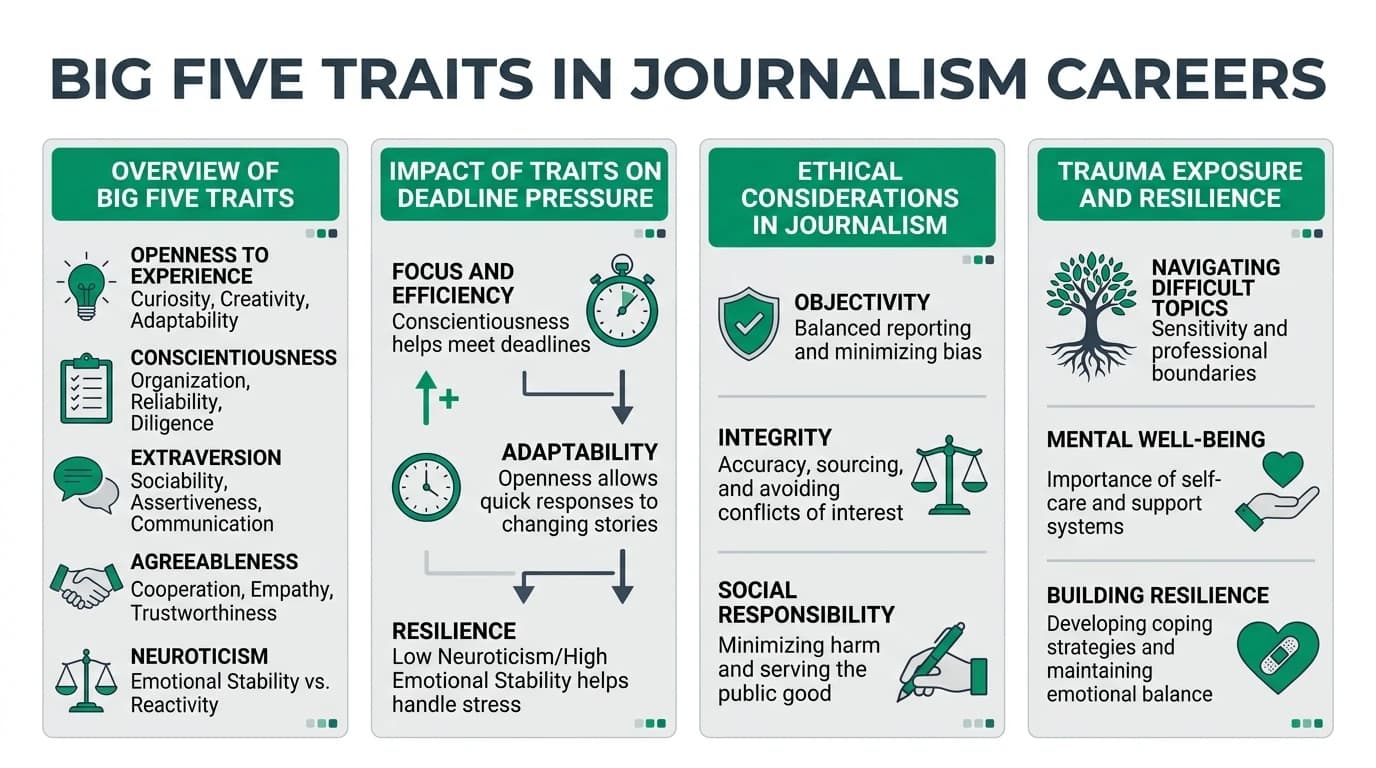
Curious about how personality affects journalism careers? The Big Five traits—extraversion, agreeableness, conscientiousness, neuroticism, and openness—play a significant role in shaping a journalist's work style and resilience.
The bottom line: Understanding your personality can help you thrive in journalism by aligning your strengths with job demands.
Critical: Always consult a professional for personalized career advice.
What Are the Big Five Personality Traits?
The Big Five personality traits provide a framework for understanding human behavior:
- Extraversion: Sociable, energetic.
- Agreeableness: Caring, cooperative.
- Conscientiousness: Organized, responsible.
- Neuroticism: Emotional instability.
- Openness: Curious, creative.
These traits are measured using tools like the BFI-K, helping individuals assess their fit for various careers12.
| Trait | Definition | Journalism Link |
|---|---|---|
| Extraversion | Sociable, energetic | Info sharing, news interest |
| Agreeableness | Caring, cooperative | Source relationships, ethics |
| Conscientiousness | Organized, responsible | Accuracy, leadership |
| Neuroticism | Emotional instability | Stress response, trauma risk |
| Openness | Curious, creative | Storytelling, adaptability |
How Does Extraversion Impact Reporting?
Extraversion can enhance a reporter's ability to share information and engage with diverse news topics. However, it may also lead to burnout if not managed properly.
- Effect: Boosts social media sharing.
- Process: Encourages engagement with news.
- Caveat: Risk of burnout under pressure.
| News Interest by Personality | Extraversion β | Openness β | Neuroticism β |
|---|---|---|---|
| Economy | Weak positive | Positive | Mixed |
| Entertainment | Weak positive | Positive | Mixed |
| Health | Weak positive | Positive | Mixed |
Why Is Conscientiousness Crucial for Editors?
Conscientiousness is vital for editors who need to maintain accuracy and organization under tight deadlines. It supports leadership roles and enhances work ethic.
- Pros: High accuracy, strong leadership.
- Cons: May lead to overwork if unchecked.
| Role | Ideal Traits | Challenges |
|---|---|---|
| Reporter | Extraversion, Openness | Burnout, stress management |
| Editor | Conscientiousness | Overwork, decision pressure |
How Does Neuroticism Influence Stress in Journalism?
Neuroticism can heighten stress responses, especially under deadline pressure or when exposed to traumatic events. Journalists with high neuroticism may need additional support.
- Effect: Increases stress sensitivity.
- Process: Heightens emotional reactions.
- Caveat: Requires effective coping strategies.
What Role Does Openness Play in Journalism?
Openness fosters creativity and adaptability, essential for storytelling and navigating digital shifts in journalism. It supports innovation and cultural awareness.
- Pros: Enhances creativity, adaptability.
- Cons: May struggle with routine tasks.
How Do Agreeableness and Ethics Interact?
Agreeableness aids in building strong source relationships and maintaining ethical standards. However, it may also lead to challenges in avoiding bias.
- Pros: Strong source relationships.
- Cons: Potential bias in reporting.
| Scenario | High Agreeableness Response | Low Response |
|---|---|---|
| Biased Source | Seeks balanced perspective | May challenge source directly |
| Rumor Dissemination | Verifies before sharing | Skeptical, cautious |
How Do Trait Combinations Affect Journalism?
Different combinations of traits can influence a journalist's performance and career satisfaction. For instance, high extraversion and low agreeableness may reduce rumor spread.
- Key Takeaway: Trait interactions matter.
- Example: Extraversion-agreeableness r=.33***3.
How Does Deadline Pressure Impact Journalists?
Deadline pressure can amplify the effects of personality traits, affecting productivity and error rates. Understanding these impacts can help journalists manage stress.
- Effect: Increases urgency and stress.
- Process: Demands quick decision-making.
- Caveat: Can lead to errors if unmanaged.
| Trait | Pros | Cons |
|---|---|---|
| Extraversion | Energy under pressure | Risk of burnout |
| Neuroticism | Heightened alertness | Increased stress |
How Does Objectivity Relate to Personality?
Objectivity in journalism is influenced by traits like openness and skepticism. Balancing these traits can support critical thinking and unbiased reporting.
- Effect: Enhances critical analysis.
- Process: Encourages diverse viewpoints.
- Caveat: Requires continuous self-awareness.
What Does Trauma Exposure Research Show?
Journalists often face trauma exposure, which can be influenced by their personality traits. Resilience and mental health support are crucial for those in high-risk reporting roles.
- Effect: Impacts mental health.
- Process: Requires resilience building.
- Caveat: Professional support is essential.
How Can You Assess Career Fit?
Matching personality traits to journalism roles can enhance job satisfaction and performance. Tools like the BFI-K can aid in self-assessment.
- Step 1: Identify your dominant traits.
- Step 2: Align traits with job demands.
- Step 3: Seek roles that match your strengths.
Action checklist
- Assess your Big Five traits using the BFI-K.
- Identify journalism roles that align with your strengths.
- Develop coping strategies for stress and deadline pressure.
FAQ
What Big Five traits make a good reporter?
How does neuroticism affect journalists under deadline pressure?
Do extraverted people excel in editing roles?
Which personality traits predict ethical decision-making in journalism?
How does openness influence objectivity in reporting?
What role does conscientiousness play in trauma resilience for journalists?
Are agreeable journalists better at source relationships?
Notes
Primary Sources
| Source | Type | URL |
|---|---|---|
| PMC (NIH) | Peer-reviewed | PMC |
| SAGE Journals | Peer-reviewed | SAGE |
| EBSCO | Academic overview | EBSCO |
Conclusion
Understanding the Big Five personality traits can significantly impact journalism careers. By aligning personal strengths with job demands, journalists can enhance their performance and well-being.