personal-development
Personality and Loneliness: How Big Five Traits Affect Feeling Alone
Explore how the Big Five personality traits influence loneliness. Discover who's at risk and what helps.
Quick answer
How do Big Five personality traits affect loneliness?
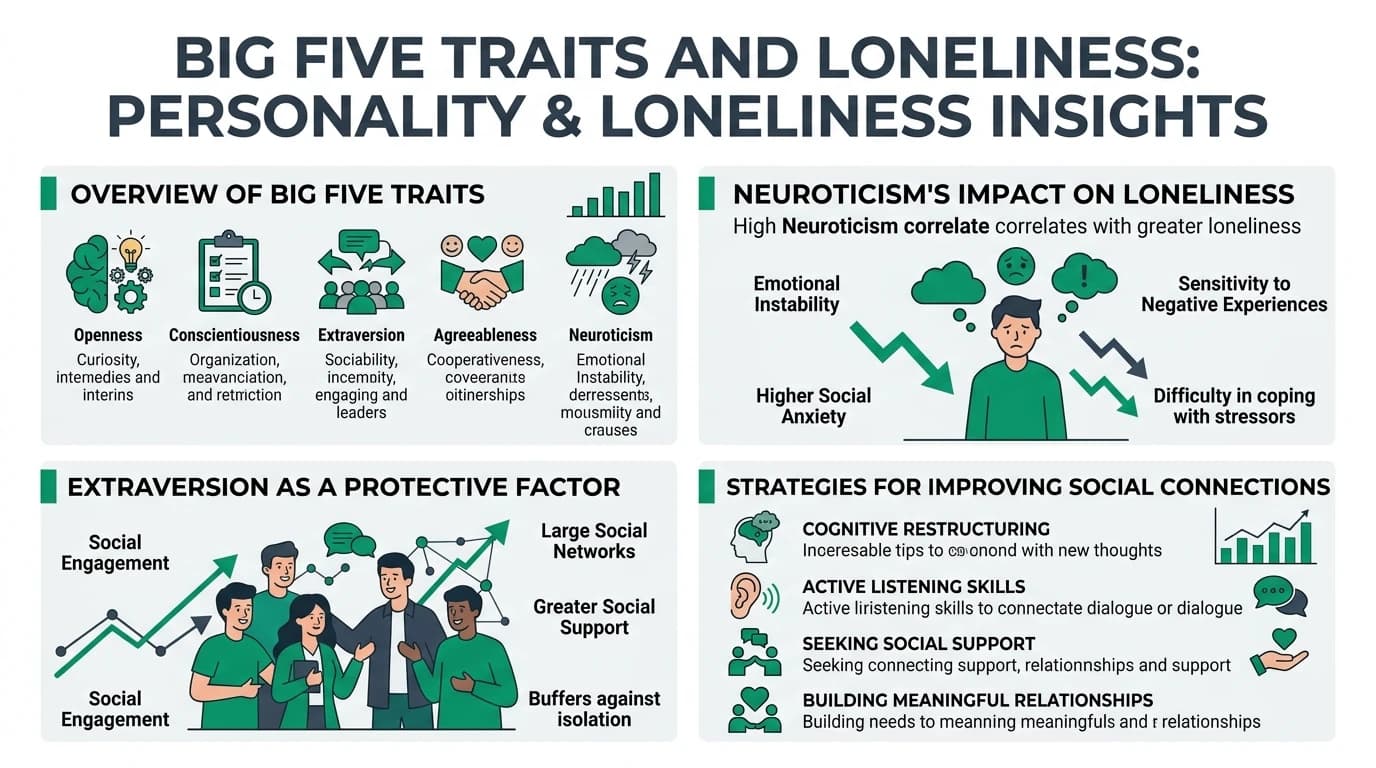
Neuroticism increases loneliness, while extraversion decreases it. Agreeableness, conscientiousness, and openness also play roles.
Source: Buecker et al., 2020
Executive Summary
Feeling lonely? Your personality might be part of the reason. The Big Five traits—neuroticism, extraversion, agreeableness, conscientiousness, and openness—affect how connected we feel.
- Neuroticism: Increases loneliness.
- Extraversion: Decreases loneliness.
- Other traits: Play smaller roles.
The bottom line: Understanding your personality can help you manage loneliness.
Critical Warning: If loneliness is affecting your mental health, seek professional help.
What Are the Big Five Personality Traits?
The Big Five traits are a common way psychologists describe personality. They include:
- Neuroticism: Emotional instability and sensitivity to stress.
- Extraversion: Sociability and assertiveness.
- Agreeableness: Compassion and cooperativeness.
- Conscientiousness: Organization and dependability.
- Openness: Curiosity and creativity.
Quick Reference Table
| Trait | Description |
|---|---|
| Neuroticism | Emotional instability, stress sensitivity |
| Extraversion | Sociability, assertiveness |
| Agreeableness | Compassion, cooperativeness |
| Conscientiousness | Organization, dependability |
| Openness | Curiosity, creativity |
How Does Neuroticism Affect Loneliness?
Neuroticism is the strongest predictor of loneliness. People high in neuroticism often feel more alone due to:
- Emotional Reactivity: Heightened response to stress.
- Sensitivity: Greater perception of social threats.
Key Takeaways
- Risk Factor: High neuroticism = increased loneliness.
- Mechanism: Emotional instability affects social interactions.
Why Is Extraversion Protective Against Loneliness?
Extraversion helps reduce loneliness through:
- Social Engagement: More frequent social interactions.
- Positive Outlook: Greater enjoyment of social activities.
Protective Mechanisms
| Mechanism | Description |
|---|---|
| Social Engagement | Frequent interactions |
| Positive Outlook | Enjoyment of social activities |
How Do Agreeableness and Conscientiousness Influence Loneliness?
Both traits help maintain strong relationships:
- Agreeableness: Empathy and cooperation foster connection.
- Conscientiousness: Reliability and commitment strengthen bonds.
Pros and Cons
| Trait | Pros | Cons |
|---|---|---|
| Agreeableness | Strong relationships | May avoid conflict |
| Conscientiousness | Reliable, dependable | Can be overly rigid |
Is Openness Related to Loneliness?
Openness has a weaker link to loneliness but can still help:
- Intellectual Engagement: Connects with like-minded people.
- Curiosity: Encourages exploration of new social circles.
Effectiveness
| Trait | Connection Type |
|---|---|
| Openness | Intellectual engagement, curiosity |
Can Personality Traits Change?
Yes, personality traits can change over time, which can affect loneliness:
- Intentional Efforts: Engaging in new experiences.
- Therapy: Professional guidance to manage traits.
Change Strategies
| Method | Description |
|---|---|
| Intentional Efforts | Trying new activities, meeting new people |
| Therapy | Professional support for emotional growth |
What Strategies Help Based on Personality?
Tailor your approach to your personality:
- For Neuroticism: Practice emotional regulation.
- For Extraversion: Engage in group activities.
- For Agreeableness: Foster deeper connections.
- For Conscientiousness: Plan regular social events.
- For Openness: Explore new social settings.
Personalized Strategies
| Trait | Strategy |
|---|---|
| Neuroticism | Emotional regulation |
| Extraversion | Group activities |
| Agreeableness | Deeper connections |
| Conscientiousness | Regular social events |
| Openness | New social settings |
Action checklist
- Identify your dominant personality traits.
- Apply personalized strategies to reduce loneliness.
- Consider professional help if needed.
FAQ
Is loneliness caused by personality or circumstances?
Loneliness is influenced by both personality and circumstances. Personality traits like neuroticism play a stable role but are not the sole cause.
Can introverts be less lonely than extroverts?
Yes, introverts can manage loneliness by leveraging other traits like agreeableness and conscientiousness.
Does neuroticism always lead to loneliness?
Not always. While it increases risk, factors like emotional regulation can mitigate loneliness.
How does agreeableness protect against loneliness?
Agreeable people build strong, empathetic relationships, reducing feelings of loneliness.
What role does conscientiousness play in social connection?
Conscientious individuals maintain reliable and committed relationships, which can decrease loneliness.
Why is openness weakly related to loneliness?
Openness fosters intellectual connections but may not always translate to emotional closeness.
Can personality traits change, and if so, does loneliness improve?
Yes, traits can change, and with them, loneliness can improve through intentional efforts and therapy.
Notes
Primary Sources
| Source | Type | URL |
|---|---|---|
| European Journal of Personality | Meta-analysis | Link |
| SAGE Journals | Empirical study | Link |
Conclusion
Understanding how your personality affects loneliness can empower you to take control of your social life. By leveraging your strengths and addressing challenges, you can reduce feelings of disconnection.