personal-development
Personality and Perfectionism: Big Five Traits Behind Perfectionist Tendencies
Explore how the Big Five personality traits influence perfectionism, when it helps, when it hurts, and practical ways to ease up.
Quick answer
What Big Five traits are linked to perfectionism?
Conscientiousness and neuroticism are the primary traits linked to perfectionism, with conscientiousness driving self-oriented perfectionism and neuroticism fueling socially prescribed perfectionism.
Source: Kent Academic Repository
Executive Summary
Perfectionism is influenced by the Big Five personality traits, especially conscientiousness and neuroticism. Conscientiousness often leads to positive, goal-oriented perfectionism, while neuroticism can result in anxiety-driven perfectionism. Understanding these traits can help manage perfectionism's impact on life.
The bottom line: Perfectionism can be both helpful and harmful. Recognizing its roots in personality can guide you toward healthier habits.
Critical Warning: If perfectionism leads to severe anxiety or depression, consider seeking professional help.
What is Perfectionism in Personality?
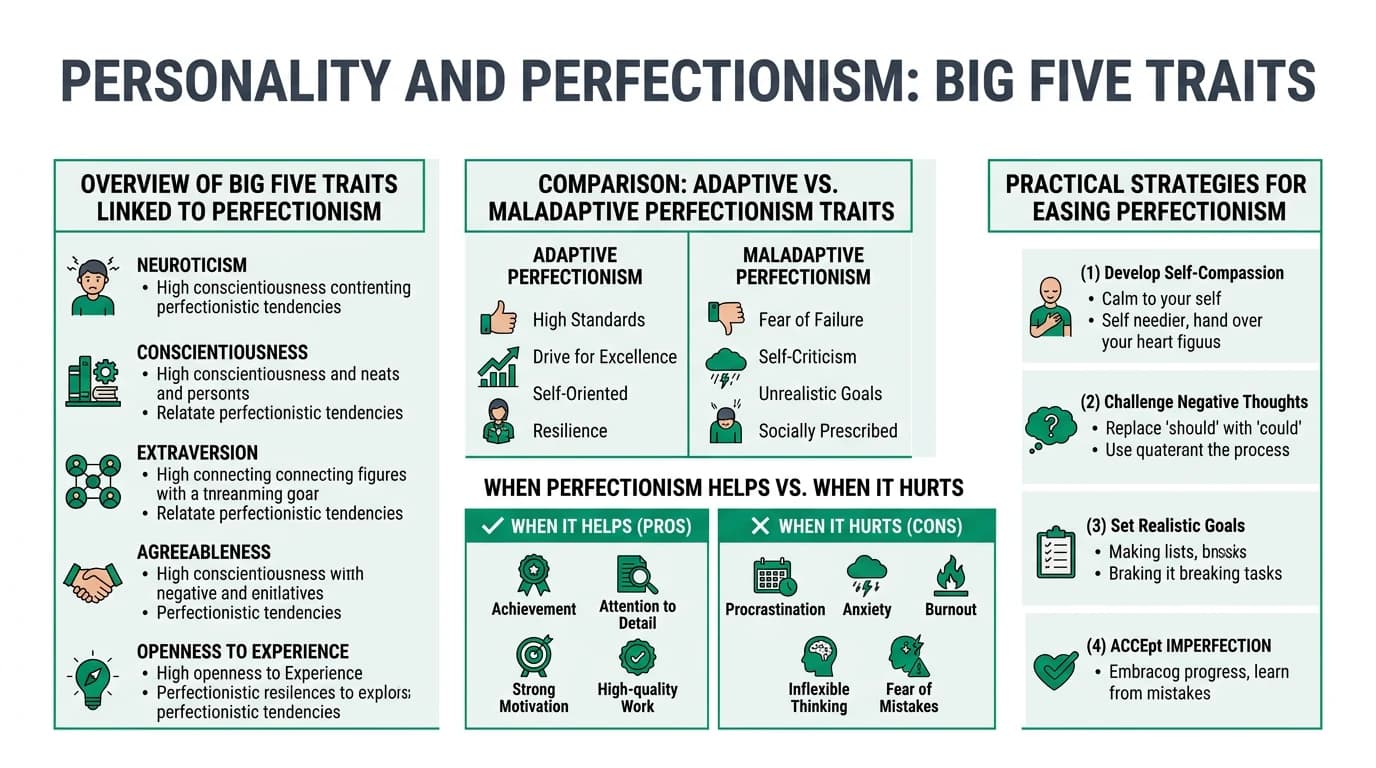
Perfectionism isn't just about wanting things to be perfect. It's deeply connected to our personality traits. Here's how the Big Five traits come into play:
- Conscientiousness: Linked to self-oriented perfectionism. It drives organization and persistence.
- Neuroticism: Tied to socially prescribed perfectionism. It fuels concerns over mistakes and external expectations.
- Extraversion & Agreeableness: Lower levels can correlate with perfectionistic concerns.
- Openness: Shows weaker, inconsistent links.
| Trait | Perfectionistic Strivings | Perfectionistic Concerns |
|---|---|---|
| Conscientiousness | High (r=.44) | Low |
| Neuroticism | Low | High (r=.50) |
| Extraversion | Low | High |
| Agreeableness | Low | High |
| Openness | Variable | Variable |
How Does Conscientiousness Affect Perfectionism?
Conscientiousness is about being organized and goal-driven. It often leads to a healthier form of perfectionism.
- Effect: Encourages self-oriented standards and goal persistence.
- Benefit: Boosts achievement and positive feelings.
- Example: A student who excels in exams due to structured study habits.
Key Takeaways:
- Conscientiousness predicts increases in self-oriented perfectionism.
- It supports achievement without the negative stress of external pressures.
Is Neuroticism Behind Maladaptive Perfectionism?
Neuroticism often leads to anxiety-driven perfectionism, where fear of mistakes dominates.
- Effect: Fuels socially prescribed perfectionism.
- Risk: Leads to anxiety, depression, and low self-esteem.
- Example: A professional constantly worried about meeting others' expectations.
| Aspect | Adaptive (Strivings) | Maladaptive (Concerns) |
|---|---|---|
| Key Trait | Conscientiousness | Neuroticism |
| Outcomes | Achievement | Anxiety |
| Example | Self-oriented goals | Social pressure |
When is Perfectionism Helpful?
Perfectionism can drive success when balanced and self-directed.
- Pros: Encourages high standards and persistence.
- Cons: Can lead to burnout if unchecked.
- Example: An athlete using perfectionism to improve performance.
Healthy Signs:
- High standards aligned with personal goals.
- Motivation without excessive stress.
When Does Perfectionism Hurt?
Perfectionism becomes harmful when driven by fear and external pressures.
- Pros: High standards can motivate.
- Cons: Anxiety, depression, and low self-esteem.
- Example: A student overwhelmed by fear of failure.
Harmful Signs:
- Constant self-doubt.
- Fear of judgment from others.
Practical Ways to Ease Perfectionism
If perfectionism is causing stress, here are some practical steps to ease up:
- Set Realistic Goals: Focus on achievable targets.
- Practice Self-Compassion: Be kind to yourself when things aren't perfect.
- Challenge Negative Thoughts: Reframe them positively.
- Seek Feedback: From trusted friends or mentors.
Action checklist
- Identify your perfectionism type: adaptive or maladaptive.
- Set achievable goals and celebrate small wins.
- Practice mindfulness to reduce stress.
FAQ
What Big Five trait is most linked to perfectionism?
Is perfectionism a sign of high conscientiousness?
How does neuroticism fuel maladaptive perfectionism?
Can perfectionism be adaptive or only harmful?
Which perfectionism type predicts depression?
Do extraversion or agreeableness affect perfectionism?
How to tell if your perfectionism is healthy?
Notes
Primary Sources
| Source | Type | URL |
|---|---|---|
| Kent Academic Repository | Peer-reviewed | Link |
| PubMed | Peer-reviewed | Link |
Conclusion
Understanding the Big Five traits behind perfectionism can help you manage its effects. By recognizing whether your perfectionism is driven by conscientiousness or neuroticism, you can take steps to harness its benefits while minimizing its drawbacks.