career
Personality Pharmaceutical Biotech Careers Big Five
Practical guide to understand and apply Personality Pharmaceutical Biotech Careers Big Five.
md
title: "Personality and Pharmaceutical Biotech Careers: Big Five Traits in Drug Development, Regulatory Compliance, Lab Collaboration, and Science Communication Research" description: "Explore how the Big Five personality traits influence success in pharmaceutical and biotech careers, focusing on drug development, regulatory compliance, lab collaboration, and science communication." slug: "personality-pharmaceutical-biotech-careers-big-five" category: "career" keywords: ["Big Five personality traits biotech careers", "Personality traits drug development", "Conscientiousness pharmaceutical jobs", "Big Five traits regulatory compliance", "Openness science communication research"] author: "Editorial Team" datePublished: "2026-04-02" lastUpdated: "2026-04-02" featured: true images:
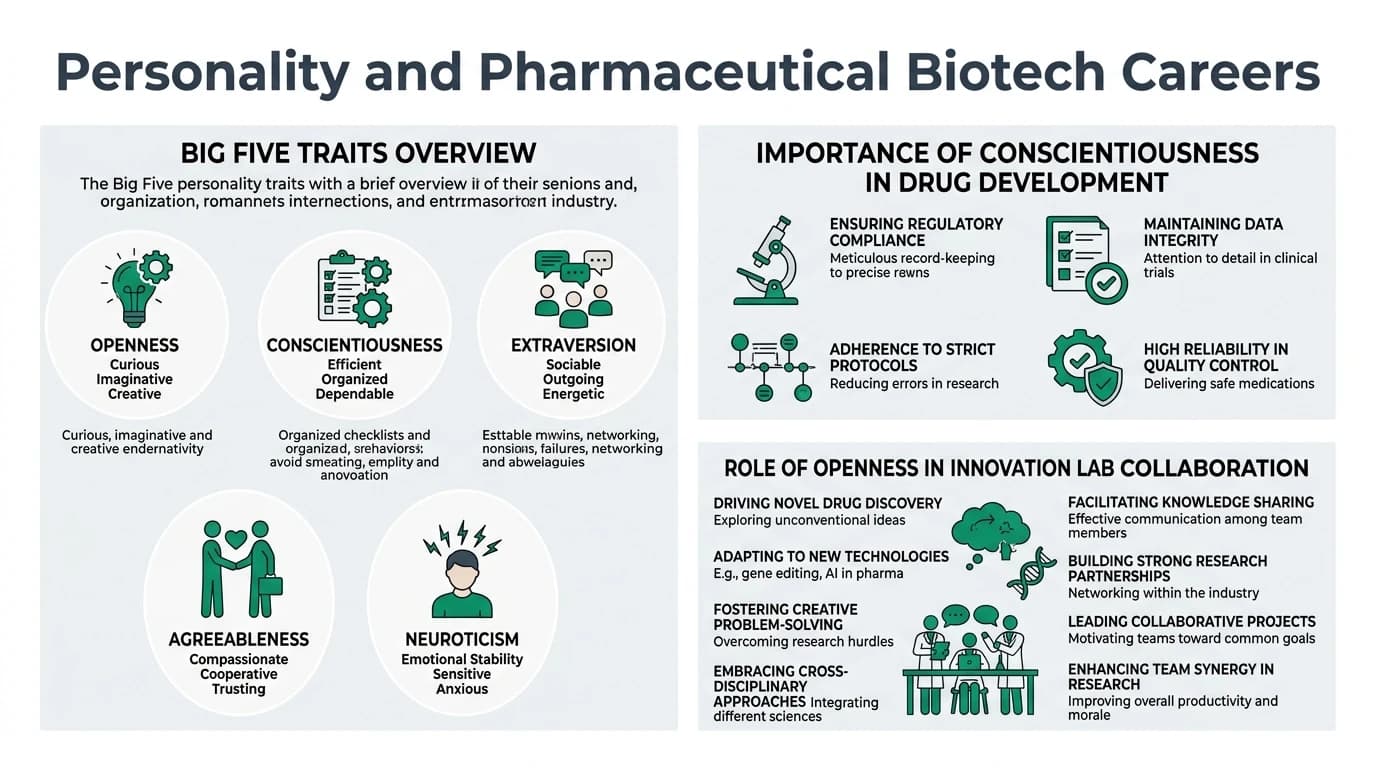
- url: "/images/guides/personality-pharmaceutical-biotech-careers-big-five.webp" alt: "A diverse team of pharmaceutical biotech professionals collaborating in a modern laboratory setting, showcasing various personality traits in action." caption: "Understanding personality traits can enhance teamwork and innovation in pharmaceutical biotech careers." relatedGuides:
- "personality-innovation-workplace-big-five"
- "conscientiousness-complete-guide-big-five"
- "personality-nursing-healthcare-big-five"
Quick answer
How do Big Five personality traits impact pharmaceutical biotech careers?
The Big Five traits—Openness, Conscientiousness, Extraversion, Agreeableness, and Neuroticism—play crucial roles in pharmaceutical biotech careers, influencing success in areas like drug development, regulatory compliance, lab collaboration, and science communication.
Source: Florida Tech Online
Executive Summary
The Big Five personality traits—Openness, Conscientiousness, Extraversion, Agreeableness, and Neuroticism—are key to thriving in pharmaceutical biotech careers. These traits influence how professionals perform in drug development, regulatory compliance, lab collaboration, and science communication.
The bottom line: Understanding these traits can help individuals and organizations enhance job performance and team dynamics.
Critical: Personality assessments are tools, not predictors. Individual results vary. Consult certified professionals for personalized advice.
What Are the Big Five Personality Traits?
The Big Five personality traits, often remembered by the acronym OCEAN, are:
- Openness: Creativity and curiosity.
- Conscientiousness: Organization and dependability.
- Extraversion: Sociability and energy.
- Agreeableness: Cooperation and empathy.
- Neuroticism: Emotional instability and stress propensity.
| Trait | Description | Example in Biotech |
|---|---|---|
| Openness | Creativity, curiosity | Innovating new drug formulations |
| Conscientiousness | Organization, dependability | Ensuring compliance with regulations |
| Extraversion | Sociability, energy | Leading lab teams |
| Agreeableness | Cooperation, empathy | Collaborating in research projects |
| Neuroticism | Emotional instability, stress | Managing stress in high-pressure roles |
How Does Conscientiousness Affect Drug Development?
Conscientiousness is crucial in drug development due to its impact on reliability and performance.
- Enhances reliability: Ensures meticulous attention to detail in research and development.
- Predicts performance: Linked to higher job performance and leadership success.
- Critical for compliance: Essential for meeting regulatory standards.
| Benefit | Description |
|---|---|
| Reliability | Consistent adherence to protocols |
| Performance | Drives goal-oriented behavior and task completion |
| Compliance | Ensures adherence to strict regulatory guidelines |
Why Is Openness Important in Science Communication?
Openness fosters innovation and adaptability, essential for effective science communication.
- Encourages creativity: Facilitates the development of engaging narratives.
- Promotes adaptability: Helps in adjusting to new communication technologies.
- Enhances idea-sharing: Supports collaborative efforts in research dissemination.
| Aspect | Impact on Science Communication |
|---|---|
| Creativity | Engages diverse audiences |
| Adaptability | Utilizes new platforms and methods |
| Idea-sharing | Encourages collaborative research efforts |
How Does Extraversion Benefit Lab Collaboration?
Extraversion plays a significant role in fostering effective teamwork and leadership in labs.
- Facilitates networking: Builds strong professional relationships.
- Boosts team morale: Energizes team projects and collaborations.
- Enhances leadership: Supports dynamic team management.
| Benefit | Description |
|---|---|
| Networking | Builds connections within and outside teams |
| Team morale | Creates a positive and energetic work environment |
| Leadership | Drives team projects and initiatives |
What Role Does Agreeableness Play in Regulatory Compliance?
Agreeableness is key in regulatory compliance due to its emphasis on cooperation and empathy.
- Supports teamwork: Enhances collaboration in compliance teams.
- Promotes empathy: Fosters understanding in stakeholder interactions.
- Facilitates cooperation: Encourages harmonious team dynamics.
| Aspect | Impact on Regulatory Compliance |
|---|---|
| Teamwork | Enhances collaborative efforts |
| Empathy | Builds strong stakeholder relationships |
| Cooperation | Ensures smooth team operations |
How Does Neuroticism Impact Biotech Career Stress?
Neuroticism can influence stress levels and emotional stability in biotech careers.
- Increases stress: Higher levels may lead to increased workplace stress.
- Affects stability: Lower emotional stability can impact job satisfaction.
- Requires management: Effective stress management strategies are essential.
| Impact | Description |
|---|---|
| Stress | May lead to burnout if unmanaged |
| Stability | Influences job satisfaction and retention |
| Management | Requires proactive stress reduction strategies |
Can Big Five Tests Improve Pharma Recruitment?
Using Big Five personality tests in recruitment can enhance role matching and team cohesion.
- Improves role fit: Matches candidates to roles based on personality traits.
- Enhances team dynamics: Builds well-rounded teams with complementary traits.
- Supports retention: Reduces turnover by aligning personalities with job demands.
| Benefit | Description |
|---|---|
| Role fit | Matches candidates to suitable positions |
| Team dynamics | Builds balanced and effective teams |
| Retention | Increases job satisfaction and longevity |
Action checklist
- Assess your Big Five traits for career alignment.
- Consider personality tests in recruitment processes.
- Develop stress management strategies for high-pressure roles.
FAQ
What Big Five trait is most important for drug development?
How does openness to experience help in biotech research?
Why is conscientiousness key for regulatory compliance in pharma?
Which personality traits predict success in lab teamwork?
Does extraversion benefit science communication roles?
How does neuroticism impact biotech career stress?
Can Big Five tests improve pharma recruitment?
Notes
Primary Sources
| Source | Type | URL |
|---|---|---|
| Squipp | Industry | Link |
| Florida Tech Online | Academic | Link |
| PMC (NCBI) | Peer-reviewed | Link |
Conclusion
Understanding the Big Five personality traits can significantly impact career success in pharmaceutical biotech fields. By aligning personality traits with job roles, professionals can enhance their performance and job satisfaction.