consumer-psychology
Consumer Psychology and Personality: Why You Buy What You Buy - Big Five and Shopping Behavior
Explore how the Big Five personality traits influence consumer shopping behavior, including impulsive buying, brand preferences, and product choices.
Quick answer
How do personality traits affect shopping behavior?
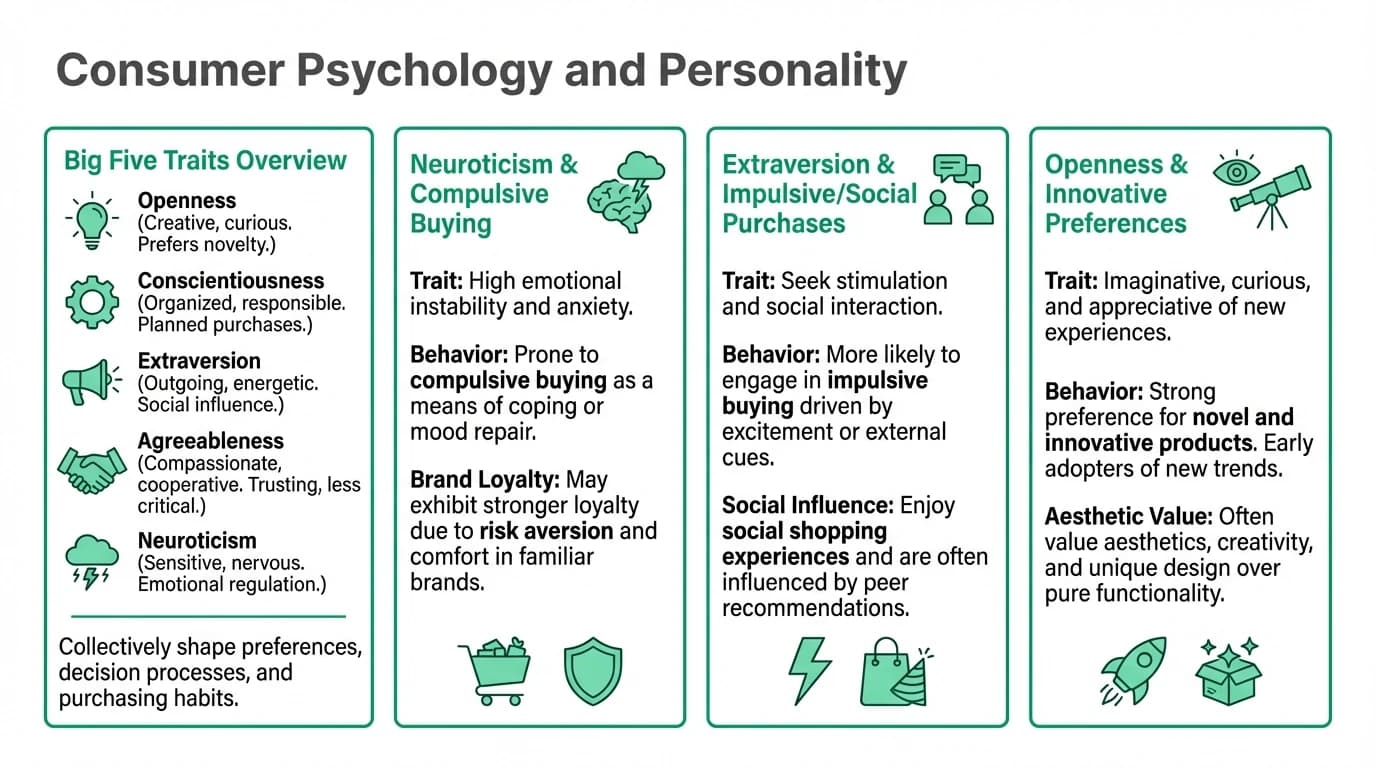
The Big Five personality traits significantly influence shopping behavior by affecting impulsive buying, brand preferences, and product choices. Traits like neuroticism and extraversion can predict tendencies such as compulsive buying and brand loyalty.
Source: Delve AI
Executive Summary
The Big Five personality traits—openness, conscientiousness, extraversion, agreeableness, and neuroticism—play a crucial role in shaping consumer behavior. These traits influence various aspects of shopping, from impulsive buying to brand loyalty. Understanding these connections can help marketers tailor strategies to different personality profiles.
Research shows that traits like neuroticism can lead to compulsive buying, while extraversion is linked to social and hedonic purchases. Openness often results in a preference for innovative products, and conscientiousness affects the tendency for planned versus impulsive purchases. By leveraging these insights, businesses can create personalized marketing approaches that resonate with specific consumer segments.
The bottom line: Understanding the Big Five personality traits provides valuable insights into consumer behavior, allowing for more effective marketing strategies.
Critical Warning: Oversimplifying personality traits can lead to ineffective marketing strategies. It's crucial to consider mediation effects like self-esteem and context-specific influences.
1) Overview of Big Five Traits in Consumer Contexts
What is the Big Five Model?
The Big Five model, also known as OCEAN, categorizes personality into five broad traits: openness, conscientiousness, extraversion, agreeableness, and neuroticism. Each trait represents a spectrum, influencing how individuals perceive and interact with the world.
How Do These Traits Influence Shopping?
Each trait manifests differently in shopping contexts. For instance, openness often leads to a preference for novel products, while conscientiousness is linked to planned purchasing. Extraverts may seek social shopping experiences, whereas neurotic individuals might prefer familiar brands to avoid regret.
Historical Development
The Big Five model originated in the 1960s and gained empirical validation in the 1990s. Compared to other models like Cattell's 16PF, the Big Five offers a more streamlined approach to understanding consumer behavior.
Comparison to Other Models
| Model | Description | Application in Consumer Behavior |
|---|---|---|
| Big Five | Five broad traits | Predicts general shopping tendencies |
| Cattell's 16PF | 16 personality factors | Detailed but complex profiling |
Key Takeaways:
- The Big Five model provides a comprehensive framework for understanding consumer behavior.
- Each trait influences shopping behavior in unique ways, offering insights for tailored marketing strategies.
2) Neuroticism and Risk-Averse or Compulsive Buying
What is Neuroticism?
Neuroticism refers to emotional instability and a tendency to experience negative emotions. High neuroticism often correlates with anxiety and moodiness.
How Does Neuroticism Affect Shopping?
Individuals with high neuroticism may engage in compulsive buying as a coping mechanism. They often prefer familiar brands to avoid the stress of new experiences.
Key Mechanics
- Effect: High neuroticism increases compulsive buying.
- Process: Preference for familiar brands to minimize regret.
Example Scenario
A shopper with high neuroticism might avoid new gadgets during Black Friday sales, sticking to trusted brands to minimize regret.
Key Takeaways:
- Neuroticism can lead to compulsive buying and a preference for familiar brands.
- Understanding this trait can help in designing marketing strategies that reduce consumer anxiety.
3) Extraversion's Role in Social and Hedonic Purchases
What is Extraversion?
Extraversion is characterized by sociability, assertiveness, and a tendency to seek stimulation in the company of others.
How Does Extraversion Influence Shopping?
Extraverts are drawn to social and hedonic purchases, often influenced by brand appeal and social media trends. They may exhibit impulsive buying behaviors.
Key Mechanics
- Effect: Positive correlation with hedonic product value.
- Process: Influence from social brand appeal and impulsive buying.
Example Scenario
An extraverted consumer might impulsively buy trendy apparel from social media influencers, prioritizing hedonic value.
Key Takeaways:
- Extraverts are likely to engage in social and impulsive buying.
- Brands can leverage social media to attract extraverted consumers.
4) Openness to Experience and Innovation Adoption
What is Openness?
Openness involves a willingness to engage with new experiences and ideas. It is associated with creativity and curiosity.
How Does Openness Affect Shopping?
Individuals high in openness are more likely to adopt innovative products and engage in sustainable consumption patterns. They are drawn to novelty and exploration.
Key Mechanics
- Effect: Preference for novel products and sustainable consumption.
- Process: Engagement with exploratory shopping tasks.
Example Scenario
An open individual might experiment with sustainable brands in grocery apps, influenced by green labels.
Key Takeaways:
- Openness leads to a preference for innovative and sustainable products.
- Marketing strategies can focus on novelty and eco-friendly features to attract open consumers.
5) Agreeableness and Value-Aligned Shopping
What is Agreeableness?
Agreeableness reflects a tendency towards cooperation, trust, and altruism. Agreeable individuals value harmony and are often swayed by peer opinions.
How Does Agreeableness Influence Shopping?
Agreeable consumers seek peer-approved products and are influenced by word-of-mouth and testimonials. They often align their purchases with political and sustainable values.
Key Mechanics
- Effect: Influence from peer opinions and testimonials.
- Process: Alignment with political and sustainable consumer behavior.
Example Scenario
Agreeable parents might select peer-recommended toys, swayed by online reviews aligning with family values.
Key Takeaways:
- Agreeableness leads to value-aligned shopping influenced by peer opinions.
- Marketers can use testimonials and reviews to appeal to agreeable consumers.
6) Conscientiousness and Planned vs. Impulsive Purchases
What is Conscientiousness?
Conscientiousness involves a high level of thoughtfulness, impulse control, and goal-directed behaviors. It is linked to discipline and organization.
How Does Conscientiousness Affect Shopping?
Conscientious consumers prefer planned purchases and high-quality products. They are less likely to engage in impulsive buying.
Key Mechanics
- Effect: Negative effect on compulsive buying.
- Process: Preference for high-quality, planned purchases.
Example Scenario
A conscientious shopper might choose pesticide-free options over impulsive choices, valuing quality and planning.
Key Takeaways:
- Conscientiousness leads to disciplined and planned shopping behaviors.
- Brands can emphasize quality and reliability to attract conscientious consumers.
7) Self-Esteem as a Mediator in Personality-Buying Links
What is Self-Esteem?
Self-esteem refers to an individual's overall sense of self-worth or personal value. It can mediate the effects of personality traits on behavior.
How Does Self-Esteem Mediate Buying Behavior?
Self-esteem fully mediates the effects of extraversion, openness, and agreeableness on compulsive buying. It influences how personality traits translate into shopping behaviors.
Key Mechanics
- Effect: Mediation of personality traits on compulsive buying.
- Process: Influences the translation of traits into behaviors.
Example Scenario
Low self-esteem might lead a low-conscientiousness user to fall into compulsive online fashion hauls.
Key Takeaways:
- Self-esteem plays a crucial role in mediating personality effects on buying behavior.
- Understanding this mediation can enhance the effectiveness of behavioral interventions.
8) Personality Effects on Sustainable and Green Consumption
What is Sustainable Consumption?
Sustainable consumption involves purchasing products that are environmentally friendly and socially responsible.
How Do Personality Traits Influence Sustainable Consumption?
Traits like openness and agreeableness are positively correlated with eco-friendly product choices. These traits drive political consumer actions and broader sustainable consumption patterns.
Key Mechanics
- Effect: Correlation with eco-friendly product choices.
- Process: Driven by openness and agreeableness.
Example Scenario
An open consumer might prioritize sustainable brands in their grocery shopping, influenced by green labels and political values.
Key Takeaways:
- Personality traits significantly influence sustainable consumption patterns.
- Marketing strategies can highlight eco-friendly features to attract open and agreeable consumers.
9) Impulsive and Compulsive Buying Tendencies
What is Impulsive Buying?
Impulsive buying refers to unplanned purchases driven by emotions and immediate desires.
How Do Personality Traits Predict Impulsive Buying?
Traits like neuroticism and low conscientiousness are key drivers of impulsive and compulsive buying behaviors. These tendencies are often linked to low self-esteem.
Key Mechanics
- Effect: Neuroticism and low conscientiousness drive impulsive buying.
- Process: Linked to low self-esteem and emotional regulation.
Example Scenario
A low-conscientiousness shopper might engage in spontaneous online fashion hauls, driven by emotional impulses.
Key Takeaways:
- Impulsive buying is influenced by personality traits like neuroticism and conscientiousness.
- Understanding these traits can help in developing strategies to manage impulsive buying behaviors.
10) Brand Preferences and Product Personality Congruence
What is Product Personality Congruence?
Product personality congruence refers to the alignment between a consumer's self-perceived traits and the perceived traits of a brand or product.
How Does Personality Influence Brand Preferences?
Consumers often select brands that match their self-perceived traits, leading to loyalty and positive brand attitudes. This consistency effect strengthens brand relationships.
Key Mechanics
- Effect: Consumers prefer brands matching their traits.
- Process: Consistency effect strengthens brand loyalty.
Example Scenario
A consumer with high openness might prefer innovative tech brands that align with their curiosity and creativity.
Key Takeaways:
- Personality traits influence brand preferences through product personality congruence.
- Brands can emphasize traits that align with their target audience's personality profiles.
11) Personality in Digital and VR Shopping Environments
What is VR Shopping?
VR shopping involves using virtual reality technology to simulate shopping experiences in a digital environment.
How Do Personality Traits Affect VR Shopping?
Traits like neuroticism and openness influence behavior in VR environments. Behavioral signals can classify Big Five domains, aiding in personalized marketing strategies.
Key Mechanics
- Effect: Personality traits influence VR shopping behavior.
- Process: Behavioral signals classify Big Five domains.
Example Scenario
A neurotic consumer might exhibit cautious behavior in a VR hypermarket, preferring familiar brands and avoiding new experiences.
Key Takeaways:
- Personality traits significantly impact behavior in digital and VR shopping environments.
- VR technology can enhance personalized marketing by leveraging behavioral signals.
12) Beyond Demographics: Personality in Premium and Loyalty Segments
What is Premium Shopping?
Premium shopping involves purchasing high-quality, often expensive products that signal status or quality.
How Do Personality Traits Influence Premium Shopping?
Traits like low extraversion and neuroticism are common in premium shoppers. These consumers often seek quality signals and are less influenced by social trends.
Key Mechanics
- Effect: Low extraversion and neuroticism in premium shoppers.
- Process: Preference for quality signals over social influence.
Example Scenario
A premium wine buyer with low extraversion might seek high-price signals of quality at tastings, valuing product excellence over social appeal.
Key Takeaways:
- Personality traits play a crucial role in premium and loyalty shopping segments.
- Understanding these traits can help brands target premium consumers effectively.
Action checklist
- Identify target consumer segments based on Big Five traits.
- Develop marketing strategies that align with personality-driven behaviors.
- Leverage digital tools like VR to enhance personalized marketing.
FAQ
How do the Big Five traits affect consumer behavior?
Can personality traits predict brand loyalty?
What role does self-esteem play in shopping behavior?
How can marketers use the Big Five model?
Are there any risks in using personality traits for marketing?
How does openness influence sustainable consumption?
What is the impact of digital environments on shopping behavior?
Notes
Primary Sources
| Source | Type | URL |
|---|---|---|
| National Institutes of Health (PMC) | Journal Article | https://pmc.ncbi.nlm.nih.gov/articles/PMC10814197/ |
| Atlantis Press | Conference Paper | https://www.atlantis-press.com/article/126001703.pdf |
| Delve AI | Blog | https://www.delve.ai/blog/consumer-personality-traits |
| Greenbook | Market Research | https://www.greenbook.org/insights/market-research-trends/the-trait-theory-of-personality-in-consumer-behavior |
| Frontiers in Psychology | Journal Article | https://www.frontiersin.org/journals/psychology/articles/10.3389/fpsyg.2022.752073/full |
| W. P. Carey School of Business (ASU) | News Article | https://news.wpcarey.asu.edu/20200422-beyond-demographics-personality-impacts-buying-decisions |
Conclusion
Understanding the Big Five personality traits provides a comprehensive framework for analyzing consumer behavior. By leveraging these insights, marketers can develop more effective, personalized strategies that resonate with specific consumer segments.