personal-development
Personality and Imposter Syndrome: Why Some People Feel Like Frauds
Explore the link between personality traits and imposter syndrome, focusing on neuroticism and low extraversion. Discover what helps those struggling with imposter feelings.
Quick answer
What is imposter syndrome?
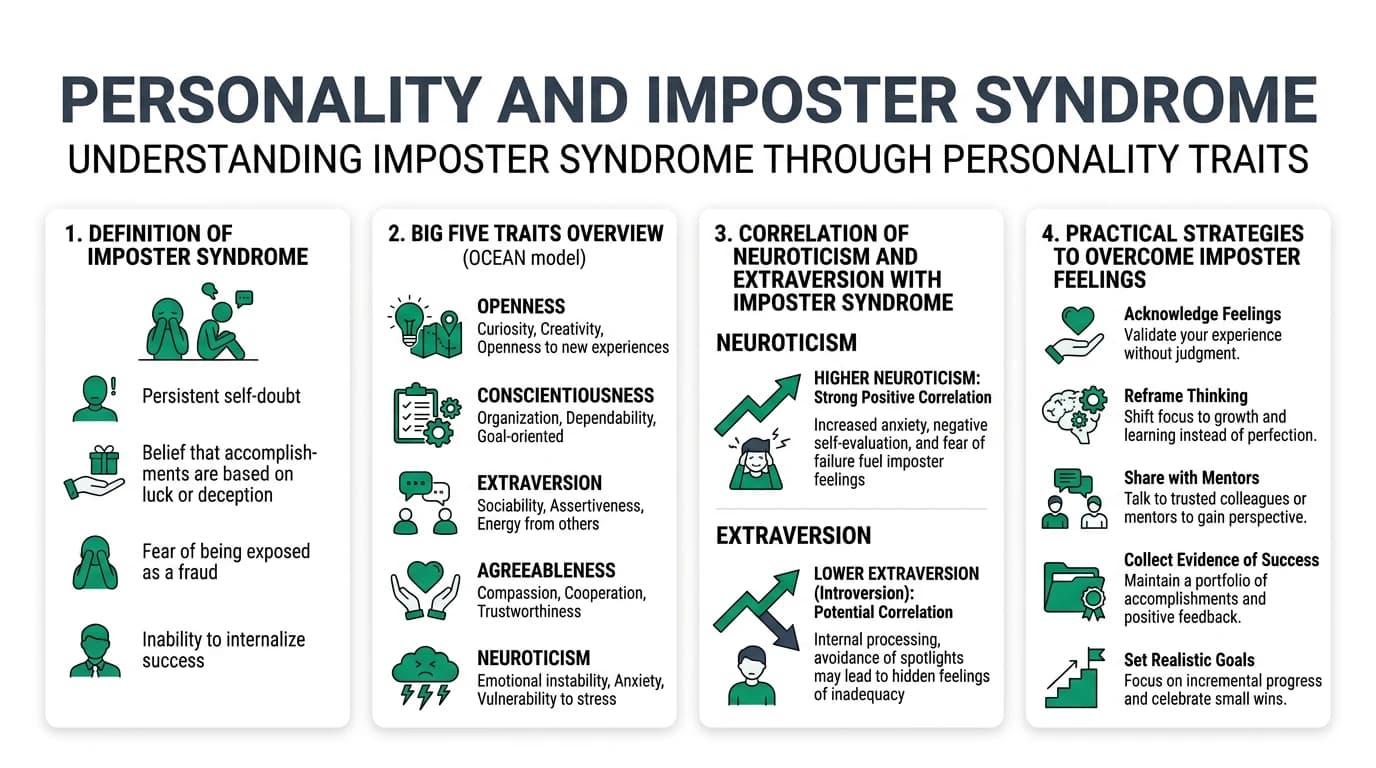
Imposter syndrome is a psychological experience where high-achieving individuals doubt their skills and accomplishments, attributing success to luck or fraud, and fear being exposed as incompetent.
Source: NCBI StatPearls
Executive Summary
Imposter syndrome makes capable people feel like frauds. It's linked to personality traits like high neuroticism and low extraversion. Understanding these connections can help reduce self-doubt and anxiety.
The bottom line: If you struggle with imposter syndrome, exploring your personality traits might offer insights and relief.
Critical Warning: Imposter syndrome can lead to anxiety and low job satisfaction if unaddressed. Seek professional advice if needed.
What is Imposter Syndrome?
Imposter syndrome involves doubting your accomplishments and fearing exposure as a fraud. It's common among high-achievers who attribute success to luck rather than skill.
Key Symptoms:
- Self-doubt: Constantly questioning abilities.
- Fear of exposure: Worrying others will find out you're not as competent as they think.
- Perfectionism: Setting unrealistically high standards.
Imposter Cycle Stages:
| Stage | Description | Personality Link |
|---|---|---|
| Over-preparation | Excessive effort to avoid failure | High neuroticism |
| Procrastination | Delaying tasks due to fear of failure | Low conscientiousness |
| Brief success | Temporary relief from anxiety | Low extraversion |
| Anxiety return | Doubt resurfaces despite success | High neuroticism |
How Do Personality Traits Influence Imposter Syndrome?
The Big Five personality traits provide a framework to understand imposter syndrome. Let's explore how each trait relates:
Big Five Overview:
- Neuroticism: Emotional instability, anxiety-prone.
- Extraversion: Outgoing, seeking social interactions.
- Conscientiousness: Diligent, organized.
- Openness: Creative, open to new experiences.
- Agreeableness: Cooperative, empathetic.
Trait Correlations:
| Trait | Correlation with Imposter Syndrome | Implication |
|---|---|---|
| Neuroticism | Positive (strong) | Heightens anxiety and self-doubt |
| Extraversion | Negative | Reduces external validation seeking |
| Conscientiousness | Negative | Linked to avoidance behaviors |
| Openness | Positive | Increases self-questioning |
Why Does Neuroticism Lead to Imposter Feelings?
High neuroticism is strongly linked to imposter syndrome. People with this trait often experience:
- Increased anxiety: Constant worry about performance.
- Self-silencing: Avoiding sharing ideas due to fear of judgment.
- Emotional instability: Frequent mood swings impacting confidence.
Neuroticism Impact:
| Effect | Description |
|---|---|
| Anxiety | Persistent worry about being exposed as a fraud |
| Insecurity | Doubt in abilities despite evidence of success |
| Emotional swings | Fluctuating self-esteem affecting performance |
Is Low Extraversion a Factor?
Yes, low extraversion contributes to imposter syndrome by limiting social validation and support.
Effects of Low Extraversion:
- Isolation: Less likely to seek feedback or support.
- Internalization: Relying on self-assessment rather than external input.
- Reduced confidence: Fewer opportunities to validate achievements.
Extraversion Impact:
| Effect | Description |
|---|---|
| Social isolation | Limited peer support and feedback |
| Self-reliance | Over-dependence on personal judgment |
| Confidence dips | Less reinforcement from social interactions |
What Helps Overcome Imposter Syndrome?
Understanding personality links can guide effective strategies to manage imposter feelings.
Coping Strategies:
- Growth mindset: Embrace challenges as opportunities to learn.
- Seek feedback: Regularly ask for input to validate your skills.
- Mindfulness practices: Reduce anxiety through meditation and reflection.
Coping Strategies Table:
| Strategy | Linked Trait | Benefit |
|---|---|---|
| Growth mindset | Neuroticism | Reduces self-doubt and anxiety |
| Social validation | Low extraversion | Boosts confidence through feedback |
| Mindfulness | High neuroticism | Calms anxiety and improves focus |
FAQ
What causes imposter syndrome in high achievers?
Imposter syndrome often stems from personality traits like high neuroticism and low extraversion, combined with perfectionist tendencies. Source: NCBI StatPearls.
How does neuroticism lead to imposter feelings?
Neuroticism increases anxiety and self-doubt, making individuals more prone to feeling like frauds. Source: Psychopedia Journals.
Is imposter syndrome linked to low extraversion?
Yes, low extraversion can limit social validation, increasing feelings of isolation and self-doubt. Source: PMC/NCBI.
Can personality traits predict imposter syndrome?
Personality traits like neuroticism and extraversion can indicate a higher likelihood of experiencing imposter syndrome. Source: Journal of Positive School Psychology.
What Big Five traits protect against imposter syndrome?
High conscientiousness and extraversion can help mitigate imposter feelings by promoting diligence and social support. Source: PMC/NCBI.
How to stop feeling like a fraud at work?
Focus on building a growth mindset, seek regular feedback, and practice mindfulness to manage anxiety. Source: NCBI StatPearls.
Can therapy help with personality-related imposter feelings?
Yes, therapy can provide strategies to understand and manage personality traits contributing to imposter syndrome. Source: Psychopedia Journals.
Notes
Primary Sources
| Source | Type | URL |
|---|---|---|
| Psychopedia Journals | Peer-reviewed | Psychopedia |
| PMC/NCBI | Peer-reviewed | PMC/NCBI |
| Journal of Positive School Psychology | Peer-reviewed | Journal of Positive School Psychology |
| NCBI StatPearls | Official/peer-reviewed | NCBI StatPearls |
| MIT Sloan | Industry/academic | MIT Sloan |
Conclusion
Understanding the link between personality traits and imposter syndrome can provide valuable insights into why we feel like frauds. By recognizing the roles of neuroticism and extraversion, you can adopt strategies to manage these feelings effectively.