personality-tests
Using Psychometric Assessments for Effective Leadership Development Programs
Explore how psychometric assessments can enhance leadership development by providing insights into personality, behavior, and emotional intelligence.
Quick answer
What are psychometric assessments for leadership?
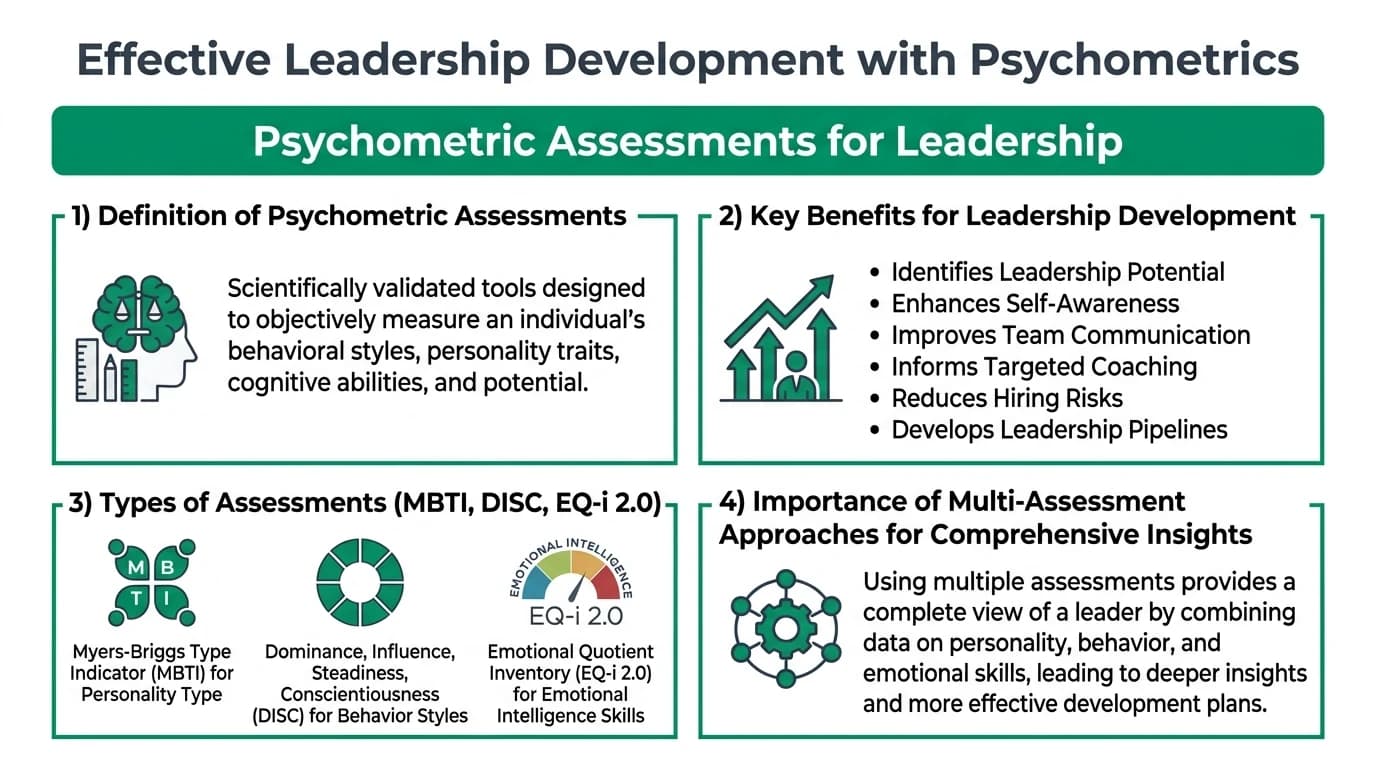
Psychometric assessments are standardized tools that evaluate mental acuity, cognitive abilities, behavioral tendencies, and emotional intelligence in leadership contexts.
Source: Flow Coaching Institute
Executive Summary
Psychometric assessments are powerful tools for leadership development. They evaluate personality traits, behavioral tendencies, and emotional intelligence to provide leaders with actionable insights.
These assessments help organizations identify strengths and development areas, supporting effective leadership growth.
The bottom line: Using a combination of assessments provides a comprehensive view of leadership capabilities, but ensure they're administered by trained professionals for best results.
Critical Warning: Always use certified professionals to interpret psychometric assessments to avoid misinterpretation and ethical issues.
What Are Psychometric Assessments?
Psychometric assessments are standardized tests designed to measure various mental capabilities and behavioral styles. They are crucial in leadership development for several reasons:
- Self-awareness: Helps leaders understand their strengths and weaknesses.
- Development: Identifies areas for improvement and growth.
- Recruitment: Assists in selecting candidates with the right traits for leadership roles.
| Assessment Type | Focus | Use Case |
|---|---|---|
| MBTI | Personality type | Team building, communication |
| DISC | Behavioral styles | Conflict resolution, team dynamics |
| EQ-i 2.0 | Emotional intelligence | Leadership effectiveness, stress management |
Why Use Multiple Assessments?
Using multiple assessments provides a fuller picture of a leader's capabilities. Here's why:
- Comprehensive Insight: Combines personality, behavior, and emotional intelligence data.
- Balanced View: Mitigates biases of single assessments.
- Tailored Development: Customizes growth plans based on diverse insights.
| Benefit | Description |
|---|---|
| Comprehensive Insight | Combines data for a holistic view |
| Balanced View | Reduces bias from single tools |
| Tailored Development | Customizes growth strategies |
How Do Emotional Intelligence Assessments Work?
Emotional intelligence (EQ) assessments measure a leader's ability to perceive, control, and evaluate emotions. High EQ is linked to effective team management and interpersonal skills.
- Self-Perception: Awareness of one's emotions.
- Interpersonal Skills: Ability to interact effectively with others.
- Stress Management: Handling stress constructively.
| EQ Component | Importance |
|---|---|
| Self-Perception | Foundation for self-awareness |
| Interpersonal Skills | Enhances team collaboration |
| Stress Management | Prevents burnout |
What Is 360-Degree Feedback?
360-degree feedback is a comprehensive evaluation method where feedback is gathered from a leader's superiors, peers, and subordinates.
- Multi-Perspective: Offers a rounded view of performance.
- Development Focused: Identifies strengths and areas for improvement.
- Behavioral Tracking: Monitors changes over time.
| Advantage | Description |
|---|---|
| Multi-Perspective | Comprehensive performance view |
| Development Focused | Identifies growth areas |
| Behavioral Tracking | Monitors progress |
Identifying High-Potential Leaders
Psychometric assessments help in spotting high-potential leaders by evaluating:
- Learning Agility: Ability to adapt and learn quickly.
- Self-Awareness: Understanding personal strengths and weaknesses.
- Leadership Traits: Characteristics like assertiveness and resilience.
| Trait | Importance |
|---|---|
| Learning Agility | Predicts adaptability |
| Self-Awareness | Foundation for growth |
| Leadership Traits | Essential for effective leadership |
Best Practices for Implementation
Implementing psychometric assessments effectively involves several key steps:
- Selection: Choose valid and reliable assessments.
- Professional Administration: Ensure assessments are conducted by trained professionals.
- Integration: Combine results with coaching for actionable development.
| Step | Description |
|---|---|
| Selection | Choose reliable tools |
| Professional Administration | Use trained facilitators |
| Integration | Combine with coaching |
How to Measure Success and ROI
Measuring the success of psychometric assessments involves tracking behavioral changes and performance improvements over time.
- Behavioral Change: Observe shifts in leadership behavior.
- Performance Metrics: Evaluate improvements in team dynamics and productivity.
- Cost-Benefit Analysis: Assess the financial impact of leadership development.
| Metric | Importance |
|---|---|
| Behavioral Change | Indicates growth |
| Performance Metrics | Measures effectiveness |
| Cost-Benefit Analysis | Justifies investment |
Action checklist
- Select assessments that align with organizational goals.
- Ensure assessments are administered by certified professionals.
- Integrate assessment results into coaching and development plans.
FAQ
What is the difference between MBTI and DISC assessments for leadership?
How accurate are psychometric assessments for identifying leadership potential?
Can psychometric assessments predict leadership success?
What is emotional intelligence assessment and why does it matter for leaders?
How do 360-degree feedback surveys work in leadership development?
What should organizations look for when choosing a leadership assessment tool?
How often should leaders retake psychometric assessments?
Notes
Primary Sources
| Source | Type | URL |
|---|---|---|
| Flow Coaching Institute | Industry resource | Link |
| Sigma Assessment Systems | Assessment provider | Link |
Conclusion
Psychometric assessments are invaluable for developing effective leaders by providing insights into personality, behavior, and emotional intelligence. When used correctly, they support growth and enhance organizational success.