career-development
Personality and Career Choice: A Data-Driven Guide for Job Seekers - Big Five, Holland Codes, and Finding Your Fit
Explore how personality traits like the Big Five and Holland codes influence career choices and job satisfaction. Use data-driven insights to find your ideal career path.
Quick answer
How do personality traits influence career choice?
Personality traits, especially the Big Five and Holland codes, significantly impact career preferences, satisfaction, and performance. Understanding these traits can help job seekers align their career paths with their personalities for better outcomes.
Source: Wuyi University Study
Executive Summary
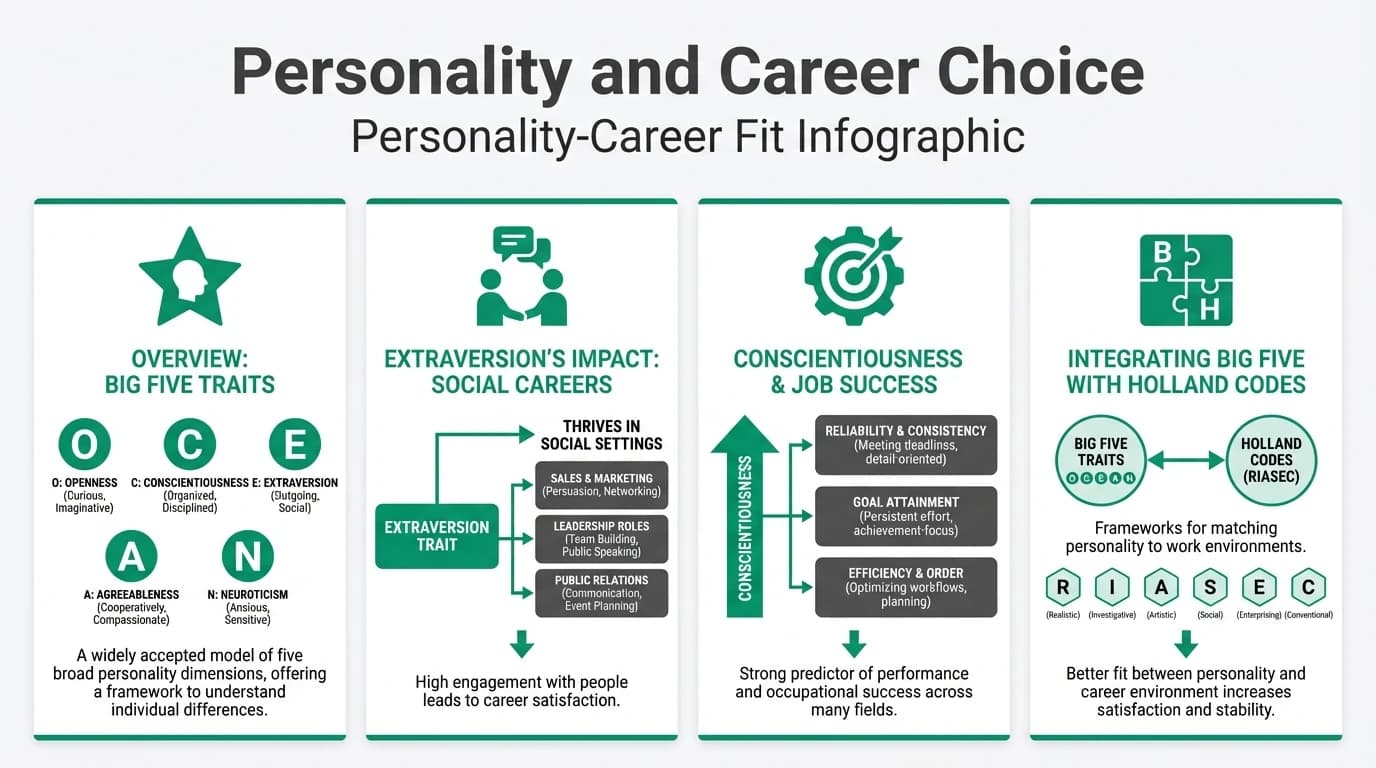
Understanding how personality traits influence career choice can significantly enhance job satisfaction and performance. The Big Five personality traits—Extraversion, Agreeableness, Openness, Conscientiousness, and Neuroticism—along with Holland's RIASEC codes, provide a framework for aligning personal characteristics with professional environments.
Research shows that these traits can predict preferences for certain roles and majors, often rivaling cognitive skills in their influence. For instance, Extraversion is linked to social and leadership roles, while Conscientiousness predicts success in structured environments. Integrating these insights can guide job seekers to more fulfilling career paths.
The bottom line: Understanding your personality can lead to better career choices.
Critical Warning: Ignoring personality traits in career planning can lead to dissatisfaction and frequent job changes.
1) Understanding the Big Five Personality Traits
What is the Big Five?
The Big Five personality traits are a model used to describe human personality. They consist of Extraversion, Agreeableness, Openness, Conscientiousness, and Neuroticism. These traits are assessed using tools like the Five Factor Model.
How Does the Big Five Work?
The Big Five traits are measured through questionnaires that evaluate how individuals perceive and react to different situations. Each trait represents a spectrum, and individuals can fall anywhere along these spectrums.
Key Mechanics
- Extraversion: Linked to social and leadership roles.
- Agreeableness: Important for teamwork and collaborative environments.
- Openness: Associated with creativity and innovation.
- Conscientiousness: Predicts success in structured tasks.
- Neuroticism: Often a barrier to decision-making.
Example Calculation
Consider a person scoring high in Extraversion and low in Neuroticism. They are likely to thrive in roles that require interaction, such as sales or management.
Common Mistakes and Pitfalls to Avoid
Ignoring Neuroticism can lead to poor career choices due to its negative impact on decision-making.
Key Takeaways:
- Extraversion: Social and leadership roles.
- Conscientiousness: Structured tasks.
- Openness: Creative paths.
2) Extraversion's Role in Social and Leadership Careers
What is Extraversion?
Extraversion is characterized by sociability, assertiveness, and high energy levels. It influences how individuals interact with their environment and others.
How Does Extraversion Impact Careers?
Extraversion is positively correlated with roles that require frequent interaction, such as sales and management. It enhances performance in teamwork and customer-facing positions.
Key Mechanics
- Social Interaction: High extraversion leads to better performance in social roles.
- Leadership: Extraverts often excel in leadership positions.
- Teamwork: Enhances collaboration and communication.
Example of Extraversion
An extroverted individual may prefer a career in sales over solitary research, leading to higher job satisfaction and commitment.
Common Mistakes and Pitfalls to Avoid
Mismatching extraversion to low-interaction roles can reduce performance and satisfaction.
Key Takeaways:
- Social Roles: Extraversion enhances performance.
- Leadership: Extraverts excel.
- Teamwork: Improved collaboration.
3) Conscientiousness and Career Success Predictors
What is Conscientiousness?
Conscientiousness involves being organized, dependable, and disciplined. It predicts success in roles requiring structure and persistence.
How Does Conscientiousness Work?
Conscientious individuals are likely to excel in roles that require attention to detail and adherence to schedules. They often show higher commitment and problem-solving skills.
Key Mechanics
- Organization: Essential for structured tasks.
- Dependability: Increases job performance.
- Persistence: Leads to goal achievement.
Example Calculation
A conscientious person might choose a career in accounting, where their attention to detail and organization are assets.
Common Mistakes and Pitfalls to Avoid
Overlooking conscientiousness can lead to mismatched roles, reducing job satisfaction.
Key Takeaways:
- Structured Tasks: Conscientiousness is key.
- Dependability: Enhances performance.
- Persistence: Drives success.
4) Openness to Experience and Creative/Innovative Paths
What is Openness?
Openness to experience is characterized by creativity, curiosity, and a preference for novelty. It influences preferences for dynamic and innovative roles.
How Does Openness Impact Careers?
Individuals high in openness are drawn to careers that allow for creativity and innovation, such as art, design, and entrepreneurship.
Key Mechanics
- Creativity: Drives innovative roles.
- Curiosity: Leads to exploratory careers.
- Novelty: Prefers dynamic environments.
Example of Openness
An open individual might pursue a career in design, where creativity and innovation are valued.
Common Mistakes and Pitfalls to Avoid
Ignoring openness can lead to dissatisfaction in routine jobs.
Key Takeaways:
- Creative Roles: Openness is crucial.
- Innovation: Drives career choice.
- Exploration: Prefers dynamic paths.
5) Neuroticism's Negative Impacts on Decision-Making
What is Neuroticism?
Neuroticism involves emotional instability and a tendency to experience negative emotions. It can hinder career decision-making and commitment.
How Does Neuroticism Affect Careers?
High neuroticism can lead to frequent career changes and dissatisfaction due to its impact on stress and decision-making.
Key Mechanics
- Emotional Instability: Affects decision-making.
- Stress: Increases job dissatisfaction.
- Commitment: Reduces persistence.
Example Calculation
A highly neurotic individual may struggle in high-pressure roles, leading to frequent job changes.
Common Mistakes and Pitfalls to Avoid
Ignoring neuroticism can lead to poor career choices and dissatisfaction.
Key Takeaways:
- Decision-Making: Neuroticism is a barrier.
- Stress: Increases dissatisfaction.
- Commitment: Reduces persistence.
6) Agreeableness in Collaborative Environments
What is Agreeableness?
Agreeableness is characterized by trust, altruism, and cooperation. It is important for teamwork and collaborative roles.
How Does Agreeableness Impact Careers?
Agreeable individuals thrive in environments that require collaboration and teamwork, such as healthcare and social services.
Key Mechanics
- Trust: Enhances teamwork.
- Altruism: Important for helping roles.
- Cooperation: Improves collaboration.
Example of Agreeableness
An agreeable person may excel in a nursing career, where teamwork and cooperation are essential.
Common Mistakes and Pitfalls to Avoid
Overlooking agreeableness can lead to poor fit in competitive environments.
Key Takeaways:
- Teamwork: Agreeableness enhances collaboration.
- Helping Roles: Important for success.
- Cooperation: Essential for teamwork.
7) Integrating Big Five with Holland RIASEC Codes
What are Holland RIASEC Codes?
Holland codes categorize careers into six types: Realistic, Investigative, Artistic, Social, Enterprising, and Conventional. They align with personality traits to guide career choices.
How Do Holland Codes Work?
Holland codes match personality traits with career environments, helping individuals find roles that fit their preferences and strengths.
Key Mechanics
- Realistic: Conscientiousness aligns with structured tasks.
- Investigative: Openness suits exploratory roles.
- Social: Extraversion enhances social careers.
Example Calculation
A person high in Extraversion and Social codes may thrive in a teaching career, where interaction is key.
Common Mistakes and Pitfalls to Avoid
Ignoring Holland codes can lead to poor career alignment and dissatisfaction.
Key Takeaways:
- Career Fit: Holland codes guide choices.
- Personality Match: Enhances satisfaction.
- Role Alignment: Improves performance.
8) Personality Effects on College Major Selection
How Do Personality Traits Influence Major Selection?
Personality traits significantly impact the choice of college majors, often rivaling cognitive skills in influence.
Key Mechanics
- Extraversion: Prefers social majors.
- Conscientiousness: Chooses structured majors.
- Openness: Opts for creative fields.
Example Calculation
A student high in Openness may choose a major in art, aligning with their creative inclinations.
Common Mistakes and Pitfalls to Avoid
Ignoring personality traits can lead to dissatisfaction and frequent major changes.
Key Takeaways:
- Major Choice: Influenced by traits.
- Satisfaction: Enhanced by alignment.
- Performance: Improved by fit.
9) Career Exploration Mediated by Traits
How Do Traits Influence Exploration?
Personality traits mediate career exploration, influencing self-efficacy and decision-making.
Key Mechanics
- Extraversion: Enhances exploration.
- Openness: Drives curiosity.
- Conscientiousness: Increases persistence.
Example of Exploration
A conscientious individual may explore various career paths before settling on a structured role.
Common Mistakes and Pitfalls to Avoid
Skipping exploration can lead to poor career choices and dissatisfaction.
Key Takeaways:
- Exploration: Driven by traits.
- Self-Efficacy: Enhanced by alignment.
- Decision-Making: Improved by fit.
10) Career Role Enactment and Job Crafting
How Do Traits Influence Role Enactment?
Personality traits influence how individuals enact their roles and craft their jobs, affecting satisfaction and performance.
Key Mechanics
- Extraversion: Enhances role enactment.
- Openness: Drives job crafting.
- Conscientiousness: Improves performance.
Example Calculation
An extraverted person may craft a customer-facing role to enhance satisfaction and performance.
Common Mistakes and Pitfalls to Avoid
Ignoring role enactment can lead to dissatisfaction and reduced performance.
Key Takeaways:
- Role Enactment: Influenced by traits.
- Job Crafting: Enhances satisfaction.
- Performance: Improved by fit.
11) Trait Influences on Commitment and Satisfaction
How Do Traits Affect Commitment?
Personality traits significantly impact career commitment and job satisfaction, with positive effects from Extraversion, Openness, and Conscientiousness.
Key Mechanics
- Extraversion: Increases commitment.
- Openness: Enhances satisfaction.
- Conscientiousness: Improves persistence.
Example Calculation
A conscientious individual may show higher commitment and satisfaction in a structured career.
Common Mistakes and Pitfalls to Avoid
Ignoring trait influences can lead to dissatisfaction and frequent job changes.
Key Takeaways:
- Commitment: Driven by traits.
- Satisfaction: Enhanced by alignment.
- Persistence: Improved by fit.
12) Practical Assessments for Job Seekers
What Assessments Are Available?
Various assessments, such as the Big Five and Holland codes, help job seekers align their careers with their personalities.
Key Mechanics
- Big Five: Measures personality traits.
- Holland Codes: Aligns traits with careers.
- Self-Management: Enhances decision-making.
Example of Assessment
A job seeker may use a Big Five assessment to identify suitable career paths based on their personality traits.
Common Mistakes and Pitfalls to Avoid
Ignoring assessments can lead to poor career alignment and dissatisfaction.
Key Takeaways:
- Assessments: Guide career choices.
- Alignment: Enhances satisfaction.
- Decision-Making: Improved by fit.
Action checklist
- Take a Big Five personality assessment.
- Identify your Holland code.
- Align career choices with your personality traits.
FAQ
What are the Big Five personality traits?
How do Holland codes work?
Can personality traits predict job satisfaction?
What role does Neuroticism play in career choice?
How can I assess my personality traits?
Are personality traits more important than skills in career choice?
How can I use personality assessments in career planning?
Notes
Primary Sources
| Source | Type | URL |
|---|---|---|
| Wuyi University | Study | Link |
| NIH/PMC | Research Article | Link |
| Society of Labor Economists | Study | Link |
| Wiley Online Library | Meta-Analysis | Link |
Conclusion
Understanding personality traits is crucial for making informed career choices. By aligning your career with your personality, you can enhance job satisfaction and performance.